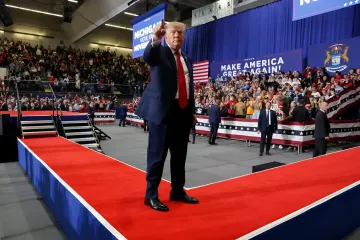
US President Donald Trump sharply criticized those who urged Washington to impose sanctions against Russia in a public speech, calling them "stupid people." According to him, such restrictions would not only fail to achieve their stated goals, but would also have prevented the release of US citizen Stephen Hubbard from a Russian prison. This was reported by RBC-Ukraine citing the speech of the head of the White House.
"Russians Laugh at These Sanctions"
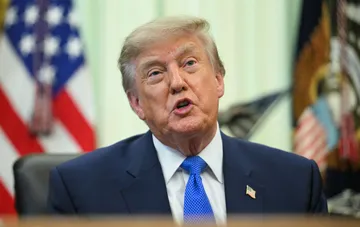
"Stupid people wanted me to impose sanctions on Russia," Trump said, addressing the audience. In his view, Moscow treats such measures with irony: "Russians laugh at these sanctions," the US president emphasized. Thus, he effectively rejected the argument about the necessity of economic pressure on the Russian Federation, considering it counterproductive in the specific situation involving the detention of an American citizen.
The Case of Stephen Hubbard: How It Happened
Trump illustrated his position with the example of 74-year-old Stephen Hubbard, a retired teacher from Michigan who reportedly fell into the hands of the Russian military in Ukraine in April 2022. The Russian side reportedly convicted him of participating in hostilities on the side of Ukraine as a mercenary. In the US, Hubbard was recognized as wrongfully detained, making his release one of the most sensitive topics in bilateral relations.
Circumstances of Release
Hubbard was released on October 21 during a visit to St. Petersburg by Trump's special envoy Steve Witkoff. The US president said that he personally asked Vladimir Putin to release the American in a phone conversation and emphasized that no prisoner swap took place. Thus, according to the White House version, the key role was played by the direct appeal of the head of state, rather than a formal exchange mechanism.
Different Wordings: Washington vs. the Kremlin
The Kremlin, in turn, stated that the American was released "for humanitarian reasons." Both sides confirm the very fact of Hubbard's release on October 21, but public formulations regarding the reasons and mechanism diverge: Washington emphasizes Trump's personal request to Putin, while Moscow emphasizes humanitarian logic. This difference in narrative does not affect the main fact — the return of the US citizen to his homeland.
Context: Reliance on Direct Contacts
Trump's speech fits into the broader context of his rhetoric, in which direct telephone contacts with leaders of other countries are contrasted with "bureaucratic" instruments of pressure like sanctions. Citing the example of Hubbard, the US president effectively argued for the effectiveness of personal dialogue: according to him, asking Putin to "release" the American while simultaneously imposing sanctions would have been absurd — "Can you imagine?" he rhetorically asked the audience. Hubbard's release nearly four years after his detention thus became a public argument in favor of the chosen course of direct negotiations.