
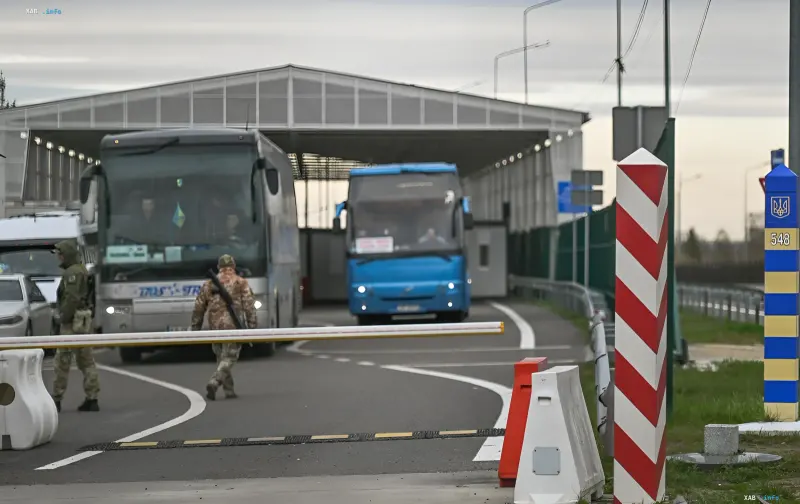
The summer season at the Ukrainian-Polish border has begun with a serious test for passengers and carriers. At border crossing points, especially in the direction of “Shehyni — Medyka,” buses are forced to stand in queues for 8–12 hours. The reason is planned repair work, which has temporarily reduced the throughput capacity of one of the busiest crossings.
The situation has caused concern at the government level of both countries. Deputy Prime Minister of Ukraine for Recovery, Minister of Communities and Territories Development, Oleksiy Kuleba, during a meeting with his Polish colleague — Minister of Infrastructure Dariusz Klimczak — discussed practical measures to minimize the consequences of the repairs for transit.
An “Important Step” by Poland
As reported in a statement by the Ukrainian side, Warsaw has taken specific actions to mitigate the situation. This involves reviewing the logistics of border clearance and optimizing the operation of border crossing points under conditions of limited throughput capacity. This has helped avoid a complete stoppage of bus traffic, which was previously considered a possible scenario.
Earlier, Polish authorities warned of a temporary suspension of bus clearance for entry via “Shehyni — Medyka” due to extensive repair work. However, after consultations, the parties agreed on the continuous operation of the border crossing point throughout the entire summer season — despite inevitable delays.
Why This Is Important
The “Shehyni — Medyka” border crossing point serves thousands of passengers and international carriers daily. Any reduction in its efficiency directly affects citizen mobility, cargo logistics, and tourist flows. Delays of 8–12 hours are not just an inconvenience but a real threat to the operations of transport companies and travelers' plans.
Monitoring and Prospects
Oleksiy Kuleba emphasized the need for constant monitoring of the situation, especially during peak summer months. The parties agreed on regular information exchange and operational coordination of actions to prevent similar disruptions in the future.
Repair work, although causing temporary inconveniences, is necessary for the long-term modernization of infrastructure. The question now is how effectively it will be possible to balance technical needs with the needs of people who depend on uninterrupted movement across the border.


