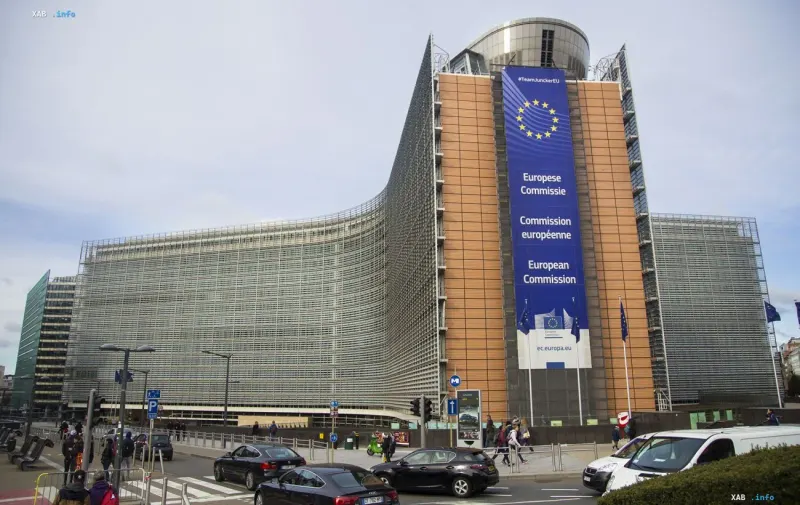
Thirteen European Union member states, at the initiative of Austria, sent a collective letter to the European Commission demanding a one-year moratorium on the adoption of new regulatory acts, primarily those concerning the regulation of business activity. The initiative, dubbed the "year of simplification" by Austrian EU Affairs Minister Claudia Bauer, aims to restore the competitiveness of the European economy, which, according to the authors of the letter, can no longer cope with the flow of new bureaucratic obligations.
The essence of the appeal and the countries' arguments
The letter, addressed to the leadership of the European Commission, emphasises that "it is vital to ensure a regulatory environment that does not unnecessarily hinder businesses with unjustified administrative burdens, duplicative procedures, or excessive reporting obligations." The authors of the document insist that regulatory acts should be drafted in such a way as to simplify their implementation, application, enforcement, and judicial review. In comments to the press, Claudia Bauer stated: "We cannot keep piling new and new proposals on the table while the rules already adopted remain unimplemented." In her words, the approach of first multiplying a huge body of regulations and then attempting to simplify them is strategically wrong.
The mechanism of prior review
In addition to the one-year pause on adopting new regulations, the 13 countries propose introducing a mandatory rigorous prior review of each new regulatory proposal. Such an analysis must answer two key questions: how exactly the new rule will affect economic competitiveness, and whether it is justified in the first place. Bauer emphasised that the initiative should be viewed not as an attempt at deregulation, but as a "plan for deep legislative cleanup" — a systematic tidying up of the existing body of EU regulatory acts.
Contradictory data
The provided materials record a discrepancy in the list of countries that signed the letter. The headline and the first paragraph of the source explicitly state that the appeal was sent by 13 EU member states. However, the list given in the text names only twelve countries: Austria, Germany, Poland, Italy, the Czech Republic, Slovakia, Denmark, Lithuania, Estonia, Latvia, Hungary, and Portugal. It is possible that a typo was made in the publication, or one of the signatories was omitted during the count. Until official confirmation from the European Commission's press office is received, the exact composition of the initiative group remains subject to clarification.
Context: the overload of the EU regulatory machine
Criticism of excessive bureaucracy in Brussels has been heard for many years. According to the latest available World Bank Doing Business ranking (the ranking has not been updated in subsequent years), only two of the ten countries in the world with the best business climate represented the EU — Denmark (4th place) and Sweden (10th). Germany ranked 22nd, Poland 40th. The most regulation-heavy sectors of the European economy remain the tobacco industry (the European Commission is preparing a review of the Tobacco Products Directive TPD and the Tobacco Advertising Directive TAD) and packaging legislation: the new "Packaging Directive," adopted in August, reportedly forced a number of small businesses to cease cross-border deliveries within the EU due to disproportionately high administrative costs. The debate around possible tightening of regulation of nicotine products is accompanied by calls to take into account not only the impact on public health but also the economic consequences, including the risk of an expanding shadow market.
Impact on Ukraine: regulatory burden in wartime
For Ukraine, which in recent years has been consistently introducing additional standards as part of European integration, the situation is compounded by the full-scale war. Agriculture is facing export restrictions, rising fuel prices, and burdensome legislative standards on animal husbandry and the circulation of plant protection products. The metallurgical industry, which has suffered severe damage in recent months, is forced to adapt to the CBAM mechanism — a carbon levy at the EU border, which, according to industry estimates, may lead to the loss of the European market. The tobacco industry, where all four of the largest companies have suffered strikes on their production facilities or warehouses, is simultaneously bearing the burden of a new excise increase to EU levels and compliance with the requirements of Directive 2014/40. In parallel, parliament is preparing new regulation on nicotine pouches, which, by estimates, could lead to tax losses of around 1.2 billion hryvnias per year. Against this backdrop, Ukrainian business, like European entrepreneurs, needs at least a temporary "regulatory break" to restore lost capacities and not lose competitiveness.