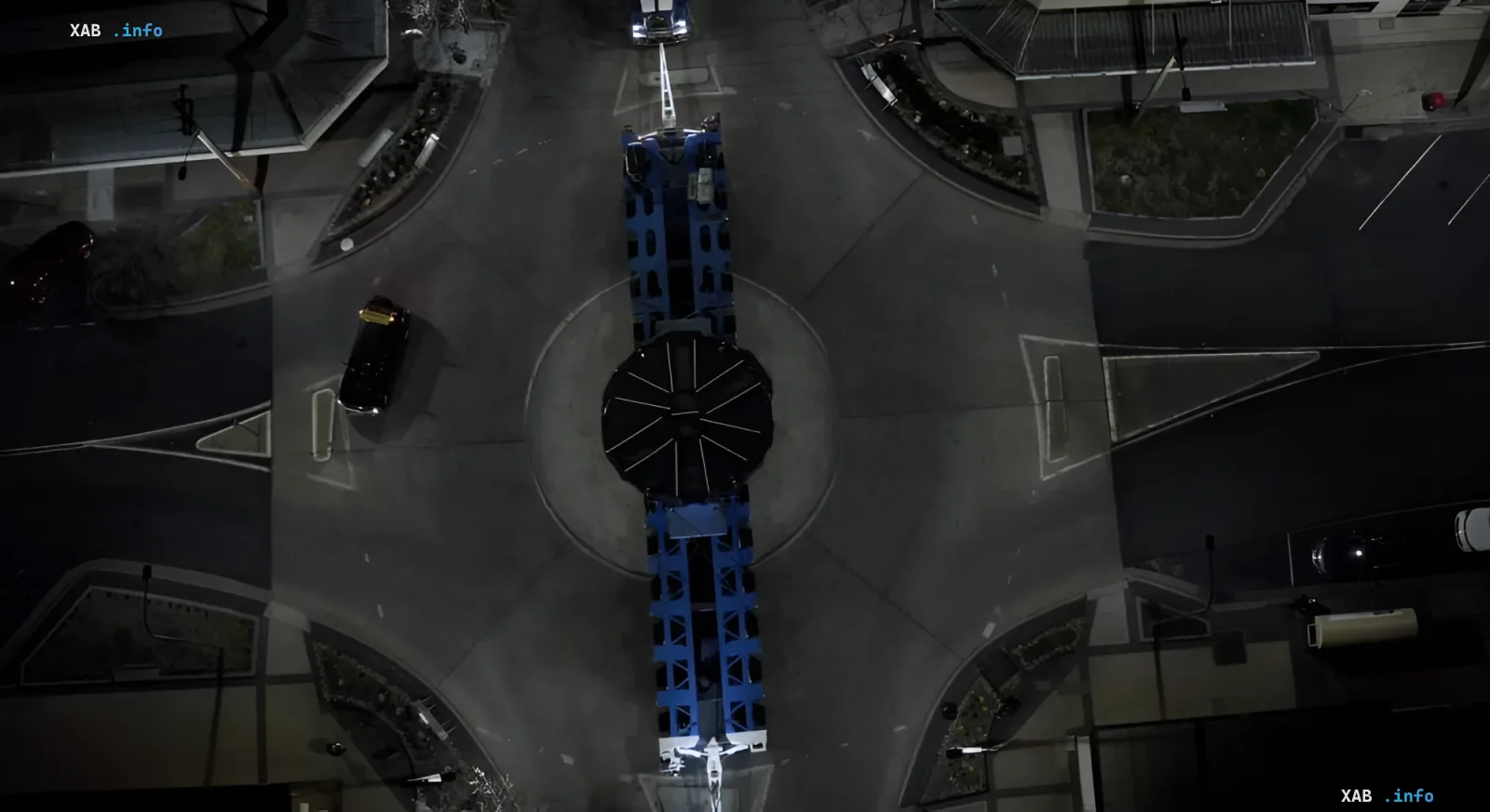
At the end of 2025, the streets of the Australian town of Cooma in New South Wales witnessed a spectacle hard to mistake for anything else. Moving through the urban landscape was not just a truck, but a 152-wheeled transport convoy resembling a mobile construction site. It was carrying one of the most critical components for the Snowy 2.0 pumped hydro storage project.
Transporting "Monica"
The cargo that caused a stir among locals was the central section of the cutterhead of a Tunnel Boring Machine (TBM) named "Monica." This element weighs over 136 tons, is approximately 7 meters wide, and is a critical part of the future giant. Without this component, the machine cannot begin boring tunnels in the Snowy Mountains.
The transport took place in early October 2025, on a Wednesday night. The convoy moved along Sharp Street before heading to the final leg of the journey on the Snowy Mountains Highway. The total length of this unique load was about 73 meters. Snowy Hydro emphasized that this move was not just a feat of oversized cargo transport, but a key step in delivering the machine to the Marika construction site, located north of Kiandra.
Infrastructure in Plain Sight
For the residents of Cooma, this event was a rare moment when massive infrastructure came to the surface. Usually, such objects are built behind fences or deep underground, but this time Snowy 2.0 was right in front of shop windows and amidst daily traffic.
"It made people stop on the sidewalks and watch," note the authors of the report. A Tunnel Boring Machine, often called a TBM, is essentially a mobile underground factory. Its cutterhead is the rotating front section that cuts through rock and soil, resembling a giant circular drill, while the rest of the machine supports the tunnel behind it.
Challenges of a Mega-Project
The Snowy 2.0 project has not been without close scrutiny and criticism. Australian media have reported on cost overruns and schedule delays. Currently, construction completion is not expected before December 2028. This highlights how complex mega-projects can be when geological features, supply chains, safety issues, and budget constraints collide.
Nevertheless, transporting the 152-wheeled unit through Cooma is a notable element of these massive efforts. Before boring the tunnel and releasing water through the mountain, someone had to safely deliver the 136-ton cutterhead via public roads. And this stage was successfully completed.


