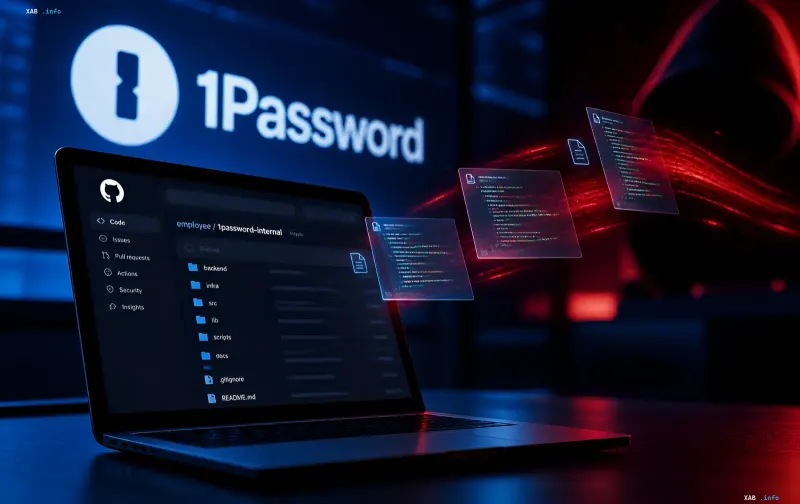
One of the world's largest password management services, 1Password, disclosed a cyber incident that the company began investigating on November 19, 2026. According to 1Password, attackers gained access to an employee's corporate GitHub account and then used it to inject malicious code into internal backend systems. This access allowed the hackers to view source code, copy it from private repositories, and breach the CI/CD system, which stores corporate secrets tied to the company's digital infrastructure.
What Exactly Fell into the Attackers' Hands
As a result of the attack, the hackers exfiltrated administrative data for a portion of users — specifically, the names and email addresses used to log in to accounts. The company emphasized that the source code accessed by the attackers does not contain user secrets. Tokens from invitation emails and account recovery messages, 1Password says, do not by themselves grant access to an account: completing the procedure requires signing in via SSO or a confirmation code sent to the registered email. However, the company did not disclose the exact number of affected users.
What, According to the Company, Was Not Affected
1Password stressed that the incident did not affect user vaults or their contents, vault protection keys, account recovery keys, or the 1Password applications and browser extensions themselves. The company reminded users that it does not store account passwords or user secret keys and has no access to them, so users are not required to change their account settings. This is the key point that 1Password repeats in all of its official statements.
Response Measures and Security Hardening
In response to the incident, the company disabled the compromised GitHub account, revoked the stolen token, removed the access rights created by the attackers, and changed or revoked all internal credentials that may have been at risk. Additionally, the codes in invitation and account recovery emails were increased from 6 digits to 10 alphanumeric characters. 1Password strengthened controls over GitHub, CI/CD, and endpoint devices, introduced new rules for detecting such attacks, and verified whether any user accounts had been compromised or whether the exposed tokens had been used to configure access. Independent cybersecurity experts were brought in to the investigation, it is noted.
Recommendations for Users
The service urged users to be vigilant about phishing emails, messages, and calls made in the name of 1Password, especially if they concern invitations or the restoration of access. The company reminds users that it never requests an account password or secret key outside the official application or website. Cybersecurity experts typically advise in such situations not to follow links in suspicious emails and to verify any access requests through official channels.