
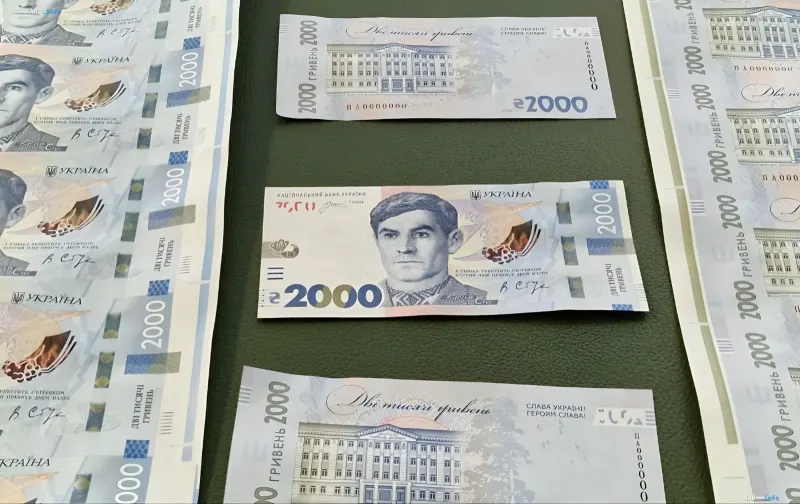
On September 4, 2026, the National Bank of Ukraine put into cash circulation a banknote of a new highest denomination — 2,000 hryvnia. The note features a portrait of Vasyl Stus — a Ukrainian poet, dissident, and Hero of Ukraine. Banks were able to receive the new notes from the regulator and issue them to customers through their cash desks on the very day of launch, while the full appearance of the banknote in ATMs and terminals will become possible after the equipment is reconfigured, for which the NBU provided two months from the presentation on July 10.
There Is No Direct Link Between the New Denomination and the Exchange Rate
In a comment to RBC-Ukraine, financial analyst Andriy Shevchishyn emphasized that the issuance of a 2,000-hryvnia banknote is not a signal of an impending weakening of the Ukrainian currency. According to him, there is no direct link between the appearance of a new denomination and possible changes in the official or cash exchange rate of the hryvnia, so the fact of putting the note into circulation in itself should not be perceived by the market as a "banknote of alarm."
How the Exchange Rate Is Linked to Inflation
At the same time, the analyst noted that the exchange rate and inflation are linked to a certain extent. "The exchange rate and inflation are connected, because a change in the rate leads to a rise in the prices of imported goods and thus affects inflation," Shevchishyn explained. Thus, the increase in the prices of imported goods due to exchange-rate fluctuations is passed on to domestic prices and creates inflationary pressure.
The Purchasing Power of the Hryvnia
To assess the state of the national currency, the expert said, it is important not only to look at its ratio to foreign currencies, but also at the dynamics of prices within the country. "That is, the purchasing power of the hryvnia itself, not of the dollar or any other currency," the financial analyst added, pointing to the need to look at the real purchasing power of money in everyday transactions.
Technical Readiness of the Banking Sector
The NBU presented the banknote on July 10, 2026, giving banks a two-month window to reconfigure, at no cost, the equipment responsible for sorting and dispensing cash. This means that by the time the note enters circulation, the infrastructure should already be ready, and customers will be able to receive the new notes both at cash desks and, gradually, at ATMs and terminals as the technical work is completed.