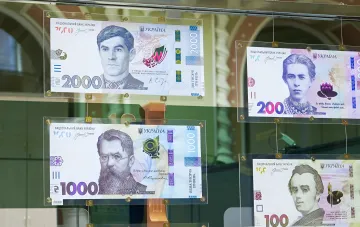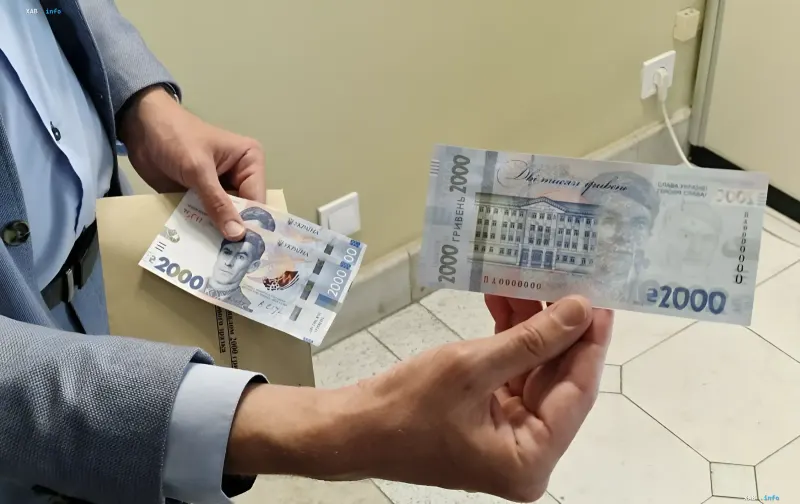
Significant changes are coming to Ukraine's currency circulation. Starting September 4, 2026, a banknote with a denomination of 2000 hryvnias will begin to circulate in the country. This will be a historic moment, marking the appearance of the largest banknote in the history of the modern hryvnia. The obverse of the new note will feature the Ukrainian poet and dissident Vasyl Stus.
However, the National Bank of Ukraine's (NBU) decision to introduce the new denomination has sparked a heated debate within the expert community. Former Ukrainian Finance Minister Ihor Umanets, in his column for RBK-Ukraine, criticized this move, calling it inconsistent with modern international trends.
European Trend: Abandoning Large Banknotes
According to Umanets, over the past two decades, developed countries have observed the opposite process: the sphere of use for large cash denominations is not expanding but shrinking. The expert emphasizes that the main goal of such measures is to combat the shadow economy, tax evasion, and money laundering.
A striking example is the decision by the European Central Bank (ECB) to stop printing the 500 euro banknote back in 2019. The regulator feared that the large denomination would become a convenient tool for illegal activities. Furthermore, the European Union is introducing a unified limit of 10,000 euros for cash transactions between business structures starting in 2027.
The situation in individual EU countries looks even stricter:
- In Greece, the maximum amount for cash transactions with legal entities is limited to 500 euros.
- In Spain and France, this limit is 1,000 euros.
- In Italy — 5,000 euros.
- In Belgium and Portugal — 3,000 euros.
Even in Germany, where there is no general limit on cash, strict buyer identification rules apply for payments over 10,000 euros, and the purchase of real estate for cash is completely prohibited.
Arguments 'For' and 'Against'
The NBU justifies the introduction of the 2000 hryvnia banknote by the need to adapt to accumulated inflation, rising prices, and average incomes. The regulator also points to the increased demand for large denominations in wartime conditions. It is expected that the new measure will reduce the number of banknotes in circulation, simplify large transactions, and lower logistical costs for the production and transport of cash.
Ihor Umanets questions the significance of these arguments. He acknowledges that wartime conditions do create a specific situation for Ukraine, but insists that this should not be presented as a global trend. Regarding savings on logistics, the former minister considers them insignificant compared to other regulator expenses. As an example, he cites the 82 billion hryvnias that, according to his data, the National Bank spent in 2025 on sterilizing excess liquidity.
Risks to the Hryvnia's Reputation
The main danger, according to Umanets, lies in macroeconomic and reputational risks. If the market perceives the appearance of a new banknote as a signal of further devaluation of the hryvnia, it could damage confidence in the national currency.
The expert also notes that if the NBU's argumentation is based on inflationary processes, it would have been more logical to immediately introduce a banknote with a denomination of 5,000 hryvnias. In the long term, after the war ends, Ukraine, according to Umanets, should consider the possibility of conducting a redenomination of the hryvnia as a systemic way to update the nominal series, rather than gradually introducing larger and larger banknotes.