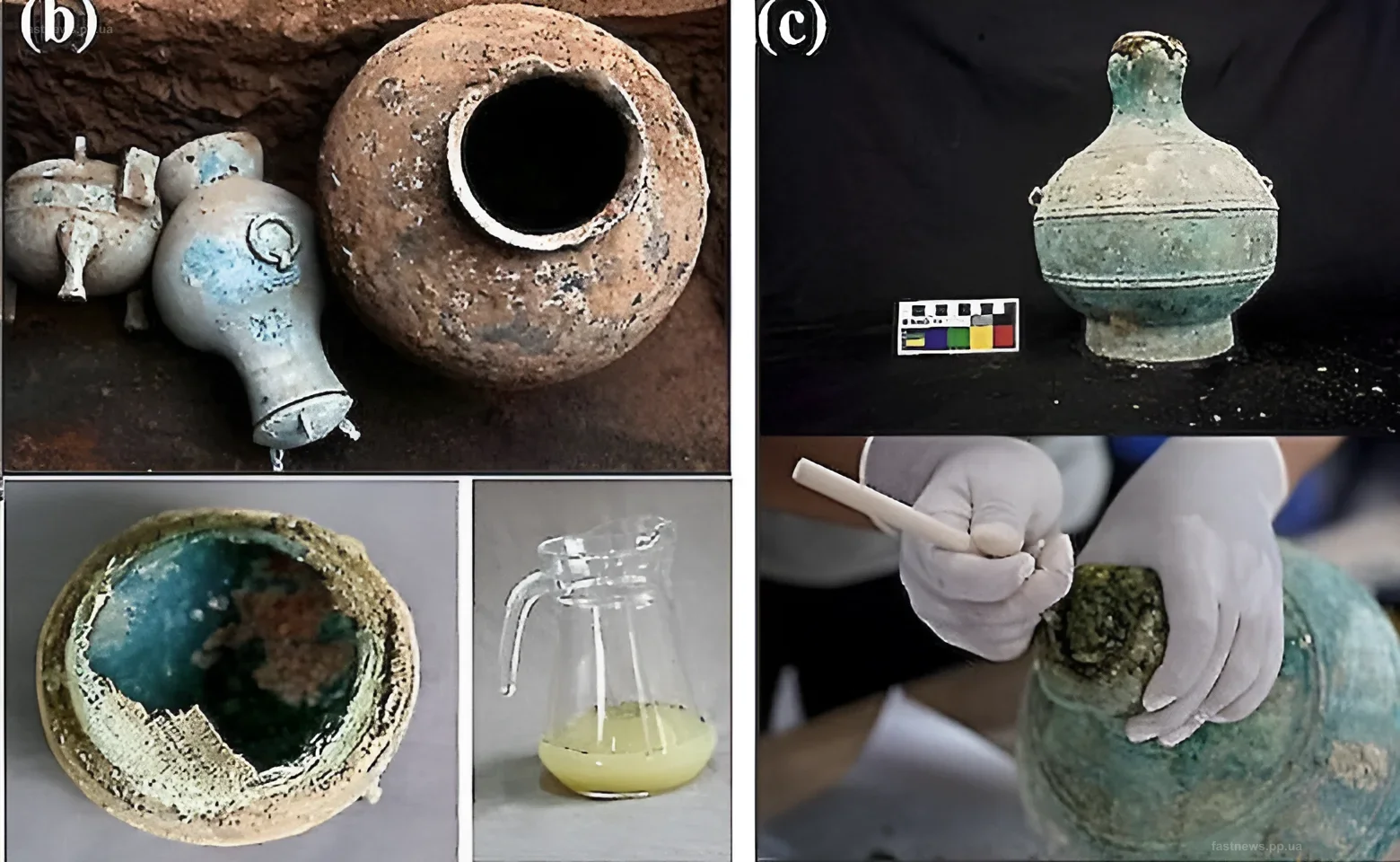
Imagine: you open a vessel that was sealed more than two thousand years ago — and inside, a liquid still flows. Not water, not mud, but real alcohol, preserved in nearly unchanged form. This is exactly the miracle discovered by archaeologists in China while exploring a tomb at the Shanjiaobao cemetery.
A bronze vessel from the Qin state period (221–206 BCE) contained about 3.74 liters of bluish-green liquid with sediment. Chemical analysis confirmed: it was ancient grain alcohol, rich in lactic and oxalic acids — markers of fermentation. Microscopy revealed millet as the main ingredient, traces of wheat or barley, and even living yeast cells.
What’s remarkable — the drink survived thanks to double sealing: fabric inside the neck and organic putty outside created an ideal environment for preservation. This is not just a find — it’s a window into ancient Chinese technology, where the art of brewing reached incredible heights.
Why is this important?
Such discoveries allow scientists to reconstruct not only recipes but also cultural practices: how alcohol was prepared, stored, and used in rituals, daily life, and even funeral rites. It also gives insight into how advanced preservation methods were in an era when refrigerators did not exist.
The story of this vessel is a reminder that even after millennia, human achievements can speak to us directly — through scent, taste, and chemical composition.


