
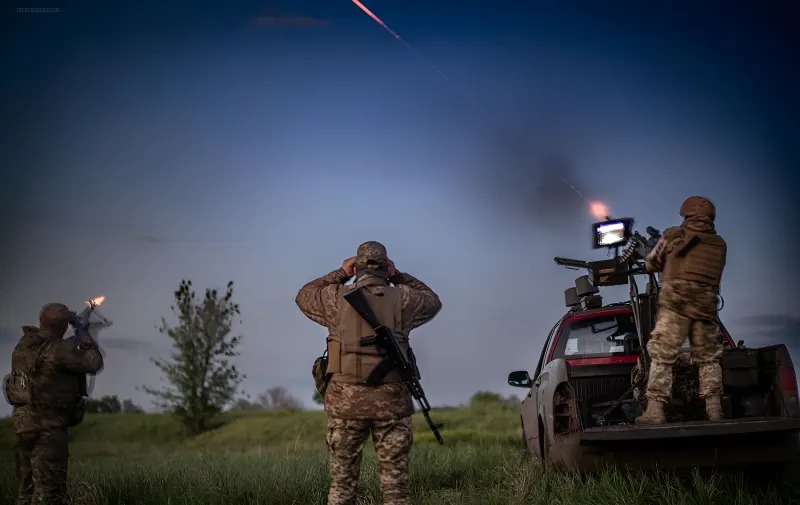
The night of May 25 became a true test for Ukraine's air defense system. Russia launched one of the largest attacks in recent times, deploying an unprecedented number of drones and covering the sky over Ukraine from seven different directions.
In total, the enemy launched 262 attack drones. The aggressor's arsenal included not only familiar "Shaheds" (including their jet modifications) but also newer models — "Gerberas," "Italmas," as well as "Parody" drones designed to overload air defense radars.
Geography of the Threat
Launches were carried out from a vast territory, indicating careful preparation and coordination. The main launch sites were Russian regions: Orel, Kursk, Bryansk, as well as occupied territories — Shatalovo, Millerovo, Primorsko-Akhtarsk, and Gvardeyskoye in Crimea. Such dispersion of the attack complicates interception, requiring air defense units to react instantly to threats from different azimuths.
Results of the Night Battle
By morning, at 08:00, Ukraine's sky defenders had dealt with the main wave of the attack. According to the Air Force of the Armed Forces of Ukraine, 246 enemy UAVs were shot down or neutralized. This means the interception efficiency exceeded 93%. Despite the scale of the attack, the enemy managed to achieve only 10 hits on nine locations. Additionally, debris from downed drones was recorded falling on seven more objects.
This attack once again confirmed that the war in the sky requires colossal resources. Earlier, the Air Force reported a critical shortage of missiles for Western systems like Patriot, NASAMS, and IRIS-T. In conditions where the enemy uses "drone warfare" and imitators to save their own resources, every air defense missile becomes invaluable. Nevertheless, Ukrainian defense continues to hold the sky, demonstrating high efficiency even against massive strikes.


