
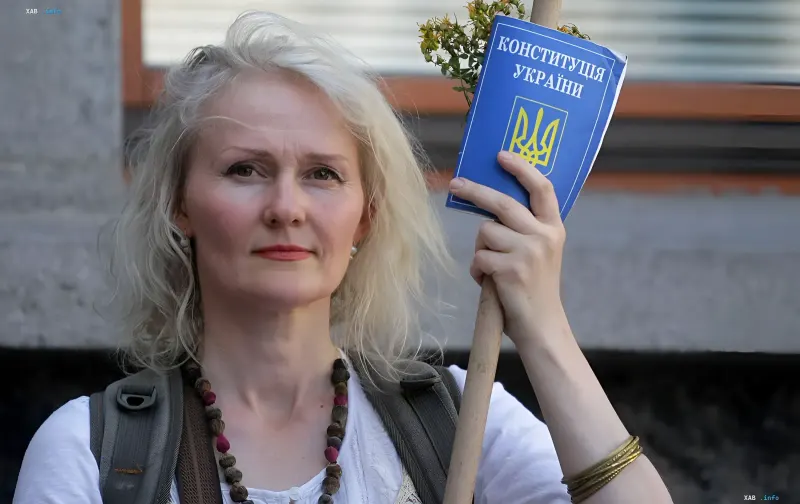
Thirty years ago, Ukraine completed a complex process of adopting its Constitution. Today, the document is undergoing perhaps its most severe test of strength — a prolonged war. In an article by RBC-Ukraine, experts discuss how the Fundamental Law is coping with the challenges of wartime, what it says about Crimea, and whether amendments are overdue.
Five Years of Struggle for a Modern Document
Bogdan Bondarenko, an expert in constitutional law, notes that despite its considerable age, the Ukrainian Constitution remains one of the most modern in the world. Unlike many post-Soviet countries, where fundamental laws were drafted in one or two years, Ukrainian lawmakers worked on the document for five years.
"It was written with great struggle," the specialist emphasized. A crucial factor was the existence of a solid legal basis: by the time work on the Constitution began, the European Convention on Human Rights and international covenants were already in force in the country.
Why Amendments Are Prohibited During Wartime
According to current legislation, amending the Constitution is prohibited under martial law. Experts consider this the right decision. One of the authors of the Fundamental Law, Roman Bessmertny, explains that during wartime, powers become concentrated, and the political system ceases to function in its usual mode in many respects.
"This means there is a potential threat of usurpation of power and dictatorship. Therefore, amendments are not allowed during the war," Bessmertny stated. According to him, the Constitution clearly outlines the framework of the martial law regime, however, some legislative changes adopted after 2014 turned out to be erroneous.
Military-Civil Administrations vs. Military Commandancy
Roman Bessmertny called the introduction of military-civil administrations (MCA) a mistaken step. Initially, they were created for tactical reasons to resolve budgetary issues in territories where local self-government bodies were not functioning. The expert believes there was no need for this.
According to the author of the Constitution, the introduction of military commandancy would have been more appropriate. "Under martial law, in territories where fighting is taking place, subordination to military commandancy should be introduced. Everything should be in the hands of the military," he noted. On other territories, according to Bessmertny, ordinary legislation should apply under the legal regime of martial law.
The Impossibility of Foreseeing an Eternal War
Bogdan Bondarenko agrees that the current Constitution does not fully meet all the challenges of wartime. He emphasizes that no country writes a fundamental law expecting to live in a state of constant war. It is a social contract defining the rules of life for society as a whole.
As an example, the expert cited Israel, which does not have a single codified constitution but rather about 11 basic laws. Despite the country living in a state of war for 70 years, Israelis still cannot agree on adopting a single document. "Therefore, it is impossible to write a Constitution that would ideally meet the requirements of wartime," Bondarenko concluded.
Vulnerable Points of the Fundamental Law
The authors of the 1996 Constitution provided for extraordinary legal regimes, such as martial law and a state of emergency, but did not anticipate a prolonged war. This becomes evident when looking at the term of office of the president. Under martial law, elections cannot be held, but the Constitution does not give a clear answer on what to do if the war lasts 5 or 20 years.
Today, Ukrainians have to make decisions themselves, relying on common sense, as the Fundamental Law does not always provide answers. Another vulnerable point, according to experts, is the situation if the state loses its president during the war. Although the Constitution provides for the temporary performance of duties, in the conditions of a protracted conflict, this issue requires special attention.


