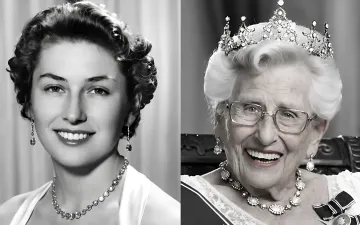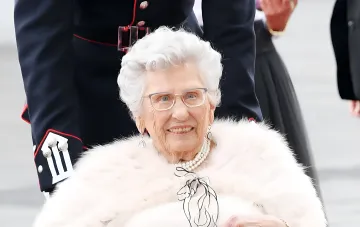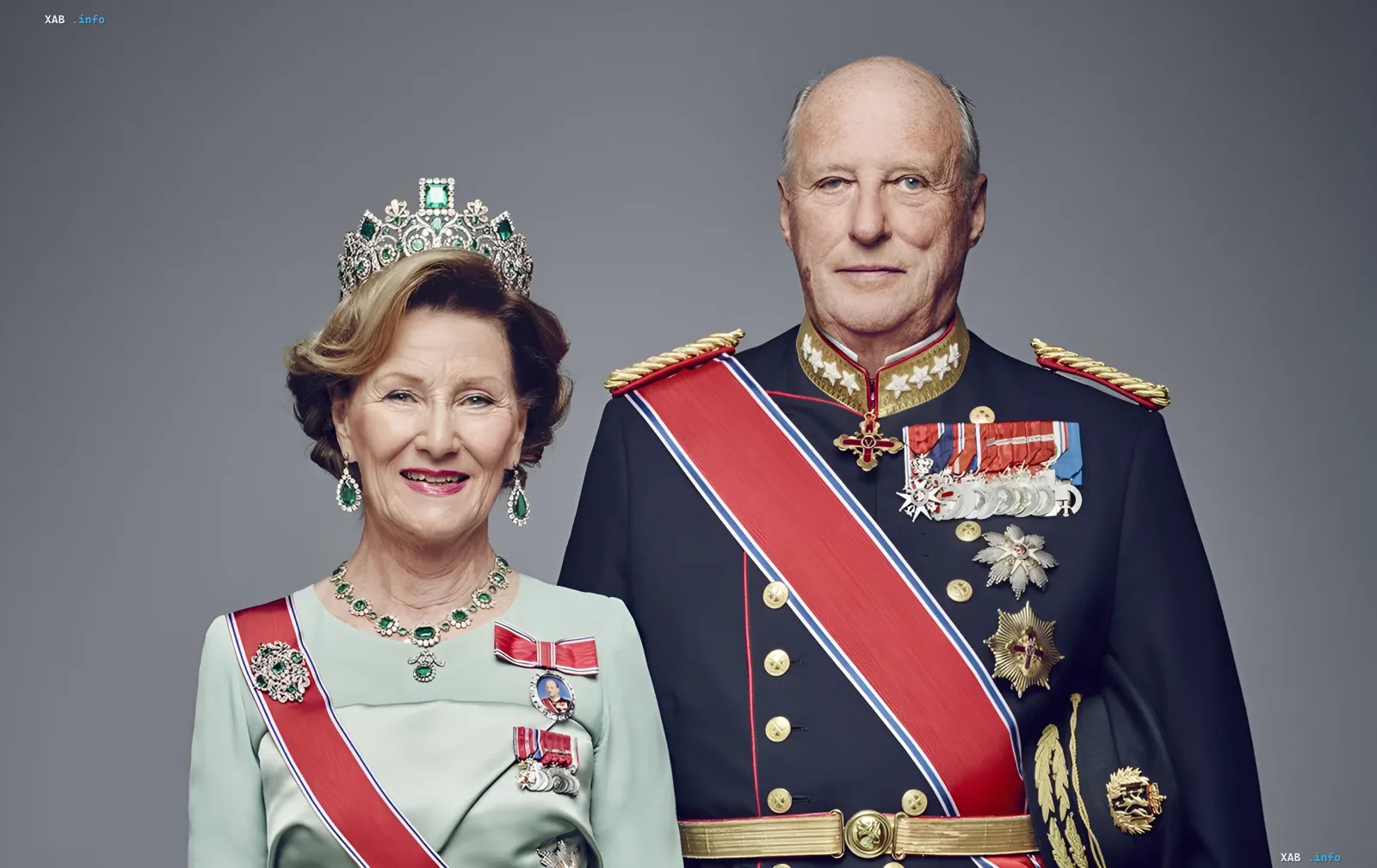
On 29 August 2026, King Harald V and Queen Sonja of Norway are celebrating 58 years of marriage — one of the longest and most enduring unions in the history of modern European monarchies. Behind this figure lies a story that, in the late 1950s, seemed almost impossible to the royal court: the heir to the throne had fallen in love with a woman who belonged to no aristocratic dynasty. Their path from first meeting to the altar took nine years, and the marriage itself became a turning point for the Norwegian monarchy.
The Meeting That Changed Everything
Harald and Sonja Haraldsen first met in 1959, when both were 22 years old. According to biographical accounts, the introduction took place at a party, and feelings arose between the young couple almost immediately. For the future king — the only son and heir of King Olav V — this marked the beginning of a relationship that would remain under the strict control of the court for many years. Sonja grew up in an ordinary family in Oslo — her parents were Carl August and Dagny Haraldsen — and it was precisely this background that made her an 'unsuitable' match for a prince under the unwritten rules of the time.
Nine Years in the Shadows: Why the Court Stayed Silent
In Norway of that era, the heir to the throne was expected to marry a member of a European royal family or the aristocracy. Sonja did not belong to that circle, and the couple's romance remained a source of tension for the royal household for many years. The relationship had to be kept away from public view, and the lovers several times faced the prospect of a breakup. The Norwegian royal court states directly: it was precisely the need to approve a marriage to a woman who belonged neither to the royal family nor to the nobility that explains why a full nine years passed from the first meeting to the wedding.
The Crown Prince's Ultimatum
The turning point came in the mid-1960s, when the crown prince put the matter bluntly: if he could not marry Sonja, he would not marry at all. Since Harald was the only male heir, such a decision threatened a serious crisis for the continuation of the dynasty. King Olav V was forced to reconsider his position, yet even in granting permission for his son's personal marriage he consulted the prime minister, the government, the leadership of parliament, and the leaders of the political parties. On 19 March 1968 the king officially gave his consent to the marriage — and flags were raised on the state buildings of Norway.
A Wedding the Country Had Been Waiting For
On 29 August 1968, Harald and Sonja were married in Nidaros Cathedral in Oslo. Around 850 guests were invited to the ceremony, the church was decorated with more than 2,500 flowers, and nearly three thousand soldiers lined the route of the wedding procession. Since Sonja's father, Carl August Haraldsen, had already died in 1959, it was King Olav V himself who escorted her to the altar — the man who, for years, had been unwilling to grant permission for this union. After the ceremony, crowds greeted the newlyweds outside the cathedral, and two 21-gun salutes sounded from Akershus Fortress.
From Crown Princess to Queen
Fears that the heir's marriage to a 'commoner' would harm the monarchy proved unfounded: Sonja quickly won the recognition of Norwegian society, becoming crown princess and first lady of the country. The couple had two children — Princess Märtha Louise and Prince Haakon. After the death of Olav V in January 1991, Harald ascended the throne, and Sonja became queen — the first Norwegian queen in 53 years.
58 Years Together
By their 58th wedding anniversary, the royal couple once again returned to the very Nidaros Cathedral in Oslo where they had been married, and, as tradition dictates, they did so in the same Lincoln Continental that had carried the newlyweds from the cathedral to the palace in 1968. A story that in 1959 had seemed almost impossible to the court ultimately became the symbol of one of Europe's strongest couples: nine years of struggle for the right to be together and nearly 58 years of married life.