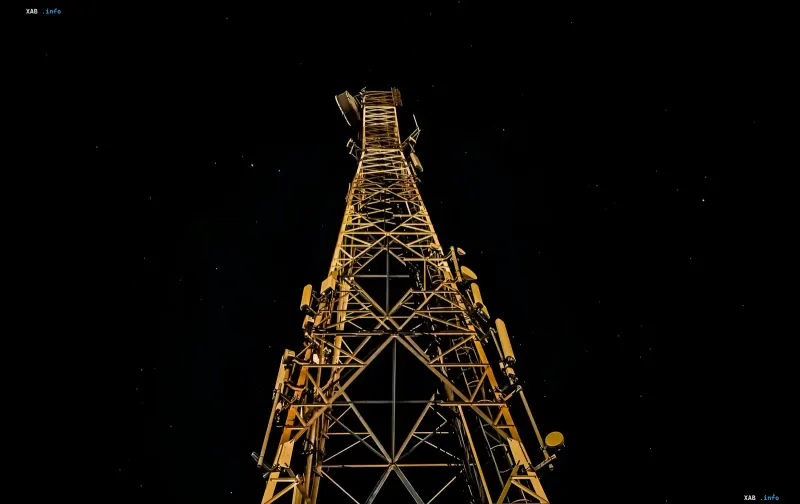
Sixth-generation (6G) networks are preparing for a radical transformation. Developers of the new communication standard plan to turn it not just into a tool for data transmission, but into a high-precision radar capable of detecting people and objects even through walls. This solution takes wireless communication technology to a qualitatively new level.
From Wi-Fi to 6G: the evolution of radar
The idea of using wireless signals for environmental recognition is not new. Experiments with analyzing radio waves to track movements have been conducted for a long time based on Wi-Fi networks. However, 6G networks promise a radical leap in capabilities thanks to operation in high-frequency ranges and optimization of processing algorithms.
The system's principle of operation is based on the analysis of reflected radio waves. Thanks to high accuracy and range, the network detects the slightest changes in the environment. The scalability of the standard allows for simultaneous operation with millions of devices and coverage of vast territories.
Especially impressive is the system's ability to control micro-movements. The amplitude of the radio signal reacts even to the vibrations of the chest during breathing and the pulsation of blood vessels. As a result, the network is capable of determining the exact location of a person, tracking their movement, and measuring vital signs without the use of smartwatches, fitness trackers, or video cameras.
Practical application: from medicine to rescue operations
The ability to recognize objects and a person's condition via radio signal opens up broad prospects for various industries. Experts highlight key areas of implementation:
- Medicine and care: hospitals will be able to continuously monitor the condition of critically ill patients, dispensing with numerous wires and attached sensors.
- Rescue operations: during the liquidation of consequences of collapses or natural disasters, emergency services will have the opportunity to quickly find living people behind building walls or under rubble.
- "Smart home" systems: sensors will detect falls of elderly people and automatically call for help, while maintaining full privacy, as the use of cameras will not be required.
- Industry and automation: the technology will help improve the navigation of autonomous robots and increase safety at production sites.
Engineering challenges and ethical risks
Despite the obvious prospects, the deployment of the technology requires solving a number of complex tasks. Developers continue to work on increasing the accuracy of the system under conditions of complex interference to ensure stable operation in real-world scenarios.
Special attention is paid to the aspect of personal data protection. Since the network will be able to imperceptibly record movements and physiological indicators, regulators must develop strict standards for confidentiality and security in advance. The commercial launch of 6G networks and the practical implementation of sensor monitoring systems are expected no earlier than the end of the 2030s.