
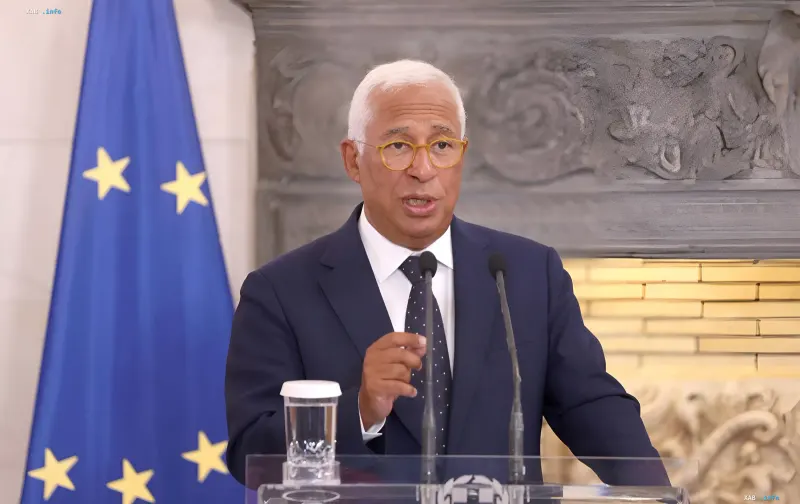
The European Union is ready to reconsider its enlargement approaches to accelerate the integration of six candidate countries from the Western Balkans. This was stated by European Council President António Costa during a press conference in Belgrade. His words, reported by RBK-Ukraine citing APnews, indicate Brussels' readiness for changes in the accession methodology.
Summit in Tivat: Seeking New Solutions
Key decisions are expected to be made at the upcoming summit in the Montenegrin city of Tivat. There, EU leaders and representatives of candidate countries plan to discuss revising the enlargement methodology. The main goal is to avoid partner disappointment due to procedural delays and to find mechanisms for faster results.
António Costa emphasized that EU enlargement is not a utopia but a realistic prospect for the coming years. However, achieving this requires working more intensively and quickly.
Six Countries and Geopolitical Challenges
The list of membership applicants includes Albania, Bosnia and Herzegovina, Kosovo, North Macedonia, Serbia, and Montenegro. Despite years of effort, the process of assessing compliance with criteria remains unfinished. Recently, Brussels has intensified efforts to stimulate reforms in the region, fearing the growing influence of Russia and China in the Balkans.
The path to membership requires adapting national legislation to European standards in 35 areas — from justice to agriculture. The requirement for unanimous consent from all 27 member states to open or close each negotiation chapter remains critically important.
Process Leaders and Specific Conditions
Currently, Montenegro and Albania are the leaders in the integration process. For other participants, there are specific conditions: in particular, for Serbia and Kosovo, the key factor for further European integration is the normalization of bilateral relations.
In the context of EU enlargement, the issue of Ukraine is also actively discussed. German Chancellor Friedrich Merz has called for opening the first negotiation cluster for Kyiv's accession as soon as possible. According to European officials' assessments, Ukraine is capable of completing the majority of negotiation stages within the next 12–18 months.


