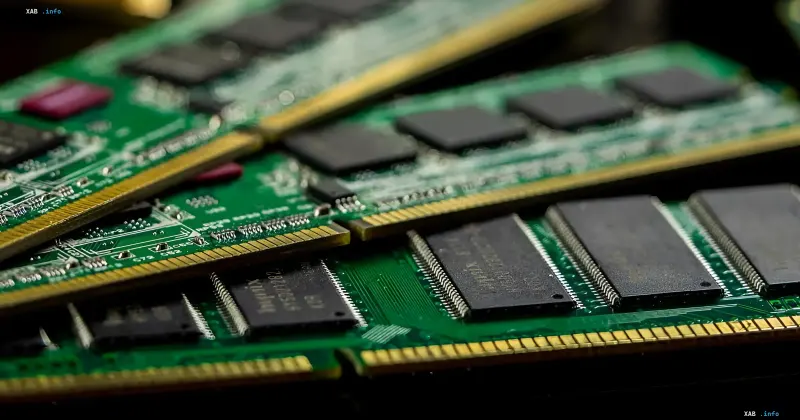
The semiconductor market is in a state of uncertainty, and many analysts have already spoken of an overheating artificial intelligence sector. However, the top management of leading memory manufacturers holds a diametrically opposite view. The head of the Taiwanese company ADATA, Chen Li-bai, stated that the industry fundamentally underestimates the real demand for DRAM and NAND memory chips.
Why the AI Bubble is a Premature Diagnosis
The trigger for the heated debate was the recent drop in TSMC stocks following the publication of its earnings report. Some experts interpreted this signal as a sign that the artificial intelligence boom is coming to an end and the market is saturated. Chen Li-bai categorically rejects such an interpretation of events.
According to the head of ADATA, talk of a "bubble" in the AI sphere is unfounded at least until 2030, and possibly until 2040–2050. The company is recording steady revenue growth, which confirms the hypothesis of the long-term nature of the current technological cycle.
The scale of demand for computing resources today has no historical precedent. The need is growing not only for the chips themselves but also for related infrastructure: from power supply systems to data storage centers.
The Situation with Excess Capacity
Chen Li-bai paid special attention to the situation with excess computing power among tech giants such as Meta and xAI. These companies have started renting out their servers, which at first glance might indicate overproduction.
However, the head of ADATA believes this is just a temporary phenomenon. In the future, AI applications will cover all segments of the economy: from B2B and B2G to B2C and B2B2C. The free resources that currently seem like surpluses will be quickly in demand by new applications, and the current imbalance will dissolve.
Resource Shortages and Giant Caution
On the horizon of the next decade, experts name electricity and memory as the two most scarce resources in the world. In this regard, major market players — Samsung, SK Hynix, and Micron — are not rushing with aggressive expansion.
Manufacturers fully understand the risks and adhere to a cautious strategy. Most projects for building new factories and expanding production lines are scheduled for the period from 2028 to 2035. This means that a significant change in the balance of power in the memory market will not occur in the coming years.
Price Forecast: Price Hikes are Inevitable
For consumers and businesses, the short-term outlook looks bleak. ADATA previously warned of a significant increase in memory component prices:
- The cost of DRAM chips could increase by approximately 30% as early as the third quarter of 2026.
- NAND memory prices could jump by 40% during the same period.
Other analysts give even more pessimistic forecasts, speaking of a possible price increase of more than 50%. Relief in the memory market should not be expected until at least 2028, and experts practically no longer consider a return to the prices of previous years as a realistic scenario.