Almost two millennia after volcanic gases turned papyrus into brittle charcoal, an international team of researchers has found a way to speed up the decipherment of the only surviving library of the ancient world. A method published in the professional scientific journal PLOS (PLoS ONE) makes it possible to determine which of the charred Herculaneum scrolls were written in ink containing lead. It is precisely these scrolls that are best 'seen' by X-ray methods and artificial intelligence algorithms, turning the search for readable text from a months-long trial and error into a targeted effort.
A library locked in ash
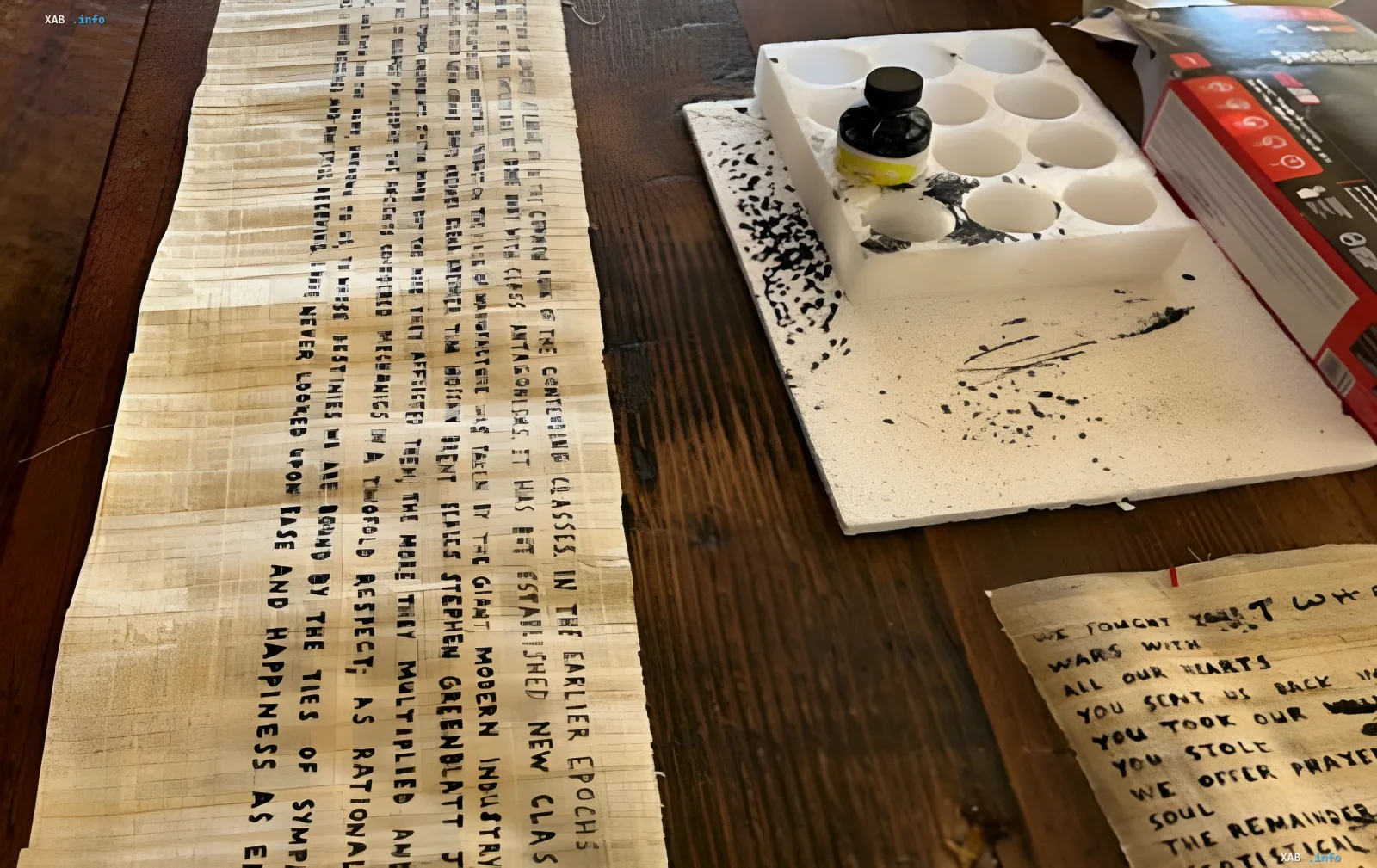
The catastrophic eruption of Mount Vesuvius in 79 AD destroyed not only Pompeii but also the city of Herculaneum. In a luxurious villa that, according to one theory, belonged to the father-in-law of Julius Caesar, and according to another to the philosopher Philodemus, archaeologists discovered a library of more than 600 charred papyrus scrolls. Hot volcanic gases instantly carbonized the papyrus, turning it into fragile carbon: physically unrolling such scrolls is impossible, as they crumble to ash at the slightest touch. This is why the Vesuvius Challenge project was created to work on the text, using micro-computed tomography and AI for so-called 'virtual unrolling' of the scrolls.
The contrast problem: why X-rays 'cannot see' the text
The main obstacle to decipherment has been the nature of ancient Roman ink. Most of it was made from soot and water, that is, from carbon. Since both the papyrus and the ink consist of the same element, X-ray radiation barely distinguishes between them: the contrast is extremely low, and the silhouettes of the letters sink into the 'darkness' of the image. As a result, scientists had to spend months on complex equipment trying to find carbon words on the tomograms.
Lead as the key: Douglas Zymler's hypothesis
Inventor Douglas Zymler, together with a team of chemists and physicists, hypothesized that some of the scrolls may have been written in ink containing metals — in particular, lead. It is the presence of lead that allows X-rays to detect letters almost instantaneously. To test the hypothesis, a large-scale experiment was conducted: the charred scrolls were scanned on 3D X-ray machines at the U.S. National Institute of Standards and Technology. Letters written in lead ink stood out brightly on the images, and adaptive software virtually unrolled the scrolls and read the inscriptions.
A portable scanner instead of months of work
The key practical value of the new approach lies in the speed and simplicity of selection. Now, to check a scroll, it is enough to use a compact portable X-ray fluorescence scanner that instantly determines whether a given scroll contains lead. Papyri with lead ink become top-priority candidates for full tomographic scanning. This will significantly accelerate the work of the Vesuvius Challenge project and, according to researchers' estimates, will allow dozens of previously inaccessible philosophical, historical, and literary works of antiquity to be read in the near future.
Contradictory data
Upon reviewing the publications, differences in emphasis were found. A number of outlets (including the BBC and Ukrainian media) present the news as the first full decipherment of text or at least a title from a charred scroll, whereas the main focus of the research description and the PLOS publication is on the new method for selecting scrolls based on the presence of lead, rather than on a specific piece of read text. In addition, the sources remain uncertain about the owner of the villa: either the father-in-law of Julius Caesar or the philosopher Philodemus is named. Both versions are cited without a final choice, and in the article they are reflected as such, without substituting facts.