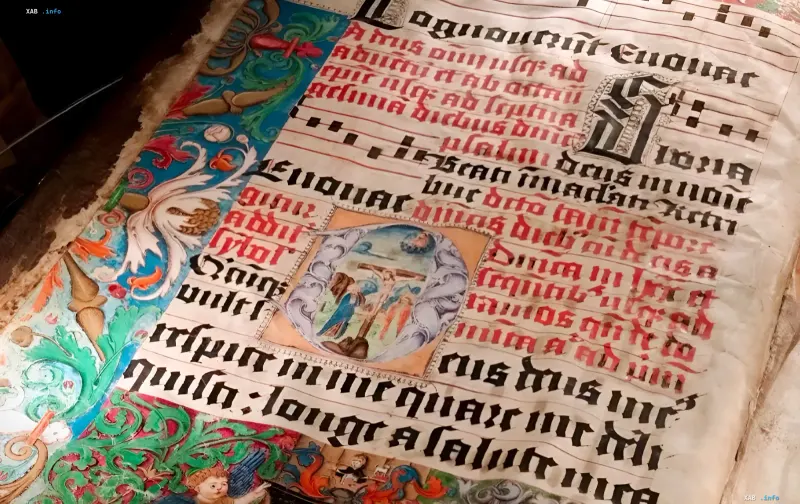
Artificial intelligence has ceased to be merely a tool for working with modern texts: today, neural networks "read" medieval manuscripts and archival documents that previously required years of manual labor from specialists. Technologies for recognizing old handwriting and automatic transcription enable researchers to process vast arrays of historical sources in the shortest possible time, turning archives that were closed to rapid study into accessible digital repositories. This qualitatively changes the methodology of historical and philological science, shifting the focus from page-by-page manual analysis to the systematic analysis of entire collections.
The Architecture of Accuracy: The Vienna Summit
A key event in this direction was the summit in Vienna, organized by the Austrian Academy of Sciences (ÖAW) and the University of Vienna with the support of Princeton University. At the venue, specialists discussed not so much individual experiments as the technical architecture of future AI systems for working with historical documents. The main stated goal is to guarantee the absolute accuracy and reliability of automatic transcriptions, so that the results of machine reading can be used in academic publications without the risk of systematic errors.
Why Medieval Archives Are a "Black Box"
The main problem with medieval archives lies in their physical and linguistic complexity. Non-standard word graphics, the temporal degradation of materials, the individual graphic features of each scribe, and lost dialects made most documents practically inaccessible to rapid study. Even an experienced paleographer often could not unambiguously decipher half-preserved letters or restore the meaning of obsolete abbreviations, which turned work on a single manuscript into a years-long process.
The Three Pillars of Neural Recognition
Modern AI models solve this problem with a comprehensive algorithmic approach. First, neural handwriting recognition (HTR) is applied: computer vision is trained on thousands of samples from a specific era, allowing the algorithm to distinguish and restore even damaged letters. Second, automatic transcription and normalization work — the AI does not merely convert graphics into digital text, but also recognizes obsolete abbreviations, adapting them to modern linguistic structures. Third, neural networks process multispectral scans, analyzing images in different light ranges and detecting faded or deliberately washed-out inks, including in palimpsests.
Scale as a Breakthrough: From Manuscript to Big Data
The greatest breakthrough lies in changing the scale of research. Instead of analyzing each manuscript individually, scientists apply Big Data methods to entire digital repositories: special algorithms instantly scan millions of pages, finding cross-references, identical toponyms, mentions of little-known figures, and hidden linguistic patterns. This makes it possible to build digital maps of connections between documents from different corners of the world and to reconstruct complete historical events in a matter of seconds, which was impossible in the era of exclusively manual labor.