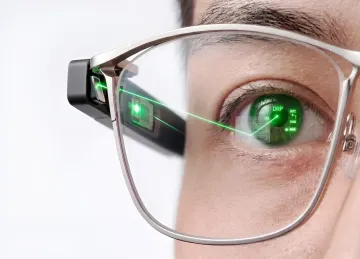
The wearable electronics market is at a turning point: AI-powered glasses have ceased to be a niche gadget and have become one of the most talked-about consumer products. According to Meta's forecast, sales of such devices in 2025 were expected to reach approximately 7 million pairs, triple the figure for 2023 and 2024, when around 2 million pairs were sold annually. Competition in the segment is intensifying: Google and Snap are also preparing to launch their own models of AI smart glasses, and the industry as a whole is banking on further demand growth.
Technological Boom and Competition Among the Giants
The dynamics described by Meta reflect a paradigm shift: AI glasses are seen as the next "personal platform" after the smartphone — a device that is constantly with the user and capable of processing voice commands, context, and visual data. The entry of several technology leaders into this market at once — Meta, Google, Snap — means that the bet is not on a single product but on an entire ecosystem of services tied to a wearable display and microphones. It is precisely this concentration of effort by major players that is shaping expectations of multiple growth in sales in the coming years.
"Pervert Glasses": The Privacy Scandal
However, in Europe, and especially in the UK, the topic of smart glasses took a sharply negative turn last summer. British media widely covered so-called "pervert glasses": several women claimed that they had been secretly filmed on video or recorded on a dictaphone using such devices. Additional tension was added by reports that Meta is developing facial recognition technology for integration into its glasses. The combination of these factors has formed sustained public dissatisfaction and a sense that a gadget intended to help the user could turn into a tool for covert surveillance of those around them.
Brussels' Response: A Data Protection Report
Against the backdrop of growing public reaction, the European Commission tasked the independent European Data Protection Council with preparing a special report, to be presented in the autumn. The document is intended to systematically assess the public's reaction to AI glasses and the potential risks to privacy. As envisioned by regulators, this report will become the basis for subsequent discussion of the topic in the European Parliament, meaning this is not a one-off reaction but the formation of a potential EU regulatory position on wearable AI devices.
Contradictory Data
There are a number of discrepancies in open sources that are important to take into account. First, the figure of 7 million pairs is Meta's forecast for 2025, whereas there are no confirmed factual data on actual sales for this period in the provided materials; the gap between expected and actually realized volume remains open. Second, the text doctrinally states that the EC report "will be presented in the autumn," but the current date is September 2026, meaning the expected deadline for the document has in fact arrived, while its final content and conclusions are not disclosed in the sources. Third, reports of "secret filming" and of Meta developing facial recognition are based on media publications and statements by individuals, not on independent investigations, so both versions — the accusations and the company's technological ambitions — require additional verification.
What This Means for the Market and Users
The situation is developing into a classic conflict between technological optimism and privacy protection. On the one hand, the industry is banking on multiple growth and the entry of new players; on the other, European regulators and the public are forming a demand for transparency and restrictions on functions related to filming and facial recognition. The final report of the European Data Protection Council and the subsequent discussion in the European Parliament will likely determine whether the AI smart glasses segment can grow in Europe under the same conditions as in other regions, or whether it will face additional regulatory barriers.