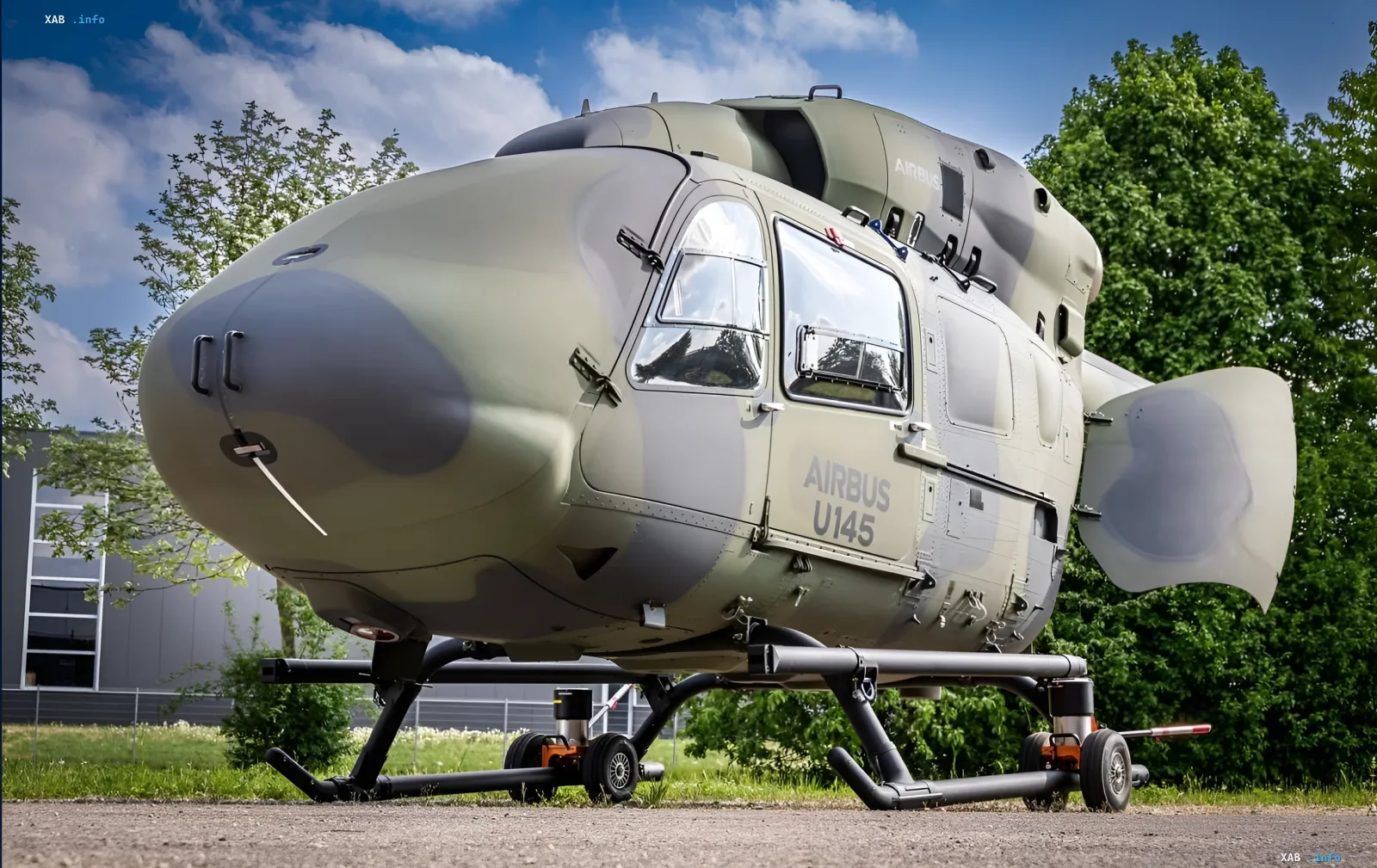
Against the backdrop of the rapid digitization of military and civil aviation, European giant Airbus Helicopters has announced the creation of the U145 unmanned helicopter. The debut of the new product will take place at the ILA Berlin international aviation and space exhibition, where the company will present viewers with a full-scale mock-up of the future aircraft.
Evolution of the classic airframe
The new U145 model is not an invention from scratch, but represents a logical development of a successful lineup. According to Matthieu Lavoie, CEO of Airbus Helicopters, the company is offering customers an autonomous version of its flagship H145. This solution allows combining the time-tested reliability of the airframe, high power, and payload of the classic helicopter with modern drone capabilities.
The U145 will be the second helicopter in Airbus's arsenal to receive an unmanned modification. The first such project was the VSR700, created based on the light Cabri G2 helicopter. However, the U145 is intended to meet the need in the heavy unmanned segment.
Technical features and autonomy
The key difference between the U145 and the manned H145 is the complete absence of a cockpit. This allowed engineers to redesign the fuselage structure: instead of a cockpit, integrated nose doors and a special cargo floor are installed. Such a layout significantly expands the capabilities for transporting cargo and equipment.
To ensure full flight autonomy, the helicopter will be equipped with a specialized set of sensors and artificial intelligence systems. The modular design of the aircraft allows it to be adapted for a wide range of tasks, including:
- Firefighting in hard-to-reach areas;
- Reconnaissance operations;
- Monitoring of unmanned ships and marine objects.
Development and implementation schedule
The project development is at the stage of active testing. The first flight with a test pilot on board, necessary for refining algorithms and safety, is scheduled for the end of 2026. It is expected that the serial introduction of the U145 unmanned vehicle into operation will take place in the early next decade.


