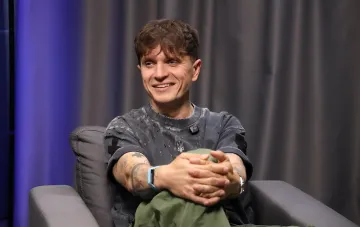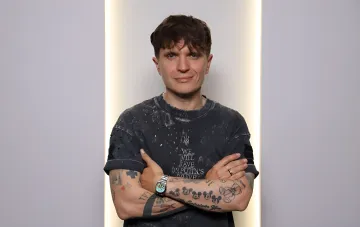
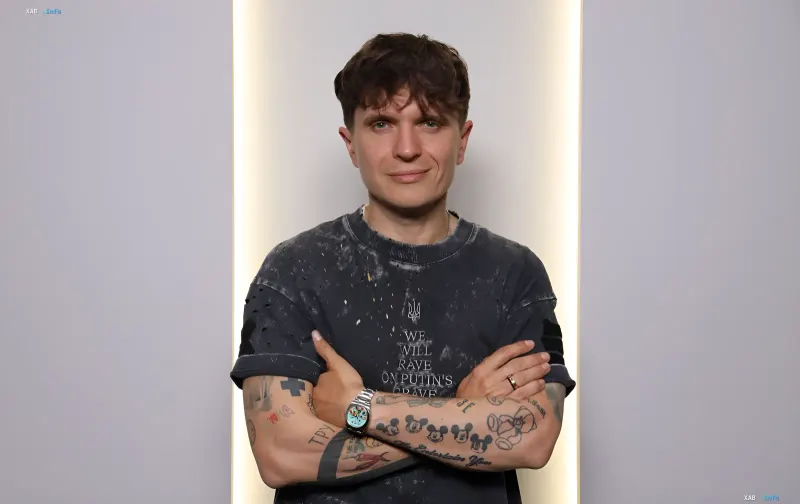
Amidst the harsh polarization of the Ukrainian show business and society, host Anatoliy Anatolich (Anatoliy Holub) has taken a stance that has caused a wide resonance. In a fresh interview for Wave RBC.UA, he not only revealed details of his personal relationships with colleagues but also clearly defined his attitude towards Svetlana Loboda, who continues to live and create in Russia. For Anatolich, whose career was built on empathy and the ability to listen, this step became a continuation of his philosophy of "not interfering in personal matters" and maintaining human connections despite political pressure.
Godparenthood and War: Why Anatolich Doesn't Condemn Loboda
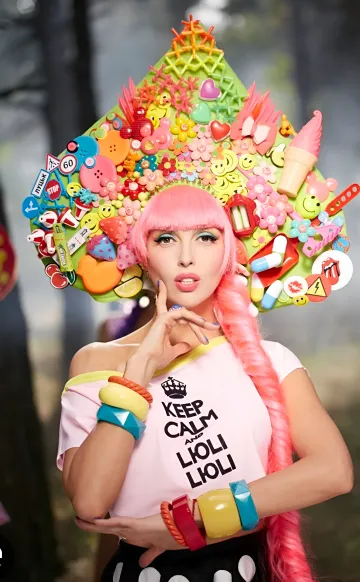
Questions about Svetlana Loboda, who left Ukraine in 2022 and continued her career in the Russian Federation, became a stumbling block for many of the host's colleagues. However, Anatolich, who calls the singer his goddaughter, took the side of understanding. In the interview, he stated that he has "no complaints" against the artist. The host explained his position by saying that he considers language a tool, not a political weapon, and does not see this as betrayal. He emphasized that Loboda is a person with whom he has personal, warm relationships, and he is not ready to break them off due to geopolitical circumstances. This position, confirmed by Unian and RBC sources, demonstrates his attempt to maintain moral bearings in conditions where society demands an unequivocal choice.
"I Did Not Vote for Zelenskyy": Personal vs. Public
Anatolich's frankness is not limited only to relationships with artists. In the conversation, he touched upon the topic of his political views, which for a long time remained a subject of speculation. The host admitted that he personally knows Olena Zelenska even before her husband's presidency, but at the same time honestly stated: "I did not vote for Volodymyr Zelenskyy." This admission became possible thanks to the atmosphere of trust in the interview, where Anatolich noted that on the radio "Maximum" he feels complete freedom, unlike his work on the "Prямий" (Direct) TV channel, where he had to face pressure from owners demanding support for Petro Poroshenko.
From "Sniadok" to Radio: The Search for Absolute Freedom
Anatolich's career path is a story of conscious refusals of popularity peaks for the sake of inner freedom. He left the "Sniadok z 1+1" project when he was at the peak, explaining this by the desire not to get stuck in routine. "In order for something new to appear, you need to free up space from the old," he summarized. Currently, his work on the radio "Maximum" with Denys Zhupnyk and Yana Hlushchenko is the embodiment of his dream of independence. He refused offers to return to television, as he values the opportunity to say what he thinks without looking back at the political views of sponsors or media holding owners.
Contradictory Data
Although Anatolich's position towards Loboda seems unequivocal, there are nuances in the media field. On the one hand, he openly stands up for the singer, calling her his goddaughter and denying any complaints. On the other hand, in the interview, he draws a clear line between Loboda and other artists, for example, Serdyuchka (Andriy Danylko), whom he does not support. This creates a complex picture: Anatolich does not condemn Loboda for language and life choices, but his loyalty has clear personal boundaries. In addition, some sources interpret his defense of Loboda as "defense of the Russian language," while the host himself focuses on human relationships, not linguistics.
Balance Between Father and Showman
Behind the scenes, Anatolich is a father of three children who daily seeks a balance between the chaos of show business and raising teenagers. In marriage with Yula, they have developed their own system of financial distribution and upbringing, which allows them to maintain a family in conditions of publicity. The host admits that his work on the radio allows him to be more flexible and present in the lives of his children, which was more difficult to do in the era of his television. It is this personal responsibility, according to him, that makes him more cautious in issues concerning the private lives of other people, and does not allow him to turn on the "shark" in interviews.