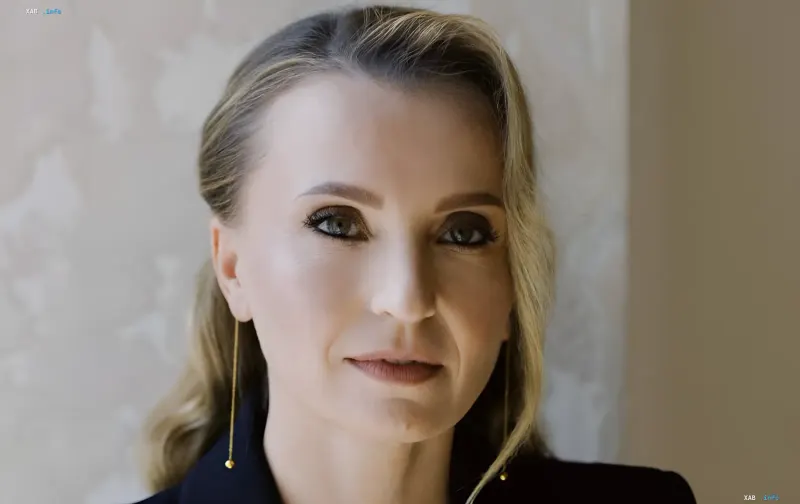
Under conditions of full-scale war, Ukrainian cinema continues to seek partners, financing, and a path to international audiences. In this context, major film festivals have long ceased to be a place solely for premieres: they have become a full-fledged tool for developing the industry and the creative economy. Anna Machuch — director of the Odesa International Film Festival (OIFF), co-founder and executive director of the Ukrainian Film Academy, as well as co-founder and director of the Dzyga MDB project — explained this in an interview with Wave RBC.UA.
The Festival as Infrastructure, Not Just Premieres
In Machuch's words, it is incorrect to pit the festival's cultural function against its industrial function: a strong festival operates on several levels at once. For the audience, it is an opportunity to see films that often do not reach wide release, to meet the creators, and to take part in discussions about contemporary cinema. For the industry — a platform where people, ideas, money, and opportunities come together. For the city and the country — a part of the creative economy and the cultural image. That is why, she notes, a festival can no longer be judged solely by the number of tickets sold or the audiences in the halls.
Around a major festival, an entire infrastructure forms: film producers, distributors, cinemas, technical teams, communications specialists, hotels, restaurants, transport, and the tourism sector. It creates jobs, orders, and new professional connections, and, above all, an environment without which the industry cannot develop. "We must not simply support the production of Ukrainian cinema, but preserve the entire chain of its existence: from the birth of an idea and the search for partners to the moment when a finished film meets the audience," Machuch emphasizes.
Practical Value for the Film Market
The main practical value of a festival, according to the director of OIFF, is the concentration of opportunities in a very short period of time. People who would normally need months to find each other end up in the same professional space. For a director, a festival can become the first meeting with a producer or an international partner; for a producer — a chance to find a co-producer, distributor, or sales agent; for a distributor — an opportunity to see a film and assess its potential; and for a young creator — professional feedback and an understanding of how to turn a concept into a moving project. That is precisely why the professional component has always been an important part of OIFF's DNA: the festival creates entry points into the industry and room for horizontal connections.
Partnerships and Deals: The Long Cycle of Film Projects
Machuch highlights the specifics of the film industry: a deal is far from always signed right at the table during the festival, because film projects have a long development cycle. From the first conversation to a contract, financing, or the start of production, months — sometimes even years — can pass. That is why a festival often creates precisely the first contact: a producer presents a project, gets to know a potential partner, they continue communicating after the festival, and meet again at another international market. Festivals, in her words, also form professional communities, and cinema — a collective art and a very complex business, in which no director, producer, or screenwriter exists in a vacuum: the more contacts, experience-sharing, and trust there are within the industry, the more resilient it becomes.
Why Culture Is an Investment
The very fact that a major international festival continues to take place in Ukraine during the war is important for Machuch not only symbolically: it means that the industry continues to work, Ukrainian cinema is being made, professionals meet and plan their next projects — in other words, cultural life is not put on pause until the war ends. In this light, business investment in culture should be viewed as a contribution to a sustainable creative economy and the country's international image, rather than as an expense item, which, in the interviewee's view, is the key to integrating Ukrainian cinema into the global market.
Contradictory Data
In the interview, Machuch states that "this year" OIFF is being held in Kyiv from August 27 to September 4. Additional sources (Focus.ua) link the Kyiv venue and the opening ceremony to the 16th OIFF, held in 2025. Thus, the phrase "this year" in the original source refers to the 2025 season, whereas as of the current date of preparing the material (August 2026), the exact dates and host city of the next, 17th, festival are not confirmed in the provided sources. Both versions of the dates are given for transparency: the content of the interview on the role of festivals does not depend on the specific year of the event.