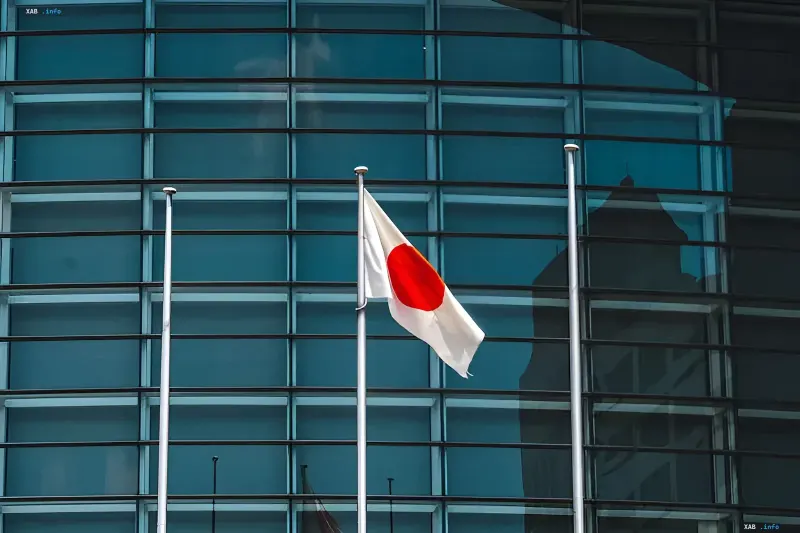
Major financial institutions in Japan have recorded a sharp and unprecedented surge in uncovering system-level digital vulnerabilities. As of August 2026, this key cybersecurity metric has exactly doubled compared to the same period last year, and the upward trend continues. Such dynamics clearly demonstrate how cutting-edge artificial intelligence technologies simultaneously act as a powerful defensive tool and a source of potential risks in the modern financial sector.
The Impact of the Claude Mythos Model on the Financial Sector
Data published by Nikkei Asian Review details the tectonic shifts in the cyber defense strategy of Japanese banks. These large-scale transformations began in April 2026, when Anthropic officially unveiled its advanced neural network model, Claude Mythos. Integrating such a powerful tool allowed banking institutions to automate and significantly accelerate the search for hidden software defects. Modern algorithms handle this task much more efficiently than humans, forcing organizations into a continuous race against time against technologically savvy attackers.
Contradictory Data
The situation surrounding the implementation of this innovative tool is complicated by geopolitical factors and regulatory restrictions. On one hand, US authorities introduced strict requirements to temporarily suspend foreign users' access to a number of advanced developments, yet in the summer, major Japanese banks nevertheless gained long-awaited access to Mythos. On the other hand, official reports diverge in assessing how quickly financial organizations can close discovered flaws: regulators insist on preventive measures, while tech contractors point to a colossal asymmetry between defense and attack forces.
Regulatory Measures and Expert Evaluations
Against the backdrop of a rapidly changing threat landscape, Japan's Financial Services Agency (FSA) issued a serious warning as early as May, demanding that national banking groups radically strengthen digital security measures. The financial regulator recommended that market participants proactively consider voluntarily suspending critical services in the event of large-scale attack threats. At the same time, Federal Reserve Board Governor Christopher Waller emphasized the fundamental complexity of modern cyberwarfare, noting that attackers only need to find a single breach, whereas payment system operators must defend an expansive potential attack surface.
Prospects for Japanese Banks' Cybersecurity
To minimize risks and develop unified protection standards, the specialized organization Financials ISAC Japan, at the direct request of the FSA and the Bank of Japan, has begun developing comprehensive guidelines for repelling cyberattacks. These detailed instructions are designed to become a handbook for security personnel at leading Japanese banks. It is expected that the systemic use of AI models combined with strict state control will allow the country's financial system to successfully counter the challenges of the artificial intelligence era.