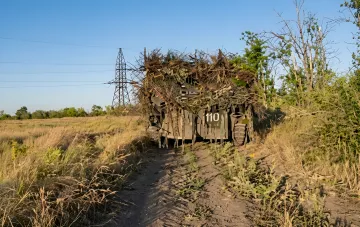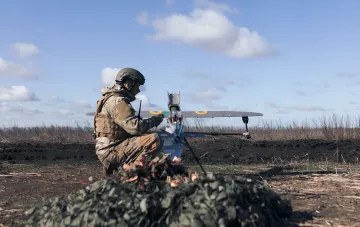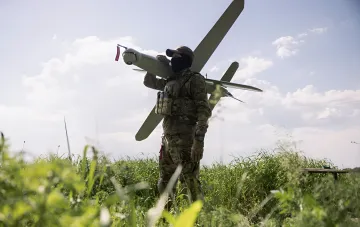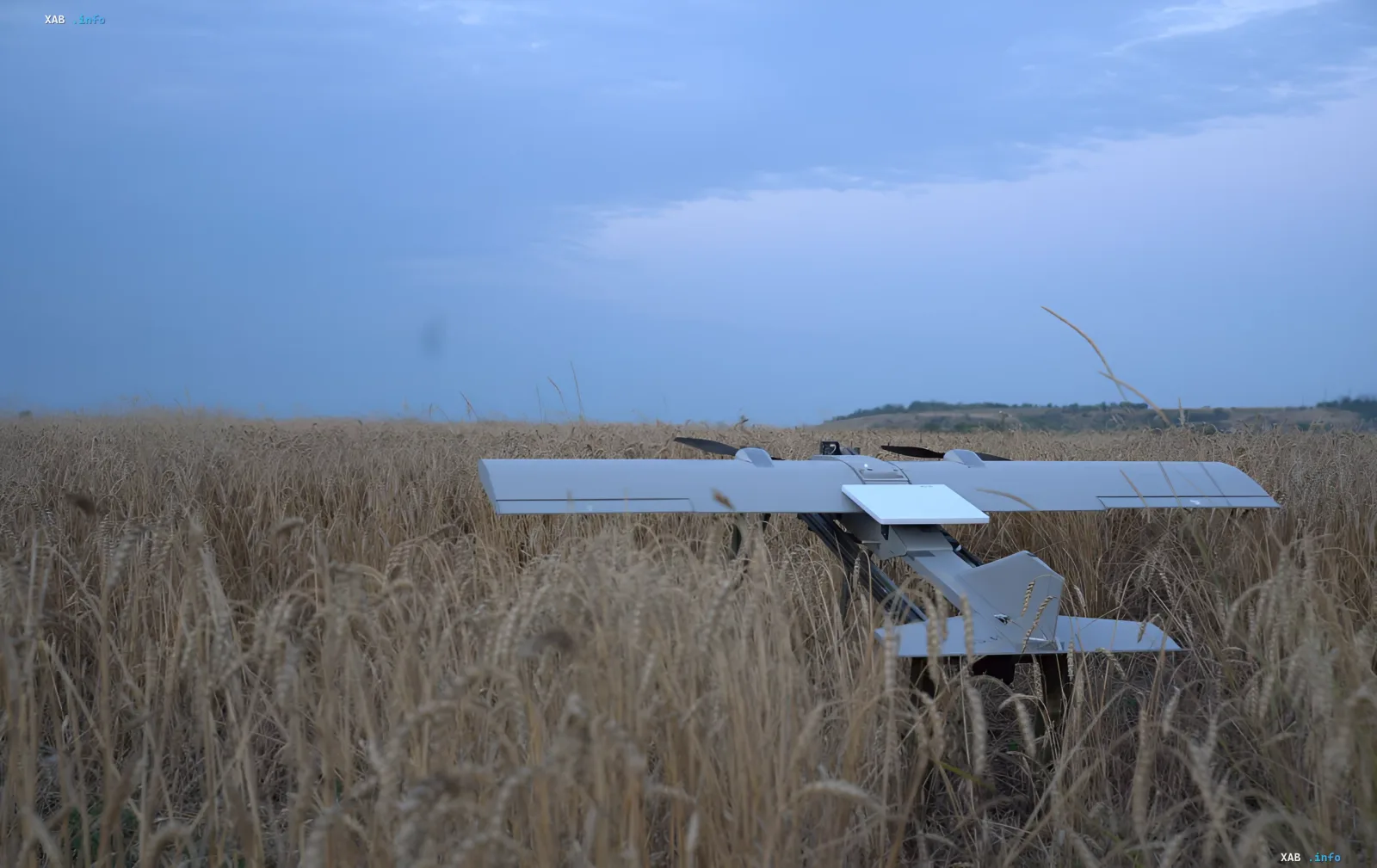
Over the past two months, fighters of the Unmanned Systems Unit (USU) "Apache" within the 81st Separate Slobodian Airborne Brigade of the 7th Rapid Reaction Corps of the Territorial Defense Forces (TDF), according to their own data, have cut off the Russian army's logistics in the operational rear on the Slavyansk axis. As RBC-Ukraine reports, citing a Censor.NET article titled "No chance of an enemy offensive: how mid-strikes expand the kill zone on the Slavyansk axis," prolonged attacks by Ukrainian medium-range drones have led to so-called "shell hunger" among the enemy at the front line. In photographs published by the brigade, medium-range strike drones are positioned right in the field — under conditions as close as possible to actual combat use.
Mid-strikes as a tool of fire control
According to the commander of the strike UAV company of the "Apache" USU battalion, callsign "Charlie," the use of mid-strikes allows establishing fire control over the enemy's operational space and effectively expanding the "kill zone" in their direction. "Our goal is not to let them engage in combat but to destroy them in the rear. We hit the enemy where they think they are untouchable," the military publication quotes the serviceman. The defenders, he says, act preemptively, destroying the enemy's offensive potential even on the approaches to the front line, without waiting for it to deploy.
Strikes in the operational rear: July figures
As an illustration of the unit's pace of work, data from several days of combat operations in July are provided: over this period, according to "Charlie," about 60 units of the enemy's light and transport equipment were destroyed, including buggies and motorcycles. The brigade accompanies these figures with footage demonstrating the use of medium-range drones on the Slavyansk axis, which, in its assessment, confirms the effectiveness of the chosen tactics.
"Shell hunger" and loss of mobility
In addition to direct hits on equipment, the constant medium-range drone raids, according to the unit, deprive the occupiers of mobility. The enemy's rear artillery, it is noted, no longer feels safe due to the constant risk of being hit, and elements of infrastructure — antennas, repeaters, and surveillance means — are systematically destroyed during raids. "The more we cut their logistics, the more problems they have on the front line: a shortage of ammunition, drones, fuel and lubricants, and food. The enemy's morale is also important — now they will think several times before heading out anywhere," the company commander stated.
Three pillars of effectiveness
The company commander highlighted three key elements on which the effectiveness of operations involving mid-strikes rests: around-the-clock aerial reconnaissance, working at speed, and the "flawless skill" of the unit's pilots. It is precisely the combination of these factors, in his assessment, that allows striking rear targets faster than the enemy can disperse or take cover.
Position of the 7th Corps command
The unit's approach is consistent with the line previously voiced by the command: the commander of the 7th Rapid Reaction Corps of the TDF, Yevhen Lasiychuk, emphasized the importance of using medium-range drones on the battlefield. According to the general, it is far more effective to destroy the enemy at a great distance before it disperses into small assault groups or infiltration "pairs." Thus, the "Apache" tactics on the Slavyansk axis represent a practical implementation of this doctrine at the level of a strike UAV company.