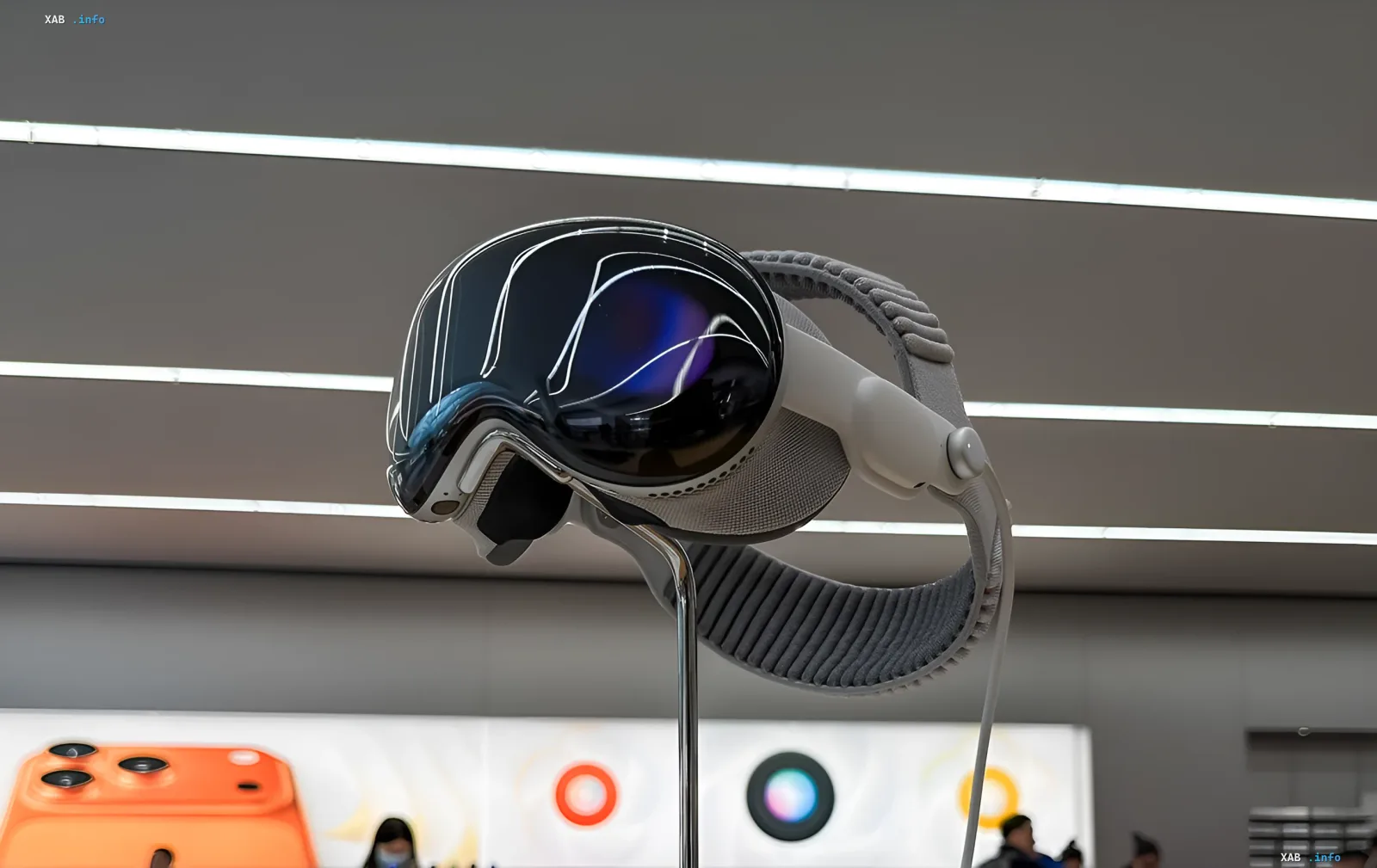
At the WWDC 2026 conference, Apple announced a major update, visionOS 27, for the Apple Vision Pro headset. The headline feature is a new technology that transforms standard panoramic photos taken on an iPhone into fully immersive three-dimensional environments.
From flat panorama to spatial reality
The new feature works with panoramic photos created in the standard way—by rotating in place with an iPhone. Users will be able to upload these photos and turn them into personal virtual locations. The level of immersion can be controlled using the Digital Crown, smoothly blending reality with the digital space. Additionally, digital avatars (Personas) can be transferred into these created worlds for group chats with other Vision Pro owners.
The main technical challenge was to turn a flat panorama into a full 360-degree 3D scene with spatial audio. A standard circular panorama leaves "blind spots"—for example, it contains no data about what is directly underfoot or high in the sky. This is where artificial intelligence algorithms come to the rescue.
Spatial Reframing technology: how AI "completes" reality
The current version of Vision Pro can already turn flat photos into 3D, but the depth of such 3D is limited, and the field of view is fixed—exactly as the photo was taken. To overcome this limitation, Apple introduced Spatial Reframing technology.
Its essence lies in using generative AI to restore and synthesize parts of the space that the camera lens did not capture. The neural network analyzes the lighting, textures, and geometry of the existing photo, and then independently "builds" a realistic sky, ground, and objects behind the viewer. This allows for the creation of a seamless 360-degree sphere around the user with a deep parallax effect when moving the head.
Ethical questions: when memories become generated
The release has sparked lively discussion among experts. Traditional methods of digitizing reality, such as Gaussian Splatting, are valued for their documentary accuracy—they reproduce the scene "exactly as it was in life." Apple's integration of generative AI changes the rules of the game: when the neural network starts to independently invent and draw details of the environment, it effectively alters the original recording of personal human memories.
Whether users will want to return to places where part of the reality is computer-generated will become clear after the official release of the visionOS 27 update in the fall of 2026.


