
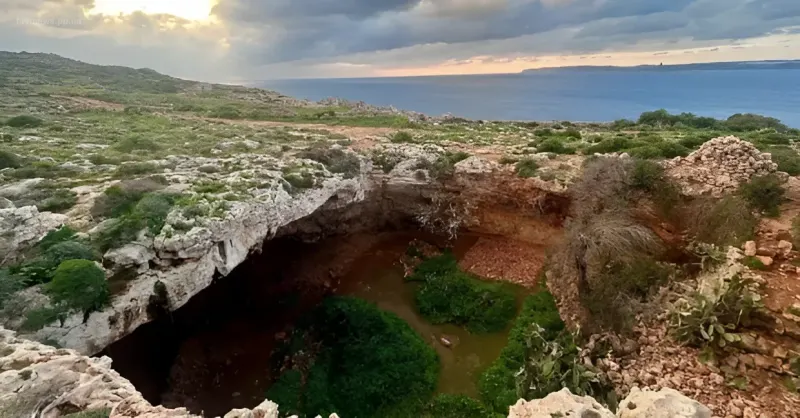
Imagine the Mediterranean Sea 8,500 years ago. No maps, no compasses, no sails. Only open water separating Malta from Sicily by more than 100 kilometers. For a long time, the scientific community was convinced that such a journey was an insurmountable barrier for Mesolithic hunter-gatherers. However, a new discovery in Għar Dalam Cave on the north coast of Malta has turned these assumptions upside down.
The Cave That Changed History
Researchers from the Max Planck Institute and the University of Malta conducted excavations in Għar Dalam Cave in the Mellieħa region. What they found forced a reevaluation of the island’s settlement timeline. Artifacts discovered within thick layers of sedimentary rock indicate that humans visited Malta approximately 1,000 years earlier than previously believed. This discovery pushes the history of human presence on the island deep into antiquity, to a time before agriculture had been invented.
Evidence of Life, Not a Casual Swim
The central question in archaeology: were these people accidental visitors or permanent residents? The answer lies in the details. Fire pits, stone flakes, and, most importantly, thousands of animal bones were found in the cave. Professor Eleanor Skinner, who led the expedition, noted that many of the bones were charred. This was no accident—it is a clear marker that people cooked food right there, inside the cave, and returned repeatedly.
The Menu of Ancient Seafarers
Analysis of food remains painted a surprising picture of these people’s diet. They were not farmers bringing grain or livestock with them. These were adaptable hunters who skillfully utilized resources from both land and sea. Remains of red deer, tortoises, birds, and seals were found in the cave. Of particular interest are marine species: fish (including groupers), crabs, sea urchins, and thousands of edible snails. Some of these species no longer exist in Malta today, indicating significant changes in the ecosystem over the millennia.
The Mystery of Navigation
How did people manage this crossing? Professor Nicholas Vella calculated that the journey from Sicily would have taken several hours even at a speed of 4 km/h, likely in complete darkness. This voyage required not just courage, but profound practical knowledge of the sea. Scientists believe these groups relied on observation and experience rather than complex tools to navigate the open ocean. This discovery blurs the line between isolated islands and connected communities, showing that the Mediterranean was a unified space long before the civilizations we know emerged.


