
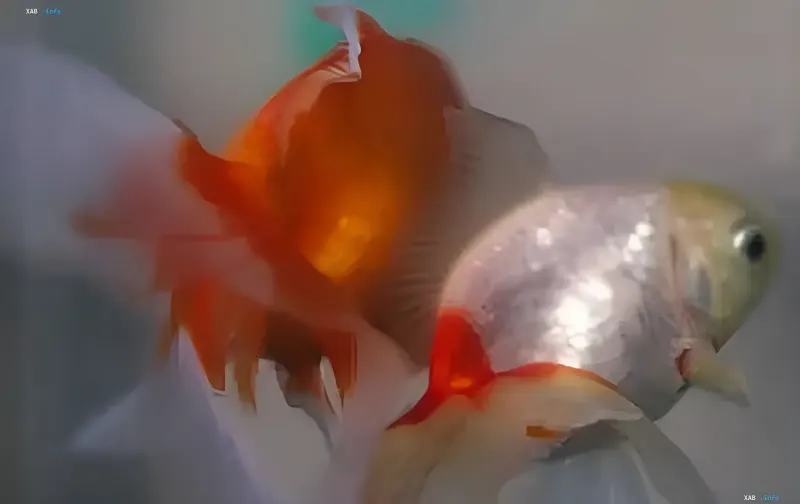
In Buenos Aires, an event occurred that could become a turning point in the history of animal rights protection. An Argentine court issued an unprecedented ruling regarding two goldfish named Fede and Magui. The court recognized them not merely as the owner's property, but as sentient beings possessing their own legal rights.
The incident began with an inspection of the conditions in which the fish were kept in one of the capital's sushi restaurants. Fede and Magui lived in a small 40-liter aquarium installed directly in the establishment's display window. Experts and animal advocates pointed out that the open location of the tank exposed the fish to direct sunlight and street noise, creating unacceptable living conditions for them.
Legal Protection and Relocation
The lawsuit was filed by the Argentine human rights organization "Jaulas Vacías" ("Empty Cages"). The organization's lawyers, in particular Matías Trufero, prepared an argument proving that keeping fish in such conditions violated Argentine laws against animal cruelty.
The court reacted quickly to the complaint. The fish were moved from the cramped display window to a spacious 2500-liter aquarium. Guardianship of the animals was taken over by specialist Carlos Jose Aga, who personally set up the new home for Fede and Magui. According to the expert, the condition of the fish improved significantly after the relocation.
Aga drew an interesting analogy to explain the importance of habitat control: "Fish are like astronauts: they travel in their own environment with careful control of all their vital parameters".
New Status: From Property to Personhood
The main outcome of the case was not only the improvement of living conditions but also a change in the legal status of the animals. Fede and Magui were officially recognized as legal subjects. This means they are no longer viewed exclusively as things or property. Now, in the event of cruelty, they can be recognized as victims, rather than simply objects of a crime.
Matías Trufero emphasized that this ruling creates an important precedent for the protection of other fish kept in inadequate conditions. However, the lawyer clarified that keeping goldfish in aquariums itself is not illegal. A violation of the law is recognized only in cases where the animal suffers due to a lack of space, food, or other critical factors.
Precedents in Argentina
The case of Fede and Magui is not an isolated fact in Argentine judicial practice. Previously, the country's courts had already recognized the rights of animals, the most famous of which was the case of the orangutan Sandra.
For more than 20 years, Sandra lived in the Buenos Aires Zoo. In 2014, the court recognized her as a "non-human person," after which the animal was moved to a specialized sanctuary in the USA. A consequence of this process was that in 2016, the Buenos Aires Zoo was transformed into an eco-park, and many of its inhabitants were relocated to conservation centers.
Today's court ruling on the fish case confirms that the approach to the legal protection of animals in Argentina is changing: they are increasingly viewed as persons whose rights to a decent life require state protection.