
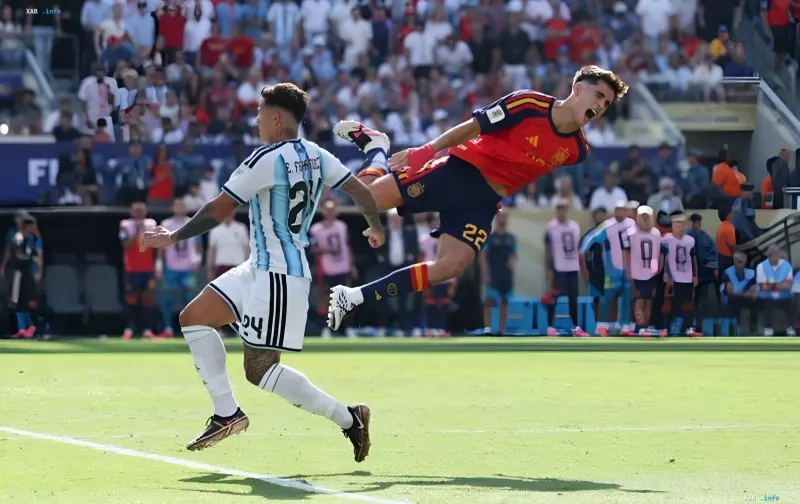
The World Cup final between the Spain and Argentina national teams ended in a historic event that has gone down in football history as a unique anti-record. After the end of regular time, the score on the board remained 0:0, but the match statistics revealed a shocking detail: the reigning world champions did not take a single shot at the opponent's goal.
Statistical failure of the Argentines
Official FIFA statistics recorded an unprecedented case. For the first time in the history of World Cup finals, one of the teams failed to score a single shot in the direction of the goal of goalkeeper Unai Simón. This happened against the backdrop of an aggressive game by the Spanish, who created 19 chances in front of Emiliano Martínez.
Previously in the history of World Cup final matches, the finalist took at least one shot at the opponent's goal. The Argentines violated this unwritten tradition, setting a dubious record of passivity in the decisive match of the tournament.
Anti-record of the first half
The situation was exacerbated already in the first half of the match. The teams set a new anti-record for the number of shots on goal in 45 minutes. Never before in World Cup finals has such low productivity been recorded — only three shots in the first half.
This match became an exception to the rule, when usually finals are characterized by high intensity and a large number of dangerous moments. The passivity of the Argentines and the dominance of the Spanish created a unique picture that will go down in history as one of the strangest finals in football history.