

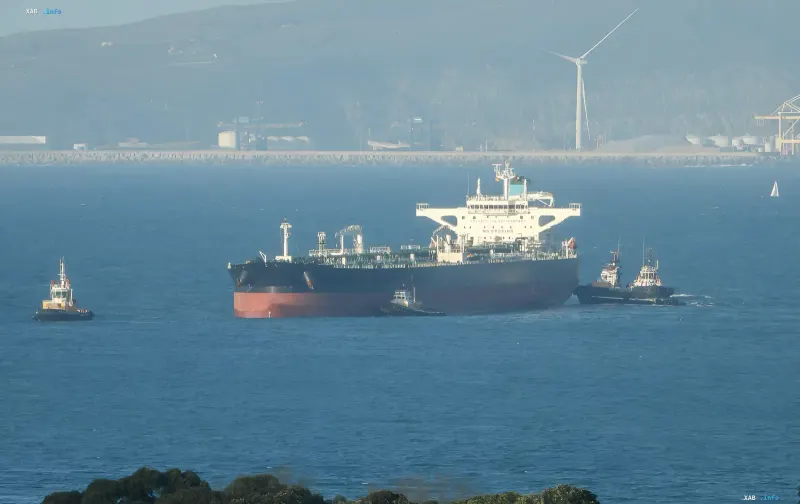
On the night of July 12, a new incident occurred in the Sea of Azov: a Russian tanker was attacked by unmanned aerial vehicles. As a result of the strike, a fire broke out on the vessel; however, according to official data, it was promptly contained.
This information was confirmed by the Governor of the Rostov Region, Yury Slyusar, in his Telegram channel. According to him, the tanker sustained damage while entering the Azov-Black Sea Sea Canal. An important circumstance is that the vessel was empty at the time of the attack, which ruled out the threat of an oil spill. There were no casualties among the crew.
Scale of strikes on the region
The attack was not limited to the maritime object. According to regional authorities, the drone strikes also targeted the settlements of Taganrog and Kamensk-Shakhtinsky, as well as four districts of the region: Azovsky, Neklinovsky, Tarasovsky, and Millerovsky.
Air defense forces shot down more than 20 drones. The fall of debris from one of them led to the closure of traffic on the federal M4 "Don" highway at the 885th kilometer in the southern direction.
Slyusar clarified the details of the road situation: "There are no casualties. Traffic on this section is blocked. The scene is under guard, and the flow of cars is being diverted through the Tarasovsky settlement. Demolition experts are working at the scene".
Operation context
This incident occurs against the backdrop of an active campaign to attack Russian maritime logistics. The day before, the General Staff of the Armed Forces of Ukraine reported strikes on 21 Russian tankers used to bypass sanctions. In addition, Ukrainian troops claimed to have hit four tugboats, two bulk carriers, and a dredger.
The Commander of the Unmanned Systems Forces, Robert "Madjar" Brovda, previously reported that between July 6 and 11, Ukrainian troops had already attacked 76 Russian vessels. The incident on the night of July 12 demonstrates the continuation and escalation of these actions in the Sea of Azov.


