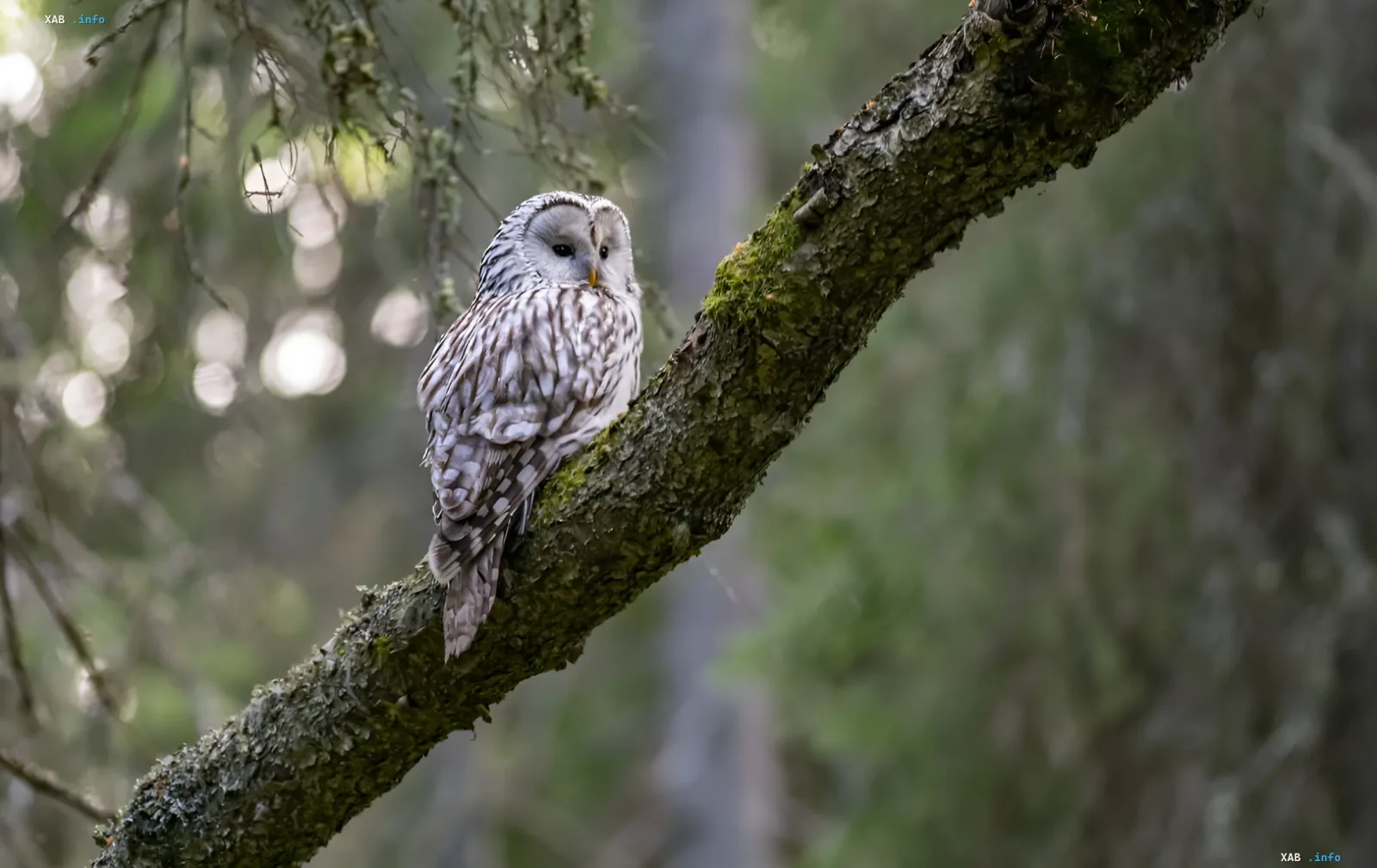
At first glance, you see a typical autumn landscape: a dense forest, a small cottage, a shimmering stream, and dry leaves on the ground. But if you keep your gaze on the image a little longer, the puzzle "comes alive" — among the trunks, branches, and fallen leaves, the silhouettes of owls begin to emerge. The entertainment project Styler from RBC-Ukraine invites readers to test their own attentiveness by finding all the hidden birds within 30 seconds. According to the editorial team, the image was generated using artificial intelligence, which makes the camouflage especially convincing: the algorithm seamlessly blends the birds' outlines into the texture of the bark, foliage, and shadow patches.
How the attention trap works
The key principle of this optical puzzle is built on the so-called "first-glance effect." Some owls really do catch the eye immediately — their round eyes or distinctive feather pattern stand out against the overall background. This is exactly where the trap lies: the brain registers the easy finds and starts assuming the task is solved. Meanwhile, other birds almost completely blend into the tree bark, dry leaves, and dark areas of the forest. Their silhouettes are formed not by separate objects, but by the boundaries between objects — where a trunk transitions into foliage, where branches overlap each other, and where dark patches come together to form outlines suspiciously resembling a bird's silhouette.
Why the last owl is the hardest
The hardest part of tests like this is not the first few finds, but the final one. The brain quickly memorizes the spots already noticed, and the gaze involuntarily keeps returning to them again and again, forming a closed loop of perception. To break this loop, Styler recommends changing the direction of your search: if you first examined the picture from left to right, start from the opposite corner. It is also useful not to look for a whole owl, but to pay attention to individual distinctive details — round eyes, head outlines, feather patterns. This "fragmented" approach allows you to notice a well-camouflaged bird that is impossible to recognize as a single object.
Practical tips for solving it
The Styler editorial team offers several specific techniques. First, set a timer for 30 seconds and do not try to guess the number of owls right away — your task is to spot each bird before the countdown ends. Second, check the boundaries between objects especially carefully: places where a trunk transitions into foliage, intersections of branches, and dark areas that form outlines resembling a bird's silhouette. Third, if you managed to find them all in 30 seconds — you did brilliantly. And if one or two owls went unnoticed, simply look at the picture again, but this time without the timer. You will likely be surprised at how well they were camouflaged.
Context: optical illusions as a trend
Attention puzzles and optical illusions consistently rank among the most discussed entertainment formats in the Ukrainian and international media space. Recently, for example, the publication UNIAN invited readers to find an owl hidden among stones in five seconds, while Focus.ua published a story about an optical illusion that changes the perception of eye color. Each of these tests relies on the same mechanism — figure-ground, where the brain is forced to switch between perceiving an object and its surroundings. Styler's autumn forest puzzle continues this tradition, adding an element of time limitation that turns a calm visual task into a mini-test of concentration.
Conclusion
Styler's autumn owl puzzle is less a test of eyesight than an exercise in managing attention. It clearly demonstrates how the brain conserves resources by "skipping" already-processed parts of the image, and how easy it is to deceive your own expectations if you do not change your search strategy. And if you have already found all the owls in 30 seconds — the Styler editorial team congratulates you on a brilliant result and invites you to share it with friends, who will most likely find one or two fewer birds.