In a column for RBC-Ukraine, journalist Mubariz Aslanov, who survived the Karabakh war in his childhood and now works in Ukraine, draws direct parallels between the two conflicts. According to him, what is happening on Ukrainian territory today largely mirrors the path traveled by the Azerbaijani people thirty-five to thirty-six years ago. Azerbaijan, having been part of the Soviet Union for 70 years, has been celebrating Victory Day since November 8 for the sixth year now — a symbol of the restoration of the state's territorial integrity, which, in the author's estimation, is a rare example of a successful protracted conflict resolution in the post-Soviet space.
Thirty Years of Negotiations and National Memory
The text recalls that for thirty years after the collapse of the USSR, according to the author, the leadership of Armenia repeatedly disrupted the negotiation process on Karabakh, while Russia, through its military presence, maintained influence over the situation in the region. During this time, the population of Azerbaijan endured, in his phrasing, numerous tragedies, including the Khojaly massacre of February 26, 1992, which left, in the author's assessment, a deep imprint on the national memory. Many of these facts, the column notes, are confirmed by the trial materials in Baku against representatives of illegal armed formations in Karabakh.
44 Days of Counter-Offensive and a Symbolic Turning Point
On September 27, 2020, following an escalation on the contact line, the Armed Forces of Azerbaijan under the leadership of the Supreme Commander-in-Chief, President Ilham Aliyev, launched, according to the column, a counter-offensive operation along the entire front. Within 44 days, control over a significant part of the occupied territories was restored, and the liberation of Shusha on November 8, 2020, became, in the author's assessment, a symbolic turning point. The leadership of Azerbaijan stated its readiness to ensure the rights of ethnic Armenian citizens remaining in Karabakh, provided they integrated into the legal and social space of the country, yet the separatist leadership, according to the author, continued to resist.
The 2023 Counter-Terrorist Operation and the Withdrawal of Peacekeepers
In September 2023, Azerbaijan conducted, according to the text, a 23-hour counter-terrorist operation, resulting in the liberation of Khankendi and adjacent areas, and sovereignty was, in the author's wording, fully restored. The main representatives of the separatist leadership were detained, and soon the Russian peacekeeping contingent was completely withdrawn from the territory of Azerbaijan. Thus, in the opinion of the column's author, a solution was found to what was previously presented as impossible, and this can serve as a signal for other countries facing separatism and foreign aggression.
Demining as the Main Challenge of Reconstruction
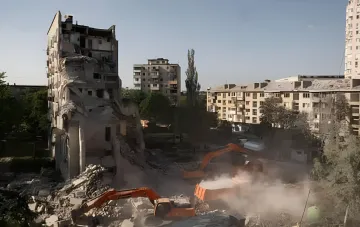
Today Azerbaijan is, according to the author, at a complex stage of post-conflict reconstruction, where the greatest challenge is the process of demining. It significantly slows down the return of residents to their homes and the restoration of economic activity: despite significant resources from the state and international partners, thousands of hectares of territory remain dangerous. At the same time, in the liberated regions, where for over thirty years of occupation, in the author's estimation, "not even two bricks were laid on top of each other," construction work is being carried out alongside demining. Over the past six years in this territory, according to the column, three international airports have been built and put into operation.
What Lesson Kyiv Can Learn
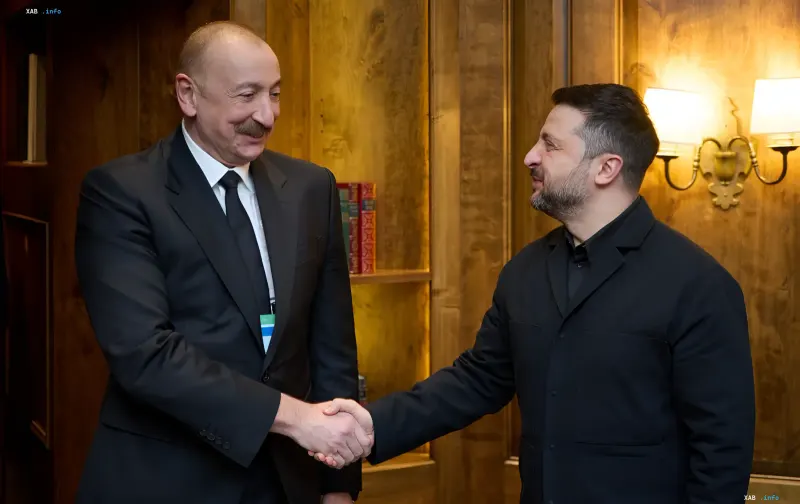
For Ukraine, which has yet to go through the stage of returning occupied territories and restoring life in them, the author considers it extremely important to carefully study the Azerbaijani experience—from demining and rebuilding liberated areas to psychological reintegration and overcoming the consequences of years of occupation. The restoration of the destroyed, the return of people to their homes, and common challenges, he says, unite both peoples. And the main thing highlighted by the author is the hope of Azerbaijanis, who did not lose it for thirty years, although in the modern world, in his estimation, this process will not drag on for that long.