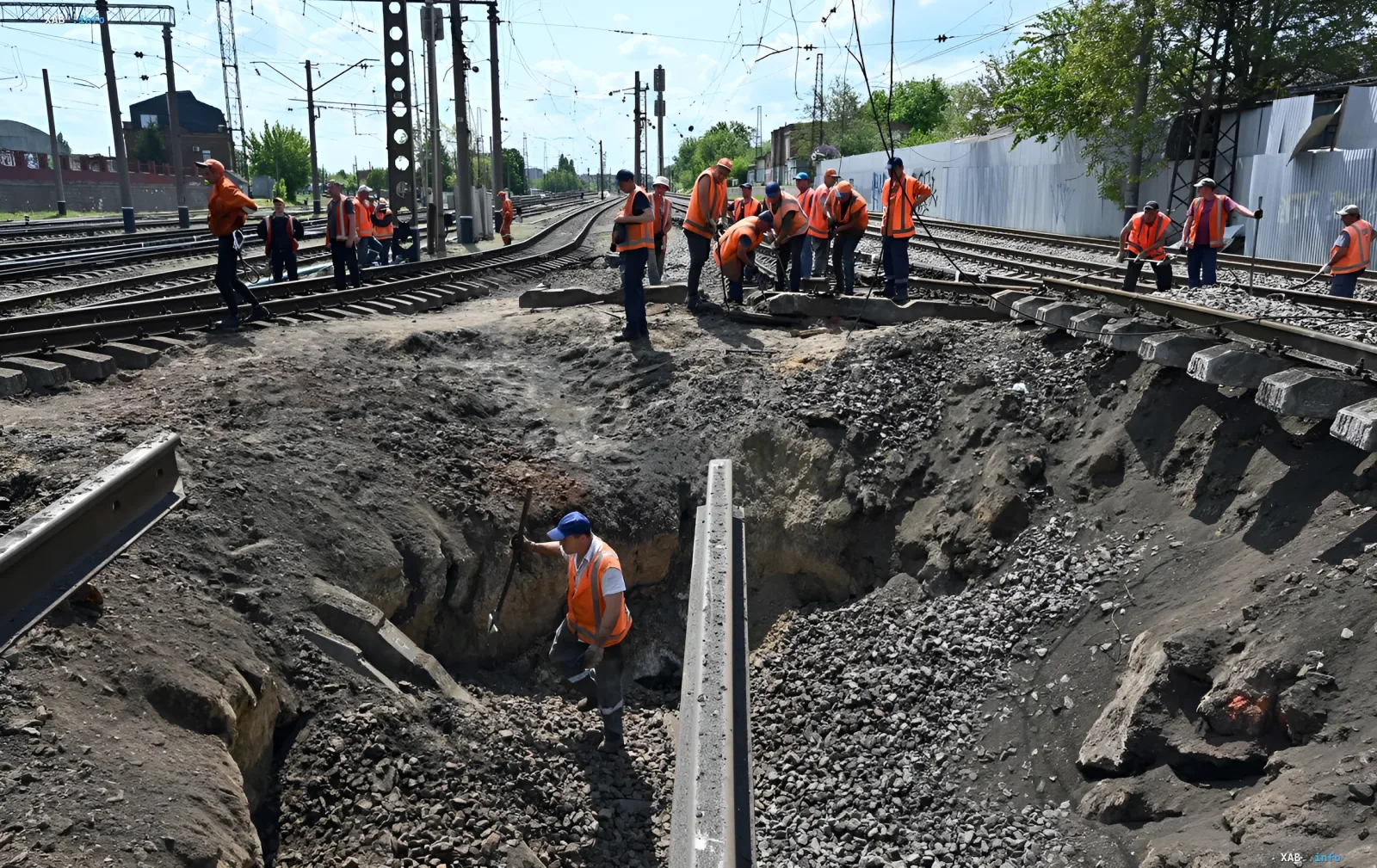
During the night, Russia carried out a targeted ballistic strike on a railway depot and other Ukrzaliznytsia infrastructure facilities in Kyiv. This was reported by RBC-Ukraine, citing a statement by the company's head, Oleksandr Pertsovskyi, on Facebook. According to the head of the company, the enemy deliberately hit the depot and adjacent railway facilities, rather than civilian buildings. As Pertsovskyi emphasized, the material losses, however large the destruction may be, are "nothing compared to the terrible loss of colleagues."
Casualties and the injured
Seven people were killed as a result of the attack, six of them Ukrzaliznytsia employees. One more colleague was hospitalized with injuries; according to the company, he is receiving the necessary medical care. Pertsovskyi reported that Ukrzaliznytsia is in contact with the relatives of the deceased and is supporting them during this period. Dozens of workers managed to take shelter in protective structures — they are now being helped to recover from what they have been through.
Scale of destruction and rescue work
The company's head described extensive destruction: a workshop next to the depot was completely destroyed, and at the time of his statement, rescue services were still dealing with a number of fires that broke out after the impact. The exact list of damaged buildings, tracks, and equipment was not disclosed in the public statement, leaving part of the picture of the destruction unconfirmed by independent sources.
Impact on train traffic
Due to the strike, traffic on two lines (track directions) was temporarily closed; it was resumed after the infrastructure was restored. This incident fits into a broader context: the day before, on August 28, trains had been running with delays for the second consecutive day, with some delays exceeding 15 hours. On the same days, Ukrzaliznytsia was preparing changes to station operations, working out a solution to ensure stable train traffic during prolonged air-raid alerts.
Conflicting data
There are discrepancies between sources regarding the geography and scale of the incidents, which is important to distinguish. RBC-Ukraine and Pertsovskyi's statement clearly point to Kyiv and seven killed. At the same time, regional publications describe other strikes on railway depots: for example, Ukranews reports a strike on Konotop that destroyed a railway depot, with one Ukrzaliznytsia employee killed and others injured, while Delo.ua's headline mentions an attack on a Ukrzaliznytsia locomotive depot with casualties, without specifying the city. Readers should note that these are likely separate events in different locations, and the figure of "seven killed" in the Kyiv incident is based on the statement of the head of Ukrzaliznytsia, republished by the media, and has not yet been confirmed by a separate independent count.
Context: systemic vulnerability of railway logistics
The strike on the depot highlights the vulnerability of railway infrastructure to ballistic weapons: depots and locomotive facilities are nodes on which the restoration of traffic after alerts depends. The combination of targeted strikes on such facilities with the already existing multi-hour train delays increases the load on logistics and on personnel working under repeated air-raid alerts. The company announced that it was preparing changes to station operations precisely to stabilize traffic during such periods, however, the consequences of the night strike in Kyiv make this task more acute.