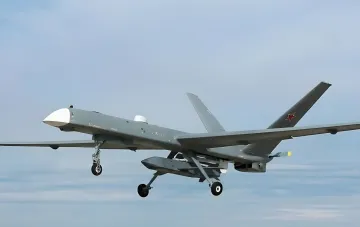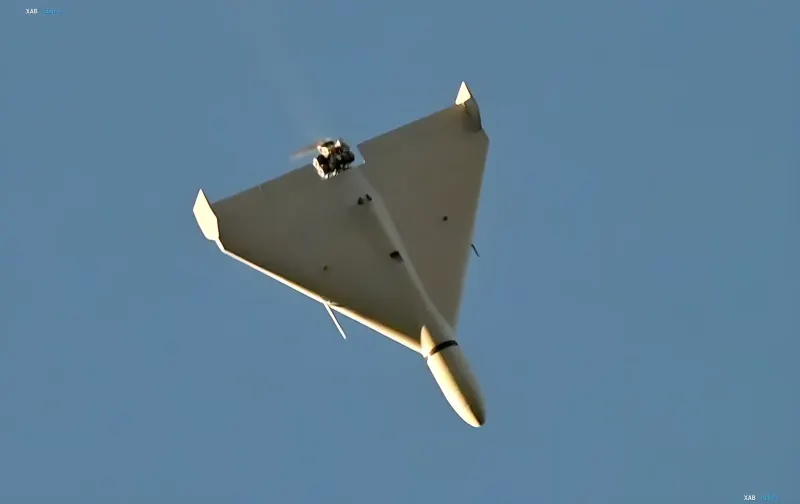
According to data cited by RBC-Ukraine, referencing the official Telegram channel of the Air Force of the Armed Forces of Ukraine, the movement of Russian strike drones — loitering munitions of the “Banderol” type — has been detected in the airspace over Chernihiv Oblast. According to military reports, the devices are moving in the direction of Kyiv Oblast, which automatically elevates the situation to a direct aerial threat to the areas adjacent to the capital.
Direction of movement: Vyshhorod district and Kyiv
As clarified by the Air Force, the direction of movement of the detected loitering munitions is such that it poses a threat primarily to the Vyshhorod district of Kyiv Oblast and, as they advance, directly to Kyiv. For this reason, residents of the specified regions and the capital are advised to remain in shelters until the air raid alert is lifted and to strictly observe safety measures. It should be emphasized: this is a situation unfolding in real time, and official channels urge people not to leave protective structures until the official signal canceling the alert is issued.
What is the “Banderol”
The “Banderol” is a large loitering munition that, according to descriptions available in open sources, is being developed based on the large “Inokhozhets” drone. Russian media characterize it as one of the large strike drones used in combat operations, while Ukrainian experts and military personnel call it a loitering munition capable of remaining in the air for an extended period and approaching its target along a designated vector. It is precisely the combination of long range, prolonged loitering, and a warhead that makes such devices dangerous to civilian infrastructure and settlements along their path of movement.
Context: the strike on Kyiv on the night of August 22
The movement of the “Banderol” drones is occurring against the backdrop of a recent massive strike on the capital. On the night of August 22, according to available data, ballistic missiles were used against Kyiv; as a result of the attack, a warehouse caught fire in the Darnytskyi district of the city, with fatalities and injuries. On the same day, Russian leader Vladimir Putin publicly justified the massive strikes on civilian objects and civilian infrastructure in Ukraine, calling them “effective and timely” and stating that, in his words, such shelling allegedly helps Russian forces carry out tasks on the front. Against this backdrop, the movement of loitering munitions toward the capital detected on August 24 is perceived as a continuation of pressure on rear areas and the regions bordering Kyiv.
Contradictory data
When assessing the situation, it is important to take into account the differences in wording and the level of verification. First, information about the specific direction of movement and the threat to the Vyshhorod district and Kyiv comes from one side of the conflict — the Air Force of the Ukrainian Armed Forces (via RBC-Ukraine) — and, at the time of publication, had not been independently confirmed by a second neutral source; these are intelligence and observation data from one of the parties. Second, the device itself is characterized differently in various sources: the Ukrainian side and some experts call the “Banderol” a loitering munition / strike drone, Russian media (TASS and others) present it as a large drone used in the “special military operation,” while some analysts in Ukrainian media describe it as a “quasi-missile” — that is, as a hybrid means that can be reduced neither to a classic missile nor to an ordinary drone. Finally, in the original reports on the consequences of the night strike on August 22, the wording about the casualties is brief (“killed and wounded”), without an exact number of victims, so specific loss figures at this time require additional verification. Until independent confirmations emerge, all the details listed above should be treated as data requiring verification.