
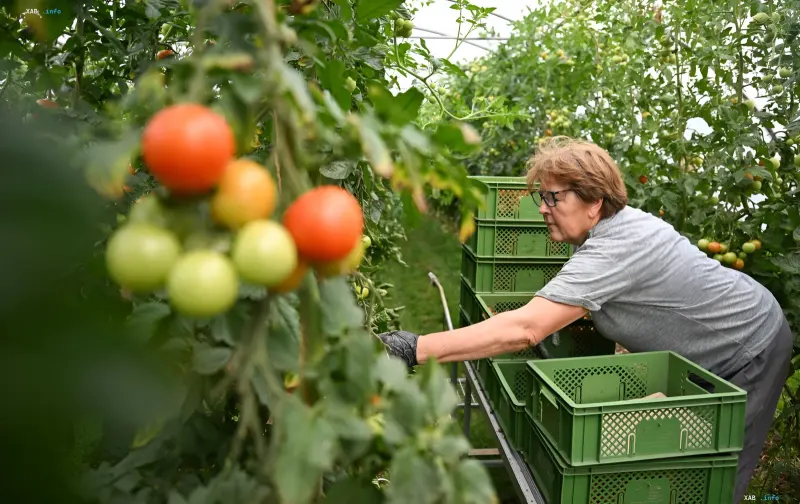
Against the backdrop of global economic challenges and the war in Ukraine, domestic greenhouse operations have found themselves in a difficult situation. While foreign producers receive massive state support, Ukrainian farmers are forced to compete under conditions of high costs and instability. The center of this confrontation is the fresh vegetable market, where imports dominate.
Turkish Dominance and Record Figures
Turkey has held a leadership position in the Ukrainian market for imported tomatoes for decades. Since the late 1990s, Ankara has consistently accounted for about 75% of all external supplies. However, 2025 proved to be a turning point: the share of Turkish products rose to a record 82%, and the negative trade balance for this item reached $140.4 million.
The situation began to change only in July 2025. After conducting relevant investigations, the government introduced anti-dumping duties on fresh tomatoes and cucumbers from Turkey. The measures yielded results: within the first months of 2026, statistics recorded a decline in expansion — the share of imports from this country dropped to 63% in January-April.
Legal Complexities and Economic Levers
The issue of dumping is not always obvious. Cheaper imports in themselves do not imply a violation of trade rules. To speak of dumping or subsidization, it is necessary to prove specific legal facts: that the goods are sold in Ukraine cheaper than in the exporter's domestic market, or that the producer receives specific state support.
"Without conducting an official anti-dumping or countervailing investigation, it is impossible to assert that Polish cheeses, Turkish tomatoes, or other products are imported specifically on dumping terms," explained Elena Omelchenko, a partner at the law firm "Ilyashev & Partners" and head of the international trade practice.
In practice, finding and confirming these facts is extremely difficult. Anti-dumping mechanisms exist, but the agricultural sector rarely uses them due to bureaucratic complexity and the high cost of procedures.
The European Factor and the Political Dilemma
The situation with the European Union has its own peculiarities. Brussels retained broad opportunities to support the agricultural sector even during the formation of the WTO system. When Ukraine joined the organization in 2008, it accepted stricter commitments. Most such programs are legal and comply with WTO rules, yet the existence of this lever does affect the competitiveness of imported products on Ukrainian shelves.
Is it realistic to apply protective measures against the EU? Formally — yes. Practically — it is extremely difficult. The Ukrainian agricultural sector has the same trade protection tools as the metallurgy or chemical industries. However, due to the large number of small producers and the lack of a consolidated position, it is difficult to gather the body of evidence necessary for international representation.
Geopolitics vs. Economics
Even if a violation is proven, the question of restricting imports from the EU or Turkey can quickly go beyond economics and become political. During intergovernmental meetings, Turkey has consistently insisted on reviewing or repealing the duties. As for Europe, any decision to close the market must be weighed against Ukraine's broad national interests.
"Are we ready to simultaneously demand the closure of the Ukrainian market to certain European goods while maintaining maximum open access for Ukrainian products to the EU market? Under current conditions, these are interconnected issues," summarized Elena Omelchenko.
Given the unprecedented support Ukraine receives from European partners during the war, any restriction on imports requires bold steps at the political-diplomatic level, the consequences of which are difficult to predict.


