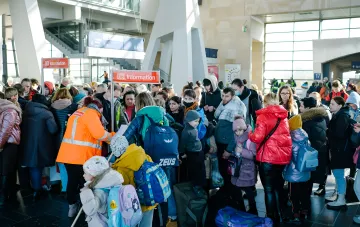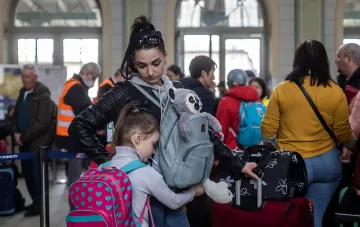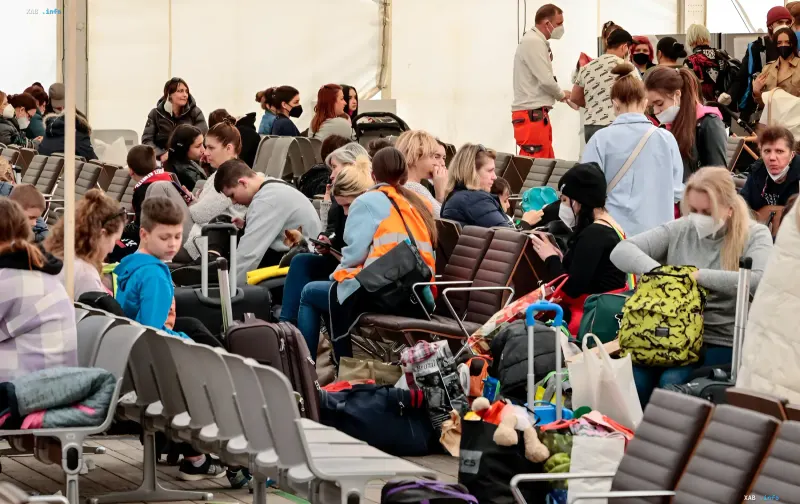
The German Foreign Minister, Johann Wadefuhl, publicly stated that Ukrainian men of draft age currently on German territory "should return home." According to him, Berlin has information on exactly which of these citizens are living in the country: the ministry can rely on data regarding recipients of social benefits, residential registrations, and residence permits. The minister emphasized that Germany is ready to share this information with Kyiv to help Ukrainian authorities identify men of draft age. RBC-Ukraine reports this, citing Reuters and Wadefuhl's direct statements.
Identification Mechanism: From Social Benefits to Residence Permits
A key element of Berlin's position has been its readiness for practical, not merely political, coordination. According to Wadefuhl, German authorities know which Ukrainian men receive social benefits, who is registered, and who holds a residence permit. It is precisely these administrative databases that, in the minister's view, could serve as a tool for identification. Thus, the statement goes beyond rhetoric and implies the exchange of data between the agencies of the two countries, effectively shifting the issue from the plane of diplomatic declarations to that of administrative cooperation.
Pressure on Defense Orders: "Not Yet Satisfied"
At the same speech, Wadefuhl stated that Ukraine should buy more weapons from German companies. The minister argued that Germany is Kyiv's largest donor and therefore "has the right to expect orders for its own defense sector." "We are not yet fully satisfied with the volume of orders we receive in Germany," he emphasized. This statement marks Berlin's attempt to link military support with the economic interests of the German defense industry and to redirect part of Ukraine's defense procurement to domestic producers.
Context: Drone Attack on Leipzig/Halle and Diplomatic Rupture
The minister's statement came a few days after Germany accused Russia of organizing an attempted drone attack on Leipzig/Halle airport in August. According to Berlin, a major disaster was barely averted at the time. In response, Germany ordered the closure of the Russian consulate in Bonn and the Russian cultural center in the capital. Russia categorically denied the accusations, and Russian Foreign Minister Sergey Lavrov called Germany's actions "the beginning of a real war." Wadefuhl rejected this characterization: "We had to react. That is understood by everyone."
Contradictory Data
Around the incident at Leipzig/Halle airport, the positions of the parties directly diverge. Berlin claims that Russia organized an attempted drone attack and that the threat was real; Moscow denies these accusations, not acknowledging any involvement. The evaluative frameworks differ as well: Lavrov characterizes Germany's reaction as "the beginning of a real war," while Wadefuhl insists that the response was necessary and "understood by everyone." Thus, the factual basis of the incident (its nature, the level of threat, and responsibility) remains a matter of dispute rather than an established fact, and in this article it is presented as the version of one of the parties.
Beyond Berlin: Tightening of Temporary Protection Rules in the EU
Wadefuhl's statement fits into a broader trend. Germany has already denied temporary protection to some Ukrainian men: the new rules apply to those who arrived in the country after July 31, 2026. In parallel, the entire EU has tightened the conditions for granting temporary protection — without a border-crossing stamp in their passport, Ukrainian citizens may face problems in obtaining status. Taken together, these measures create pressure on men of draft age and form the institutional backdrop for Berlin's call for their return home.