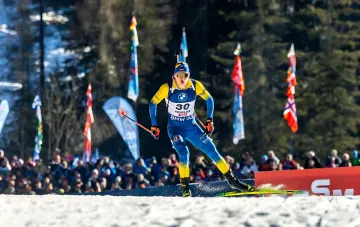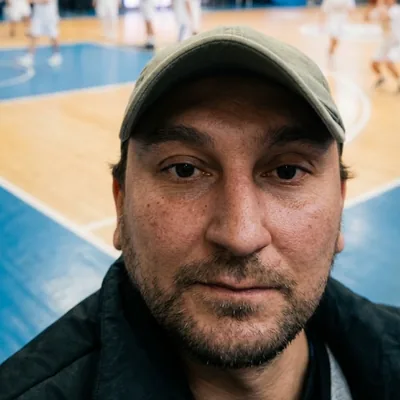
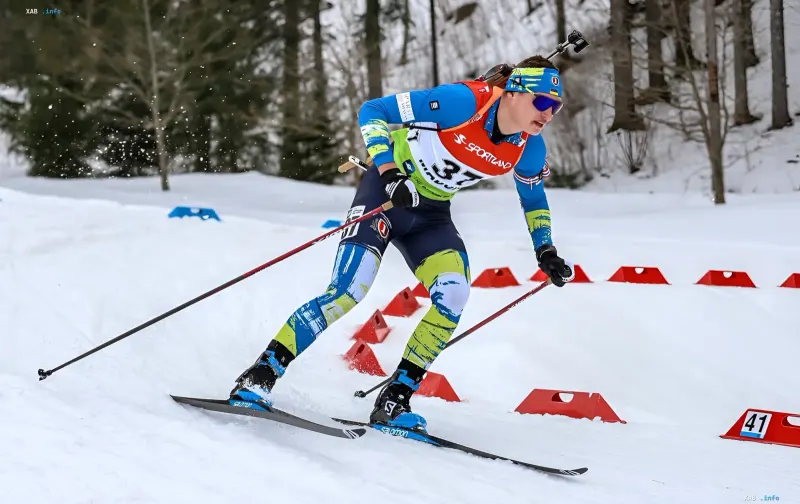
On November 26, 2026, the new Biathlon World Cup season kicks off in Kontiolahti, Finland, promising to be one of the most action-packed in recent years. The calendar includes 10 rounds — the count has increased thanks to the introduction of a New Year's round in Pokljuka, Slovenia, which begins on January 2 and, in the words of experts, will be a "gift under the Christmas tree" for fans. Simultaneously, Germany's Oberhof was moved from the beginning of the calendar year to March, and the course profile has undergone several changes. As noted in a commentary to Sport RBC.UA by Andriy Stolyarchuk, the relocation and adjustments to the course do not guarantee a complete solution to the problems Oberhof faced earlier — "only time will show how well they manage to host the World Cup round without issues in early March."
Rules are Changing: More Participants in Mass Starts and Stricter Range Control
The season organizers adopted two key regulatory changes. First, the athlete quota for mass starts has been increased from 5 to 10 participants, selected based on the results of the specific World Cup round. According to Stolyarchuk, this will benefit those in the best shape "here and now," rather than those who accumulated points in the first half of the season. Second, rules regarding weapon handling on the firing range have been tightened: stewards have been given clear authority to document violations and penalize athletes. Both changes aim to enhance the spectacle and discipline of the races.
Men’s Globe: Perrot, Laegreid, and Samuelsson’s “Achilles’ Heel”
In the battle for the Men’s Big Crystal Globe, according to Stolyarchuk’s assessment, the main contenders remain Quentin Fillon Maillet and Sturla Laegreid, who fought a tight battle last season. Serious competitors are cited as Johannes Dale-Skjevdal and Lukas Hofer — provided the Italian resolves the health issues that plagued him in the previous cycle. Sebastian Samuelsson is highlighted separately: if the Swede manages to stabilize his shooting, "which has always been his Achilles' heel," he has every reason to expect a real fight for the title. Martin Ponsiluoma, according to the expert, will be more focused on his personal life in the new season — together with Hanna Oeberg, he is expecting his first child. Germany, in turn, is banking on Philipp Nawrath, although Stolyarchuk expresses skepticism about the German on long distances. The context for the German team is disappointing: last year, the country failed to win a single race in men's or women's categories for the first time in World Cup history.
Women’s Peloton: No Clear Favorite and a “Reactive” Kirkeeide
Among the women, there is no clear season favorite. Stolyarchuk lists Lou Jeanmonnot, Lisa Vittozzi, Elvira Oeberg, and Julia Simon as the main contenders. Maren Kirkeeide is noted separately, already being compared by professionals to Tora Berger for her explosive speed on the track. Also among the competitive athletes are Suvi Minkkinen and Oceane Michelon, who "made a statement" at the Olympic Games, demonstrating what she is capable of when in good shape.
Ukraine: A Reset, a Quota of Four, and Betting on Pidruchnyi
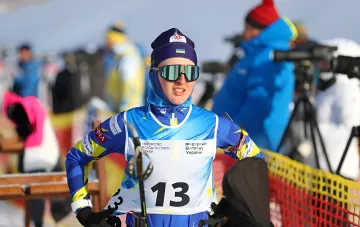
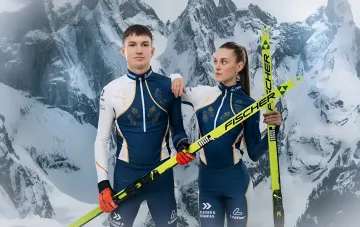
For the Ukrainian teams, the new season begins under constraints: following last season's results, neither team finished in the top ten, which means participation is limited to four men and four women in individual races. For the men, the main hope rests on Dmytro Pidruchnyi and Vitalii Mandzyn, as well as the progress of Bohdan Borkovskyi, who, according to the expert, "has decent prospects." The women's team looks more even, without clearly defined leaders. Yuliia Dzhima — the last representative of the Ukrainian biathlon’s golden generation — is missing the start of the season due to health issues. However, thanks to strong performances in pre-season races, Tetiana Tarasiuk earned a chance to debut in the World Cup. Both teams have appointed new head coaches: Oksana Khvostenko took charge of the women’s team, and Serhii Semenov leads the men’s. The overall goal for the season is a return to the top 10 and restoring the quota of five athletes.
IBU Confirmed: Russians and Belarusians Will Not Participate in World Biathlon
Concluding the season preview is the decision by the International Biathlon Union (IBU), which ruled that athletes from Russia and Belarus will not participate in world biathlon in the new season. Stolyarchuk expresses gratitude to the IBU for "a clear position on this issue," emphasizing the significance of this decision for the integrity of the international calendar.