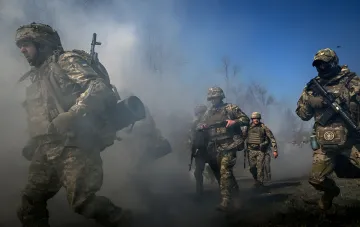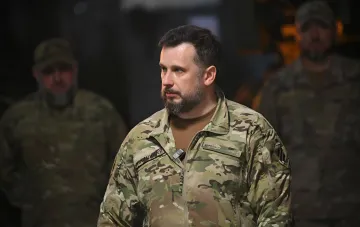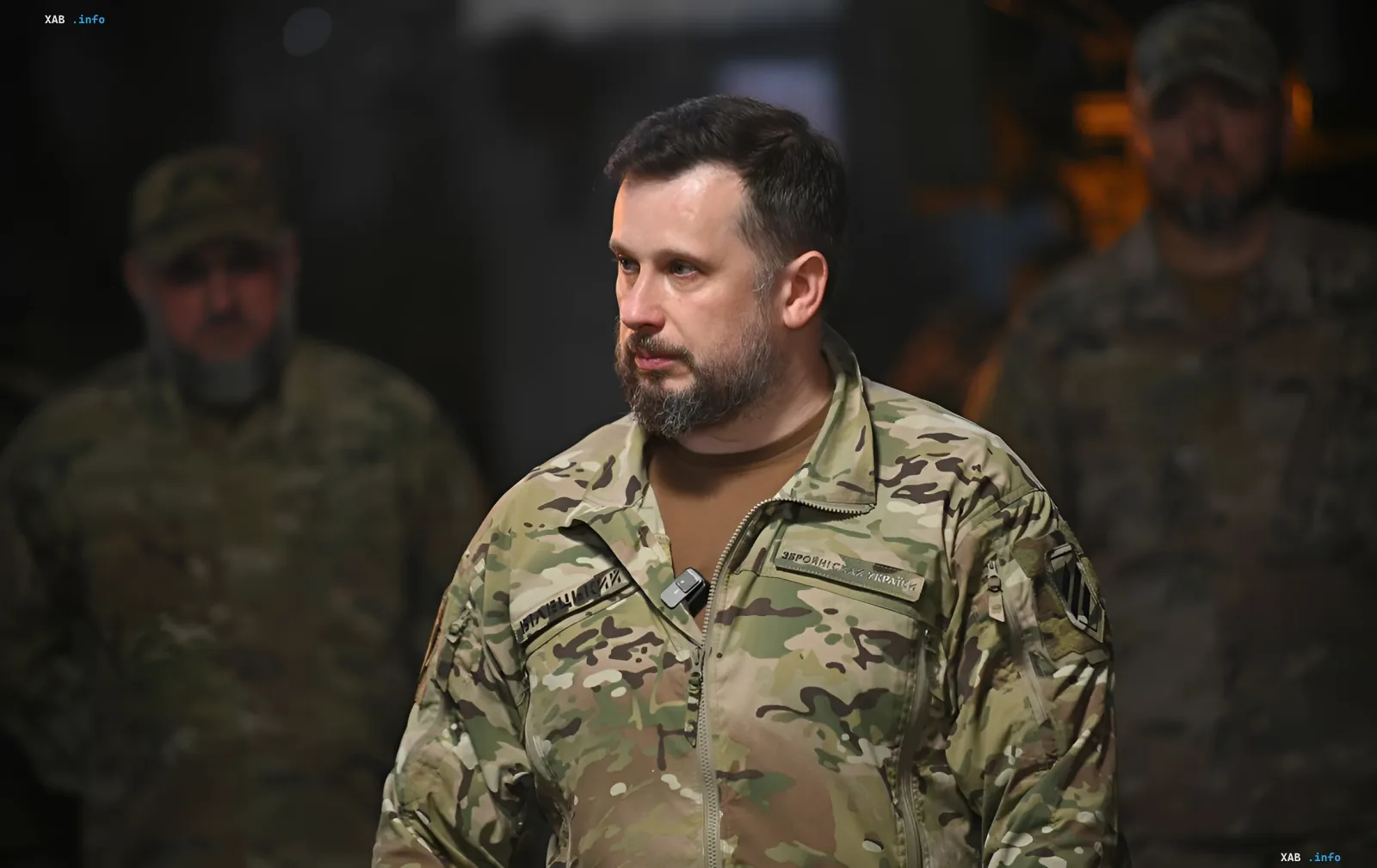
The commander of the Third Army Corps, Brigadier General Andriy Biletsky, gave a detailed account on a TV marathons of the progress of the offensive operation "Vivaldi," which Ukrainian units are carrying out in the north of Donetsk Oblast. According to him, the key objective of the operation is to move Ukrainian Armed Forces units onto more advantageous defensive positions and to deprive the enemy of the ability to execute its plan to encircle the so-called fortress cities from two directions. Biletsky emphasized that information on the course of the counteroffensive is deliberately kept secret to preserve the tactical effect, although the results of individual phases will be announced publicly once they are completed.
The Enemy's Plan: Two "Pincers" Around the Fortress Cities
The general disclosed the Russian military's strategic plan on the Donetsk axis. According to his data, Moscow intended to encircle key settlements from the north and the south. The southern "pincer" was to advance through Dobropillia, while the northern one — through a salient that, in Biletsky's words, "is currently being cut off." The northern direction ran toward the city of Sviatohorsk and then toward Barvinkove, where, by the enemy's design, the two pincers — the Dobropillia one and the conditional Sviatohorsk one — were to close in and trap the Ukrainian units in a ring. In the words of the corps commander, the Russian advance in the Dobropillia direction had already been halted back during last year's infiltration; the situation there is now "fairly complex, but under control."
"The Northern Pincer Has Effectively Been Crushed"
The main result of Operation Vivaldi, in Biletsky's assessment, is the neutralization of the northern encirclement axis. "The northern pincer has effectively been crushed and destroyed," the general stated. He stressed that it is critically important for the Ukrainian Armed Forces to prevent the restoration of this offensive — not on the battlefield and not by infantry forces, but by paralyzing the enemy's logistics and rear-support capabilities. If the Russians are unable to restore their offensive potential on this sector, they will have to assault Slavyansk, Kramatorsk, and the Druzhkivka-Konstantynivka agglomeration "head-on" — which, in Biletsky's words, is "far more painful and costly" than attempting to take the cities without a fight through encirclement.
Logistics as the Key Factor and the Secrecy of the Operation
The commander of the Third Army Corps separately addressed the issue of information security. In his words, data on the counteroffensive must be kept secret to preserve its effectiveness, and only upon reaching certain lines could individual details be disclosed. At the same time, Biletsky acknowledged the existence of a "diplomatic dimension of this war" and of psychological influence on both the enemy's army and its population. "Once several phases are completed, we will announce their results," the general promised. He also referred to the previous counteroffensive phase: "Everyone understood that 75 km is 75 km. But no one said that everything ended at 75 km. Ukraine can calmly wait for good news."
Contradictory Data
The provided sources contain a minor discrepancy in wording. Thus, the outlet Kochegarka.com.ua uses the phrasing "an offensive operation was carried out" in the headline of one of its publications, which could be interpreted as the operation having been completed, whereas in the text of Biletsky's statement and in RBC-Ukraine's materials the operation is described as ongoing ("are carrying out," "launched an offensive operation"). Most likely, this is a difference in journalistic framing: in this context, "was carried out" means "launched, initiated," not "completed." In addition, in different materials the general's surname is rendered as "Biletsky" and "Beletsyky" — this is a variation in transliteration, not a reference to different individuals. No significant factual contradictions between the sources regarding the content of the statement were found.
Context: Who Is Commanding and What Has Already Been Done
Recently, the Third Army Corps launched Operation Vivaldi in the north of Donetsk Oblast. The clearing of several settlements, the elimination of camouflaged enemy groups, and the establishment of a bridgehead for further advance have already been recorded. On September 13, 2026, Brigadier General Denys "Redys" Prokopenko took command of the "Azov" military grouping, which will operate in Donetsk Oblast. Thus, Operation Vivaldi is being conducted amid a reshuffle in the command staff, which, according to observers, could both accelerate decision-making and require time for subordinate units to adapt to the new leadership.