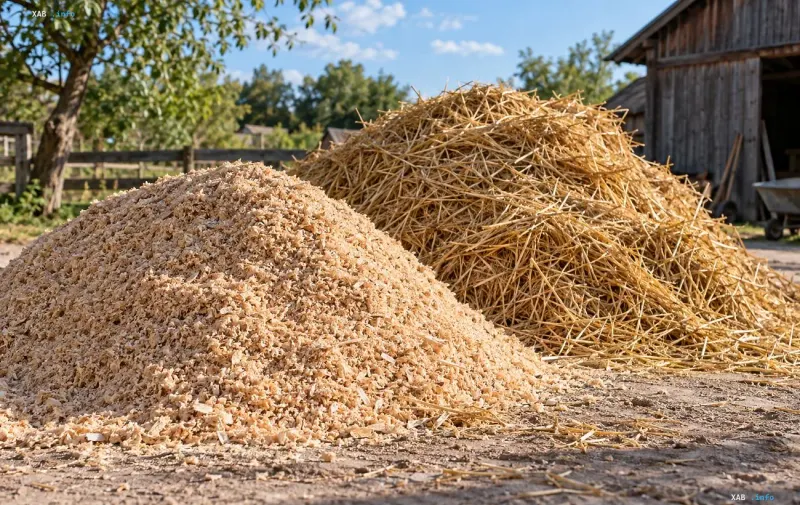
Scientists at the Institute of Cell Biology of the National Academy of Sciences of Ukraine in Lviv have developed an innovative technology for producing biofuel from non-food raw materials, including straw and sawdust. This was announced by the institute's director, Kostyantyn Dmytruk. The new method allows the production of ethanol without competing with the food sector, although the project is currently in the laboratory research stage and requires significant refinement for industrial implementation.
Technological process of plant raw material processing
The production of ethanol from straw and sawdust involves several successive stages. First, plant biomass is thoroughly crushed and pre-treated with acids or alkalis, often under conditions of elevated pressure and temperature. In the second stage, special fungal enzymes break down complex cellulose and hemicellulose into simple sugars, which are subsequently converted into alcohol using yeast.
For the economic feasibility of the process, it is critically important to process not only glucose but also xylose, a sugar contained in hemicellulose. Traditional alcohol strains cope poorly with this task, so Lviv researchers used thermotolerant yeast of the species Ogataea polymorpha. They are capable of carrying out alcoholic fermentation at a temperature of 45–48 degrees Celsius, combining hydrolysis and fermentation in a single technological cycle.
Genetic modification of yeast and increased efficiency
Natural strains of Ogataea polymorpha yeast initially lacked sufficient efficiency in utilizing xylose. To correct this shortcoming, Ukrainian scientists carried out deep genetic modification of the microorganisms. They introduced the necessary genes, restructured expression regulation, and modified glucose transport proteins, allowing cells to efficiently absorb xylose.
Thanks to these changes, the researchers managed to increase the yield of ethanol from xylose by more than 30 times. Despite significant laboratory success, the technology is not yet ready for industrial deployment. One of the key obstacles remains toxic byproducts that are released during the acid treatment of straw and inhibit the viability of yeast cultures.
Commercialization prospects and economic context
To bring the technology to market, scientists must create pilot plants capable of testing the entire production cycle under industrial conditions. In addition, the process requires the use of expensive enzymes and preliminary chemical cleaning of raw materials, so experts predict that such biofuel will not be cheaper than analogues made from sugar or starch.
The main advantage of the method remains the refusal to use food crops such as corn, wheat, sugar beets, or sugarcane. Amid the development of environmental transport standards, including the introduction of E10 gasoline containing up to 10% bioethanol, such developments open new prospects for energy independence and reducing the burden on the agro-industrial complex.