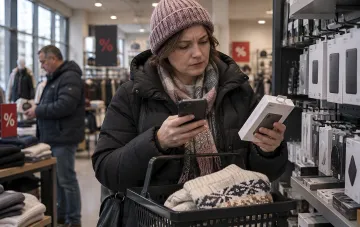
With the launch of the sales season, which in 2026 stretched from late November to Cyber Monday, the Ministry of Internal Affairs of Ukraine published a guide for buyers: according to the agency, it is precisely during the Black Friday period that criminals sharply increase their activity, masking their schemes as ultra-profitable offers. The typical set of tools used by fraudsters includes fake copies of store websites, counterfeit listings on marketplaces, and phishing links in newsletters, the purpose of which is to extract money and payment data. According to a Gradus poll cited by RBC-Ukraine, only 39% of Ukrainians believe in real discounts during Black Friday, while 89% of those planning purchases prepare in advance by tracking price history.
How Fraudsters Operate During the Sales Season
According to the Ministry's description, the key attack mechanism is the imitation of a legitimate trading platform. Fraudsters create website copies that differ from the original by sometimes a single character in the address bar, or publish fake ads with discounts that look too good to be true. Simultaneously, parallel schemes are recorded in other regions: fake prize giveaways where the victim is asked to make a “mandatory payment” in the form of tax or duty, the sale of counterfeit gift cards of popular stores with a “large discount,” as well as fake microfinance organizations that promise quick low-interest loans before sales, collect passport and banking data, and demand prepayment for “insurance” or “approval.” Experts from the “Moshelovka” platform separately single out offers with 70–80% discounts and requests to switch to a messenger to complete a purchase via a third-party link as a warning sign.
Checking the Website and Seller Before Buying
The first rule given by the Ministry is to make sure the website is genuine. To do this, you need to carefully compare the address: fraudulent copies may differ from the original by a single character, and it is at this stage that the buyer most often loses vigilance. The second is to check the seller itself: look for reviews, contact details, and information about the store's operating history. The less public history the platform has and the more vague its contacts are, the higher the risk of encountering a one-time fake that will disappear immediately after receiving prepayment.
Secure Payment and Cash on Delivery
The Ministry advises choosing cash on delivery whenever possible, especially when dealing with an unfamiliar seller: in this case, the product can be inspected before payment, eliminating the situation where the money is gone and the package never arrives. After placing an order, the agency recommends regularly checking bank debits and tracking orders only through official websites and apps of postal operators rather than links from emails or messages—third-party links are the main phishing channel during the order tracking stage.
What to Do If Card Data Has Already Leaked
If the buyer has already provided bank card details to fraudsters, the Ministry orders immediate action: contact the bank and block the card to stop any potential withdrawals. Separately, the agency urges not to hush up cases of fraud and report them to cyberpolice, which helps law enforcement record series of attacks and identify organizers. The more recorded appeals there are, the faster a specific fraudulent campaign is suppressed.
How Many Ukrainians Believe in Real Discounts and What They Plan to Buy
The Gradus survey cited by RBC-Ukraine shows a cautious attitude among the audience toward sales: only 39% of Ukrainians believe in real discounts on Black Friday. At the same time, 89% of shoppers planning to take advantage of the sale prepare in advance—monitoring prices and checking their history, which actually coincides with the Ministry's recommendations on checking the seller and the offer. Most often, Ukrainians plan to buy clothes and shoes, and every fourth person plans to buy power banks, charging stations, or flashlights, meaning goods that are especially in demand in 2026 amid power supply interruptions. Store promotions started on various dates and will last until at least November 30—Cyber Monday, making the entire November period a peak of activity for both fraudsters and buyers.