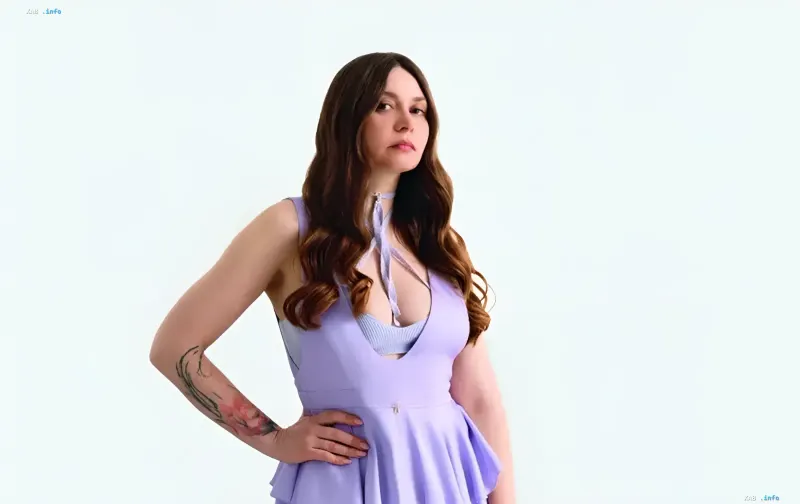
In a fresh blitz for the lifestyle project Wave (RBC-Ukraine), TONiA brand founder Antonina Belinska answered five questions about fashion, her profession, and her own principles. The conversation turned out to be honest and in keeping with the heroine herself: the designer did not try to meet expectations and stated outright that her brand is not about “hot trends” but about something else — consistency and depth.
A brand about consistency, not fast fashion
When asked about fashion trends, Belinska admitted that she could not answer the question because it is “not entirely about hot trends.” “My brand is about consistency, not fast fashion. So I simply do not focus on such things,” she explained. This approach sets TONiA apart from many brands that live from season to season and are forced to constantly refresh their displays under the dictates of the runways.
Twenty years behind the scenes of cinema
In response to the question of what she would become if she were forbidden to work in fashion, Belinska recalled her previous path: “I worked as a costume designer in cinema for 20 years. And my path as a designer is, in fact, new.” In her words, it is hard for her to imagine anyone being able to forbid her anything, and she has “another profession” in case of any such prohibitions.
“Not fashionable” is scarier than “doesn’t sell”
When asked what is scarier for a designer to hear — “this is not fashionable” or “this doesn’t sell” — Belinska chose the first option without hesitation: “Probably, if I have to choose between these — ‘not fashionable,’ of course.” For her, aesthetic coherence and recognition matter more than momentary commercial success, although she herself qualifies this by noting that it all depends on how exactly these values are measured.
Fashion, roots, and politics: the “Skarbi antiv” collection
The most layered answer came to the question about the connection between fashion and politics. Belinska does not deny that fashion can influence processes, but she emphasizes: “I simply do not understand exactly how fashion can influence these processes.” As an example, she cited her own “Skarbi antiv” collection, where most of the show’s audience did not know who the anty were. “We handed out inserts explaining this, and people learned part of their roots,” the designer said, adding that if this can be called a political manifestation, then fashion does have an influence.
Thus, the blitz revealed the position of a designer for whom fashion is not a race after a trend and not a tool of direct political agitation, but rather an exploration of oneself, history, and roots. Belinska places consistency and depth above speed, and sees the brand’s main value in the audience taking away from the show not only a look but also knowledge about their own history.