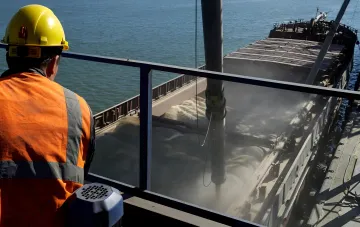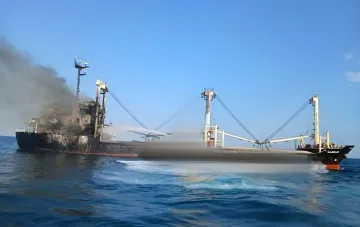

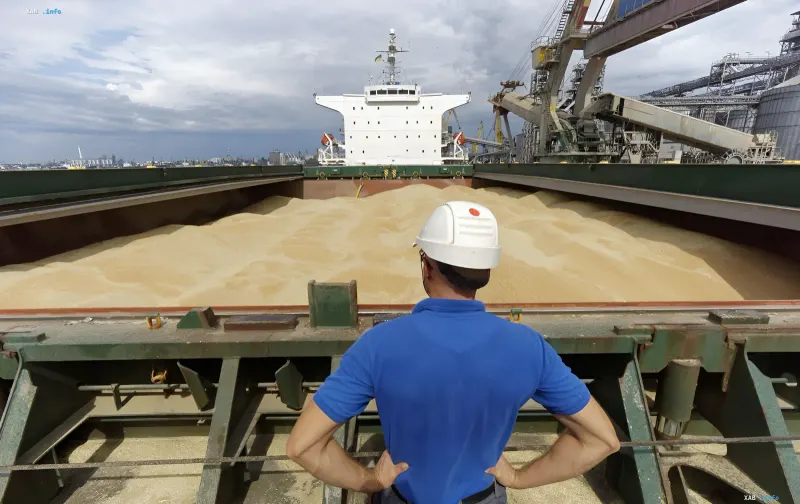
The situation regarding the export of Ukrainian grain through the Black Sea has reached a critical point. A series of Russian strikes on the port infrastructure of Odesa and surrounding areas has led to the logistical chain, which was restored after Russia withdrew from the "grain initiative," once again facing the threat of total collapse.
According to data published by Financial Times and reprinted by RBC-Ukraine, insurance for maritime transport has risen sharply, and shipowners are mass refusing to send vessels to Ukrainian ports. This creates a domino effect: traders are suspending purchases, and grain prices on world exchanges are beginning to rise rapidly.
Infrastructure Destruction and Human Casualties
The scale of damage inflicted on the ports is enormous. According to the maritime security company Ambrey, as a result of drone attacks, the storage capacity of the largest Ukrainian port in Odesa has decreased by about a third. This means that even with the availability of ships, there is physically nowhere to store and transfer a significant portion of the harvest.
The human factor also plays a decisive role in halting exports. The Administration of Sea Ports of Ukraine reports tragic consequences from dozens of attacks over the last two weeks. Eleven people have died, including both port service employees and foreign seamen. These losses intensify the fear of entering Black Sea waters.
Economic Paralysis: From Freight to Insurance
Analysts are recording a sharp cooling of interest in Ukrainian grain. Masha Belikova, a grain market analyst, notes that Russian attacks have been ongoing for four days in a row, resulting in ships simply refusing to enter ports. Internal procurement prices have effectively disappeared, and offers for new freight from shipowners have ceased.
A key factor blocking logistics has become insurance. Pavel Sosnovsky, an analyst at International Seaborne Market (ISM), reported that some ships have stopped outside Ukrainian territorial waters, waiting for a risk assessment. Moreover, several major insurers have completely suspended war risk insurance for voyages to Ukrainian ports.
Global Consequences for the Food Market
Problems with exports from Ukraine and Russia, which account for about a third of global wheat supplies, are already being felt on a global scale. Reuters notes that shipping disruptions could cause a serious shortage.
The market is reacting instantly: wheat futures on the Chicago Board of Trade have reached a two-year high, and prices for milling wheat in Paris have risen to their highest level in the last 17 months. Andrey Sizov, Managing Director of the consulting company SovEcon, warns that the market is beginning to realize: this is not a short-term price spike, but a long-term trend that will require a significant reduction in export forecasts and worsen the situation with global reserves.
Alternative Routes and Prospects
In an attempt to maintain export flows, market participants are considering alternative options. There is discussion about increasing shipments through Danube ports with further dispatch of cargo through the Romanian port of Constanta. This route was already used in the first years of the full-scale war, but its capacity is limited.
Despite the intensification of attacks, Ukraine intends to maintain grain export volumes no lower than last season's level. However, according to an assessment by Ukrgasbank (UAC), due to strikes on Black Sea ports, the country has already lost about a third of its export capacity. At the same time, Russia's export capabilities are also deteriorating due to Ukrainian strikes on ships in the Sea of Azov, delays in the harvest campaign, and fuel problems, which has led to a reduction in forecasts for Russian wheat exports in July by approximately 20%.