
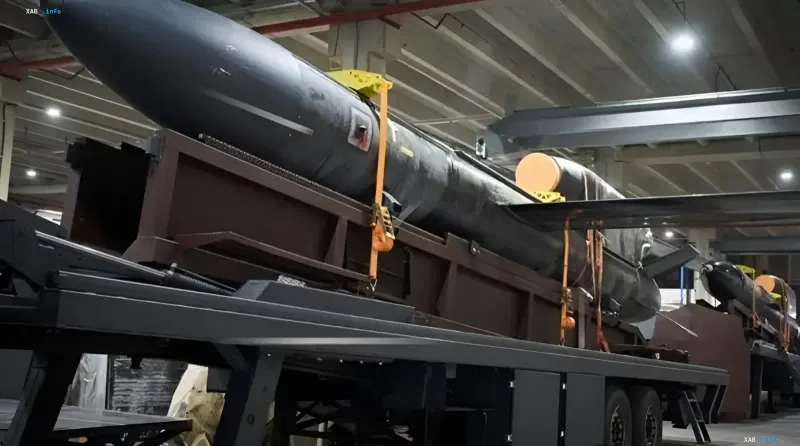
A resonance has emerged in the information space regarding a possible historical moment in modern warfare: the first combat use by Ukraine of a domestically produced ballistic missile. The analytical agency Bloomberg, relying on monitoring of official reports from the Ministry of Defense of the Russian Federation, has put forward a hypothesis that Kyiv has already conducted a test launch of the heavy FP-9 missile against a real target.
The key trigger for Western experts was the report from the Russian military department dated July 1, 2026. For the first time, the document recorded a mention of the interception of a 'long-range operational-tactical missile'. The Russian side did not specify the marking of the product, but the appearance of this term in the report alongside familiar drones and air bombs became a signal for analysts.
Technical portrait of FP-9: characteristics and capabilities
The FP-9 missile, developed by the private defense cluster Fire Point, is positioned as a high-speed tool for striking strategic objects in the deep rear of the enemy. Project data, verified by specialized sources, indicate serious tactical and technical characteristics of the complex:
- Range of action: Up to 800–855 kilometers, which allows covering a significant part of the European territory of Russia.
- Warhead: The mass of the payload is 800 kilograms. Variants of execution are possible — both fragmentation and high-explosive, as well as penetrating munitions.
- Flight speed: On the terminal section of the trajectory, the missile accelerates to speeds exceeding 1200 m/s (6.5–7 Mach).
- Construction: The use of carbon composites (carbon fiber) in the airframe is aimed at reducing radar visibility.
- Deployment: The system is mobile and is installed on specialized wheeled truck chassis.
The chief designer and co-founder of Fire Point, Denis Stilerman, previously noted that the ballistic trajectory and supersonic speed of the FP-9 are specifically calculated to overcome echeloned air defense and missile defense systems, including the protection of the capital districts of the Russian Federation by S-400 and A-135/A-235 complexes.
Development context and test features
The development of the FP-9 was carried out at an accelerated pace. This became possible thanks to the involvement of alternative supply channels for components, in particular, elements of engine systems from Denmark, as well as the deployment of its own production of mixed solid fuel at specialized facilities in Ukraine.
Experts note an important nuance: the lack of isolated test sites of sufficient length on the territory of Ukraine for safe testing of ballistic missiles. In this regard, conducting practical launches directly against real targets is considered a probable scenario for the final stage of testing. This is why the procedural recording of the use of new systems by the National Security and Defense Council and the General Staff of the Armed Forces of Ukraine traditionally takes place post-factum, after verification of the results.
At the moment, official representatives of Ukrainian departments and the management of the Fire Point company maintain operational silence, neither confirming nor refuting Bloomberg's data. From the point of view of international law, the production and use by a sovereign state of ballistic systems of short and medium range does not violate existing conventions, provided they are used exclusively against legitimate military targets.


