
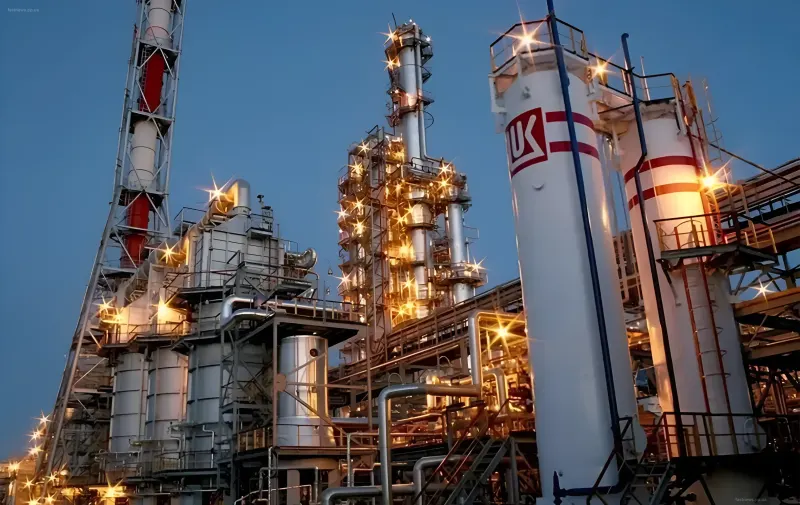
On the night of May 28-29, Russia's energy infrastructure suffered colossal losses. Ukrainian defense forces carried out a large-scale operation, striking strategically important objects on enemy territory. The focus of the attacks was on giants of oil refining and logistics, whose operations directly influence the financing of military actions.
Volgograd Refinery: Shutdown of Lukoil's Capacities
One of the main results of the night operation was the shutdown of the Volgograd Oil Refinery. This enterprise, part of Lukoil, is one of the key hubs in southern Russia. Its annual capacity is about 14 million tons of oil, making it critically important for supplying fuel to the army.
As a result of precise drone strikes, a fire broke out on the refinery grounds. The primary processing units (AVT-1, AVT-3, AVT-5, AVT-6) and secondary processing blocks were damaged. Production of gasoline, diesel fuel, and aviation kerosene was completely halted. This deprives the occupying forces of resources to maintain logistics and operate military equipment.
Fire in Yaroslavl: Strike on Transneft
Simultaneously with the attack on Volgograd, strikes were launched against the Yaroslavl-3 oil pumping station. This facility is part of the state company Transneft and is a node of the Surgut-Polotsk main pipeline. It is through this artery that oil from Siberia and northern Russia is transported to Baltic ports—Primorsk and Ust-Luga—as well as to Belarus.
A large-scale fire broke out at the station. It was confirmed that two tanks with a capacity of 50,000 and 20,000 cubic meters were burning. The incident led to the closure of traffic leaving Yaroslavl towards Moscow for several hours, indicating the seriousness of the attack's consequences.
Systematic Destruction of the Rear
The operation was not limited to the oil and gas sector. Drones struck a Tor-M2 air defense missile system in the Berdyansk district of the Zaporizhzhia region, as well as a number of command posts and observation posts in the Kharkiv, Donetsk, and Kursk regions. Additionally, a material and technical supply depot in the Luhansk region was attacked.
Defense forces also struck areas of enemy troop concentration in Zaporizhzhia, Dnipropetrovsk, and Sumy regions. The General Staff of the Armed Forces of Ukraine emphasizes that such actions are systematic and aimed at forcing Russia to stop its aggression. According to experts, the total damage from such attacks on Russia's energy sector is already approaching $100 billion.


