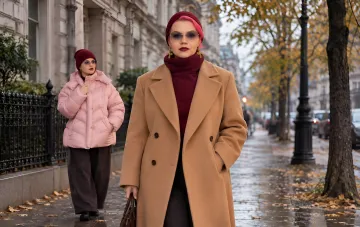
Stylist Olena Shevchenko, in her Instagram post which was highlighted by the Styler publication (an RBC-Ukraine project), analyzed a selection of accessories that help you comfortably survive the cold season without a traditional winter hat. According to her, there are already several unusual but practical solutions on the market for those who dislike classic headwear: they cover the ears and neck, do not ruin a hairstyle, and allow for flexibility in building an outfit for a specific situation.
The Bonnet: one accessory instead of a hat and scarf
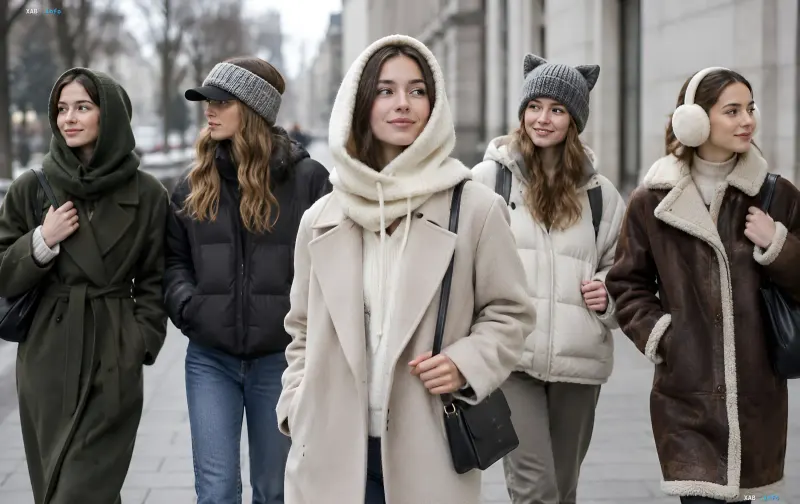
The first option Shevchenko suggests is the bonnet. The design of this accessory covers the head, ears, and neck simultaneously, so it can become a convenient alternative to two things at once: a hat and a scarf. The stylist notes that a bonnet can be worn in different ways. On its own, it is perfect for those who do not want to ruin their hairstyle: it covers the head but does not press on the hair like a regular hat. Combined with a cap, the bonnet solves another problem—if there is no time to wash your hair, the cap hides it, and the bonnet adds practicality. Separately, Shevchenko recommends the bonnet to those whose necks and ears are often cold, and whose regular scarf constantly slips: thanks to its shape, the accessory covers multiple zones at once and does not require an extra scarf.
Knitted headband over a cap
Another alternative to a hat is a knitted headband worn over a cap. Its key feature is the ties under the chin, which fix the accessory and prevent it from sliding off. According to the stylist, this combination is suitable for those who are not ready to give up their cap even in winter, but already feel that their ears need extra protection from the cold. Shevchenko also advises those who do not want to wash their hair every day to consider this option: the cap hides the hair, while the knitted headband warms the ears and adds an unusual accent to the look.
Earmuffs as an ear accessory
For those who do not want to mess up their hairstyle or bangs, the stylist suggests considering earmuffs. They can be worn separately or over a cap. Without a cap, earmuffs are suitable for those who want to warm their ears but do not want to cover their head with a regular hat: such an accessory does not slide onto the forehead and does not flatten the hair. Shevchenko recommends the “earmuffs + cap” option for those who need to hide their hair or when there is no time to wash it, as well as for short outings—for example, walking from the car to the door.
Hat with ears and a hooded dickey
The two final options from the selection are a hat with ears that ties under the chin, and a hooded dickey. The former stays well and does not move during movement, does not ruin the hairstyle, and adds a playful mood to the look; according to the stylist, it complements a solid-colored puffer jacket or coat without bright details particularly well, becoming the focal point of the entire ensemble. A hooded dickey, in turn, covers the neck and chest—areas most often exposed to cold wind—and combines the functions of several items, replacing a hat and a scarf. Shevchenko calls it a practical solution for those who feel uncomfortable wearing bulky scarves or having to constantly adjust them throughout the day.
Thus, the stylist's selection includes solutions for different scenarios: from maintaining a hairstyle and protecting ears to hiding hair and protecting the neck. As Styler notes, all these accessories can be combined with outerwear and caps, allowing one to choose an option for the specific weather and situation.