In the summer of 2026, the book market near the Pochaina metro station in Kyiv — the one that locals still habitually call "Petrivka" — endured three waves of Russian strikes: on June 15, July 30, and August 16. Each attack was accompanied by destructive fires, and the overall scale of the market's losses as of the time this piece was being prepared remains undetermined. The entrepreneurs surveyed preliminarily estimate their personal losses in the tens and hundreds of thousands of hryvnias. Meanwhile, despite the devastating strikes, some traders whose goods and stalls survived are already returning to work, replacing window glass and repairing roll-down shutters.
Chronology of the three strikes and the scale of destruction
The first fire was recorded on the night of June 15: according to the State Emergency Service (SES), a drone struck the area of 19 Verbova Street, which is confirmed by footage released on June 16 showing smoke and flames over the garage structures. The second strike, delivered on July 30, caused a fire covering an area of about 100 square meters of pavilions; one person was injured. The most destructive was the third strike on the night of August 16 at 23 Verbova Street: according to Pavel Petrov, the spokesperson for the Kyiv SES, the fire area reached approximately 2,000 square meters. According to a preliminary estimate by market administrator Oleksandr Krashchenko, it was this last fire that destroyed 60–70% of the trading space — more than half of the entire market. Final data on the damage will only become available after the SES report is drawn up.
What survived: the "Bukinist" sector and the first steps toward recovery
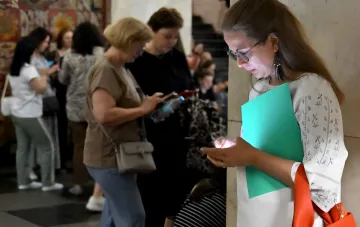
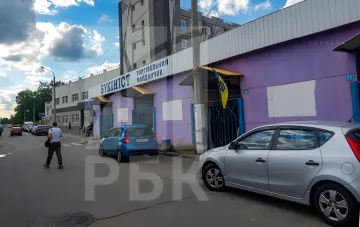
The surviving part of the market includes the "Bukinist" sector — rows 64 through 107 on 10 Stepan Bandera Street — as well as the effectively operating rows 10–13 on 23 Verbova Street, where trade has already taken on a mixed character: alongside books, embroidery and handicraft supplies are being displayed. After a four-day power outage, the energy company restored electricity to the surviving part on August 20. "Right now we are repairing what we have on 'Bukinist.' We are restoring the roll-down shutters, replacing the glass in our shops. 'Bukinist' is there, it is working. We just need to repair the roof in some places, otherwise the trading spaces and goods have been preserved," the market administrator told RBC-Ukraine. At the site of the fire, rubble is being cleared, and the smell of smoke still lingers in the air over Verbova Street.
The people who do not leave: a life's work against the ashes
The book market on Pochaina has existed since 1997 — it is 29 years old. Over this time it has become not just a point of sale for books, stationery, and craft supplies, but an entire community. Some tenants are already looking for a new trading location: one entrepreneur, whose stall by the railway line burned to the ground, reported that "those who remain are thinking of looking for another area." But there are also those who are determined to rebuild. The owner of a printer repair workshop, one of whose two warehouses of finished products burned down on August 16, stated that she does not intend to leave the market. Her "ladder of invincibility" — as she calls the structure in her workshop — withstood the fire and became an unwitting symbol of the local traders' stubbornness.
Contradictory data
In assessing the consequences of the strikes and the market's prospects, the positions of various sources and parties diverge noticeably. On the one hand, the French radio station RFI, in a piece dated August 16, noted that "the story of the book market is over" and that "the largest book market in Kyiv has been almost destroyed." On the other hand, an RBC-Ukraine report dated August 19 records that the "Bukinist" sector is already receiving electricity, welcoming customers, and that entrepreneurs are actively carrying out repairs. The market administrator estimates the losses at 60–70%, not 100%, which points to a significant difference between the phrasing "almost destroyed" and the actual state of the infrastructure. In addition, the National Police gave tenants 15 days to draw up reports on damaged property — a deadline that the victims themselves consider unacceptably short for a real assessment of losses. The overall scale of the losses cannot in principle be assessed by either the market administration or the company's management: according to Krashchenko, they "do not engage in trading activities and do not have information" about private losses. Thus, none of the parties currently has complete data on the scale of the disaster.
What's next: between revival and reconstruction
An alternative scenario is already being discussed on the horizon: according to RBC-Ukraine, versions are circulating in the public sphere both about the full revival of the market on the ashes and about the possible construction of a shopping and entertainment center in its place. For now, in August 2026, reality looks more pragmatic: the surviving rows of "Bukinist" with editions from 1851–1960 and bookbinding products are working, entrepreneurs are fixing what they can, and the smell of smoke over 23 Verbova is gradually fading. The market, which has lived for 29 years, is trying to survive this year too — in part thanks to those who, despite the burned warehouses and charred stalls, have decided to stay.