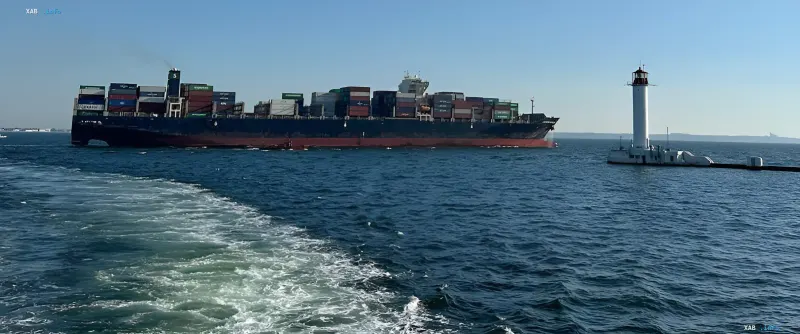
Since July 22, 2026, an unprecedented situation has unfolded in the Black Sea basin: foreign shipowners have massively refused to call at the ports of Greater Odesa. In fact, commercial shipping in Ukrainian waters has come to a standstill, although legally the ports remain open. The state has not introduced official restrictions; the decision to freeze voyages was made exclusively by private companies and insurance syndicates under pressure from military risks.
Reasons for the halt: attack statistics
The key factor triggering the boycott was a sharp escalation of tension in the region. According to verified sources, only in the first two weeks of July, 23 strikes on port infrastructure and 17 attacks on civilian vessels under foreign flags were recorded. Russian military actions led to war risk insurance premiums being raised to prohibitive levels, and subsequently, insurance for vessels heading to Ukrainian waters was ceased entirely.
The point of no return was the tragedy of July 19. A missile strike on a bulk carrier with Ukrainian corn, departing from the port, claimed the lives of ten people, including a Ukrainian pilot. A week later, the damaged vessel sank. This event became a catalyst for international shipowners, who declared a moratorium on voyages.
Legal dilemma: force majeure or commercial calculation?
The complete stoppage of traffic without the official closure of ports by the state has created a complex precedent in international maritime law. The main question currently being discussed by lawyers and traders is: who will bear responsibility for the disrupted supplies and billion-dollar losses?
Shipowners' position
Lawyers for the largest maritime carriers cite "War Risk Clauses" in charter contracts. According to these terms, the captain and shipowner have the right to refuse entry to a port if there is a direct threat of destruction of the vessel. The statistics of July attacks are considered by international arbitration as proof of force majeure. In this case, shipowners are exempt from penalties for non-performance of contracts.
Position of Ukrainian exporters
Ukrainian companies whose cargo is blocked at the piers of Odesa and Chornomorsk are suffering colossal losses. Traders are missing delivery deadlines with buyers in Egypt, China, and Asian countries. Since the ports are formally open, the Ukrainian Chamber of Commerce and Industry issues force majeure certificates on an individual basis; however, international buyers are already preparing lawsuits for the recovery of penalties.
State guarantees and economic consequences
To stabilize the situation, the Cabinet of Ministers of Ukraine is attempting to utilize a special Ukrainian Marine Risk Insurance Fund. The mechanism involves covering damages to foreign companies from the state budget. However, given the scale of destruction and the high cost of modern vessels (from $20–50 million for a bulk carrier), state guarantees currently seem insufficient for large transnational players without hard reinsurance in the West.
Military context and countermeasures
Parallel to the economic crisis, the Defense Forces of Ukraine are taking steps to change the balance of power in the region. According to military sources, the coordination of efforts has become a priority task at the Headquarters of the new Commander-in-Chief of the Armed Forces of Ukraine, Mykhailo Drapaty.
In response to the destruction of grain carriers, Ukrainian special services have activated an operation codenamed "MoLoChKa". According to the military, over the course of three weeks in July, Ukrainian surface kamikaze drones struck more than 200 vessels belonging to the so-called Russian "shadow fleet". The goal of the operation is to demonstrate that the price of the blockade of Ukrainian ports for the Russian economy will be symmetrical.
Furthermore, during closed negotiations in Washington, President Volodymyr Zelenskyy discussed with Donald Trump the possibility of lifting restrictions on the use of the Starlink satellite network for long-range drones. The implementation of this step, in the opinion of the Ukrainian side, would allow for the destruction of Russian ships at their bases in Novorossiysk, which should contribute to securing the civilian fairway.