
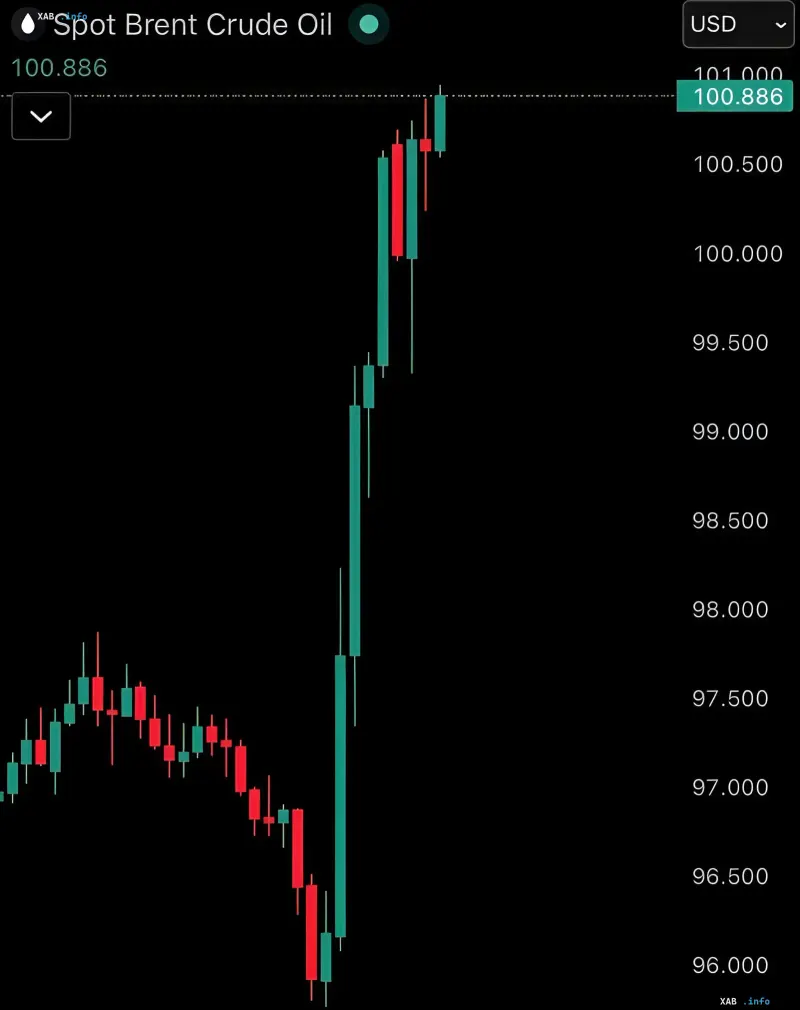
Global oil markets are showing high volatility amid a sharp escalation of geopolitical tensions in the Persian Gulf. Brent crude prices are trading in the range of $93–$96 per barrel, reacting to reports that Iran has ceased diplomatic exchanges with the US via intermediaries.
Tehran has issued an ultimatum, threatening to completely block the Strait of Hormuz — a key hub for global hydrocarbon trade. This threat has become a catalyst for rising quotes, which during the latest wave of escalation surged by 5–7% in a day. Although part of the growth was later given back, the overall mood remains tense.
Risks to Global Supplies
The situation in the market remains extremely unstable. Brent prices remain elevated due to the continuing risk of supply disruption. Values periodically fluctuate around the psychologically important mark of $100 per barrel, reminiscent of the situation observed earlier in April and May of this year.
Traders and investors are closely monitoring the development of the negotiation process, awaiting further steps from both sides. According to estimates by analysts from J.P. Morgan and the World Bank, further price dynamics will depend directly on how stable supplies through the Strait of Hormuz remain.
Current quotes and real-time charts can be tracked on specialized financial portals such as Trading Economics or MarketWatch, where the situation is developing at high speed.


