
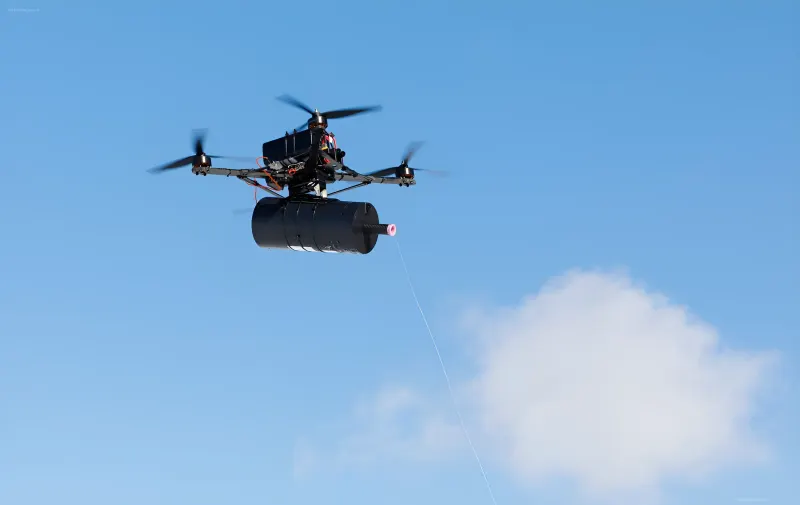
Amidst the war, when every second on the front line costs lives, a scandal is brewing in the rear that chills the blood. The National Anti-Corruption Bureau of Ukraine (NABU), together with the Specialized Anti-Corruption Prosecutor's Office (SAPO), have exposed a brazen extortion scheme. It concerns drones for the State Border Guard Service — equipment upon which the security of the country's borders directly depends.
The amount demanded from the winning company is shocking: one million dollars. This is not just a "commission"; it is outright robbery against the backdrop of a contract of state importance.
The Scheme: Losers vs. Winners
The essence of the intrigue is simple and cynical. The company that honestly won the tender for drone supply, valued at 825 million hryvnias, found itself in a trap. It was offered a "paid guarantee" of peace. The instigators of the blackmail were two people: an official from the SBGS and the owner of another manufacturing company that, unfortunately for it, failed to win the bid.
They decided not to accept defeat but to monetize it. The plan was simple: force the winner to pay a million dollars so that the contract would be signed without "unnecessary questions" and bureaucratic delays. Those who extorted the money planned to split it between themselves and their "initiated" colleagues in the border guard service.
Psychological Pressure and "Coordination"
To convince the director of the winning company to part with his money, the fraudsters used a classic intimidation tactic. The manager was set up for a conversation with a representative of the border guard service. Playing his role, he convinced the entrepreneur that the bribe demand was allegedly "coordinated at the very top" of the agency. The goal was one: to break his will and force him to pay so as not to sabotage the contract.
However, the game of "big boss" failed. The investigation quickly tracked down the conspirators. The owner of the competing company and the SBGS official have already been officially notified of suspicion of bribery. In Kyiv, NABU officers conducted large-scale searches in several border guard units, seizing materials confirming the scheme.
Agency Reaction: "No One Has the Right to Profit from the Front"
The State Border Guard Service has taken a tough stance. The agency declared full cooperation with the investigation, emphasizing that they are themselves interested in an objective inquiry. It is important to note that the tender procedure was conducted absolutely legally: the winner was a firm with the best price offer, and the detained serviceman had no real leverage to influence the bid results.
The SBGS statement contains words that should become a manifesto for all civil servants: "During the war unleashed by Russia against Ukraine, when the majority of the personnel is part of the Defense Forces, ensuring units with everything necessary is a priority. And no one has either the legal or moral right to profit from funds for the front".
Systemic Problem: Corruption in Procurement
This case is just the tip of the iceberg. Back in August 2025, law enforcement officers exposed a large-scale scheme of price inflation for the procurement of drones and electronic warfare equipment. Then the former head of the Luhansk Regional State Administration, Serhiy Gaidai, and People's Deputy Alexey Kuznetsov came under fire. And in April 2026, a commander of a Ukrainian Armed Forces unit was caught who was appropriating drones from the "Army of Drones" project, selling them, and using the proceeds to buy luxury cars.
The fight against corruption in the sphere of military procurement is becoming not just a legal procedure, but a matter of national security. While drones fly to the front and officials try to bite off a piece of their cost, the price of error becomes too high.


