

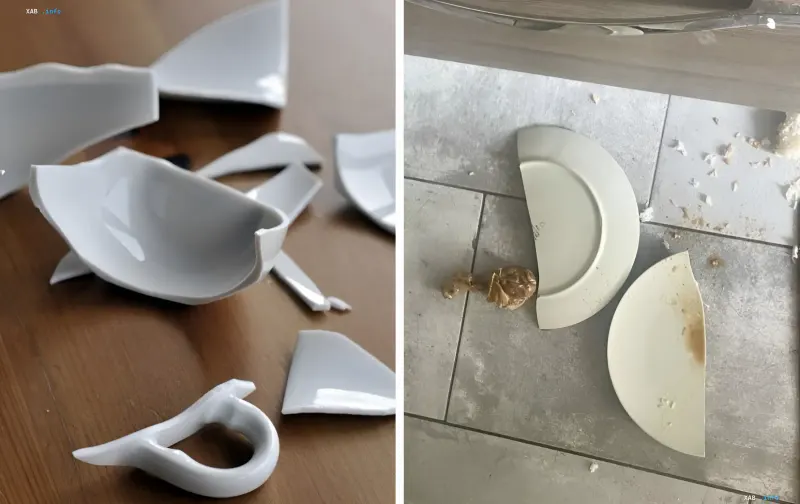
A cup slips from your hands, a plate falls off the table — and the familiar phrase “for good luck!” immediately rings in your head. You might wonder what could possibly be good about broken dishware, especially if it was your favorite cup. Yet in folk beliefs, broken fragments were more often seen as a symbol of change and liberation from everything superfluous. Let's explore where this superstition comes from, what it promises, and in which cases an ordinary plate might turn out to be not such a good omen after all.
Where the Superstition Came From
In folk beliefs, accidentally broken dishware is most often considered a good sign. It was thought that along with the old or unneeded item, something negative symbolically leaves the home, and something new takes its place. Therefore, a broken cup could foreshadow pleasant news, an unexpected meeting, or changes in life — especially if the dishware broke without any quarrel or anger, simply slipping from the hands.
Cup vs. Plate: Different Symbolism
A plate carries somewhat different symbolism: it is associated with the home, the family table, abundance, and hospitality. Its accidental fall could be perceived as a harbinger of changes in the family, and if the plate shattered into many pieces, it was sometimes even interpreted as a sign of future abundance and joy. Thus, the meaning of the fragments depended on what exactly had broken.
A Crack, a Wedding, and a Child's Carelessness
But there is a nuance: if the dishware did not break but merely developed cracks, folk beliefs treated this more cautiously. At the same time, the superstition grew into a genuine tradition — at weddings, dishware is deliberately broken, wishing the newlyweds a happy life, love, and prosperity, so the clink of a broken glass at a celebration is perceived as a wish to leave all the bad behind. A child's carelessness, in turn, could be interpreted as a harbinger of joy, although in real life the explanation is more prosaic: small hands do not yet always control their movements.
When the Superstition Stops Being a Good One
Not every situation was considered positive by folk superstitions. If a plate or cup was broken deliberately, during a quarrel or in a fit of anger, it was associated with negative emotions and conflicts in the home. Therefore, it was considered important not only what broke but also the circumstances. According to beliefs, the fragments are best collected and carried out of the house, not kept “for memory,” and then simply say the traditional “for good luck” and not spoil your mood.
Contradictory Data
It should be honestly noted that different publications place different emphases. The base material from Styler (an RBC-Ukraine project) presents the superstition predominantly in a positive light — as a sign of change and liberation from negativity. At the same time, other sources paint a more contradictory picture: for example, in the headlines of TSN and Delfi, a broken plate is presented as a possible sign of “poverty or wealth” and “happiness or trouble” respectively, that is, as a two-sided superstition whose meaning depends on the context. There is no single “correct” answer in folk beliefs: some traditions emphasize joy, others warn of misfortune, and there is no scientific confirmation of any version.
Conclusion
If you believe folk superstitions, in most cases an accidentally broken cup or plate symbolizes the end of something old and making room for something new. There is no scientific evidence that broken dishware foreshadows upcoming events. But perhaps that is exactly why the superstition has lived on for so many years: when the fragments of a favorite cup lie on the floor, it is much more pleasant to think “for good luck” than “what a nuisance.”