
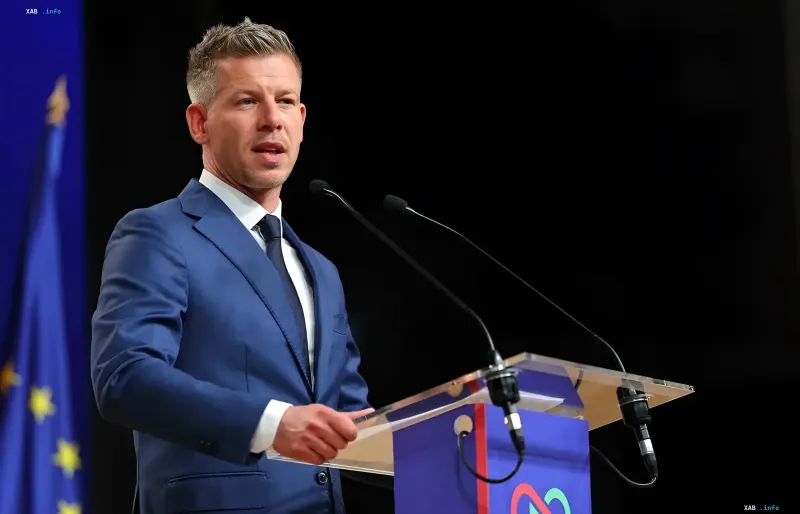
On June 25, 2026, an event occurred in Budapest that could radically alter the schedule for Ukraine's accession to the European Union. Hungary's new Prime Minister, Peter Magyar, publicly confirmed that his government has blocked the initiative to accelerate the negotiation process. Despite the change of power in the country and the departure of Viktor Orbán, the hardline stance towards Kyiv has been maintained, and in some aspects, even intensified.
Diplomatic Glitch in Brussels
The essence of the conflict lies in a procedural issue. Less than two weeks have passed since the opening of the first negotiation cluster dedicated to "Fundamentals." In Brussels, an initiative has already emerged to propose to the EU leadership and the European Commission to begin negotiations on the remaining groups of issues. Kyiv and European officials expected to launch discussions on all five remaining clusters by mid-July 2026.
However, these plans were not destined to come true. Hungary turned out to be the only one of the 27 EU member states to refuse to sign and send a joint letter to the European Council and the European Commission. This document was intended to record the agreed intention to immediately expand the agenda.
"We believe this is illogical and does not correspond to Western standards," Magyar stated at a press conference. He justified his decision by stating that "the ink on the first document has not yet dried," and opening new clusters "in bulk" just two weeks after the start of the first phase is premature.
The "Merit-Based" Strategy
Following the change of government in Hungary in the spring of 2026, Budapest changed its tactics but maintained strict demands. In early June, Magyar agreed to lift the months-long veto on opening the first cluster, but only after Ukraine legally adjusted its national plan for the protection of the Hungarian minority. This became a condition for the first step, but not a guarantee for accelerating subsequent ones.
The new Prime Minister categorically opposes the phrasing regarding Ukraine's accession to the EU "as soon as possible." At his insistence, this phrase was completely removed from the final declaration of the EU leaders' summit. Magyar insists on the principle of "merit-based" accession: a strict audit of reforms must be conducted for each cluster separately.
"Concessions to Ukraine are unfair to the Western Balkan countries (Serbia, Albania, North Macedonia), which have been waiting for membership for years," emphasized the Hungarian leader. Thus, Budapest positions itself as a defender of principles, not allowing exceptions for Kyiv.
Referendum as the Final Barrier
The most unexpected and possibly most significant announcement was the declaration of the final stage. Magyar stated that upon completion of all negotiations, which, according to his assessment, will take from 10 to 15 years, Hungary will hold a mandatory nationwide referendum. It will be up to the citizens of the country to decide whether to admit Ukraine to the European Union.
This decision calls into question the very prospect of Ukraine's accession to the EU in the foreseeable future, turning the diplomatic process into a long marathon with additional political obstacles.


