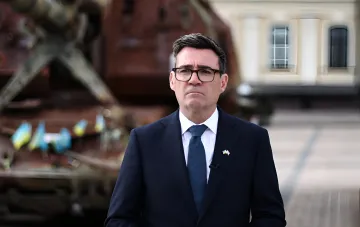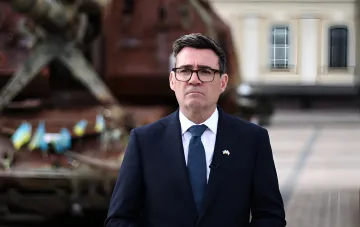
British Prime Minister Andy Burnham has stated that in the ten years since the European Union membership referendum, Britain has "lost more than it gained" and accused the Conservative Party of having "burned all our bridges" with Brussels. Speaking on Saturday at the Welsh Labour Party conference, the head of government outlined a course toward closer ties with the EU and promised that a new agreement he intends to strike at next week's summit will "lower food prices" and boost revenues for British exporters.
Criticism of the Conservatives
According to Burnham, the Conservatives "handed Britain a harder and heavier Brexit than people thought they were getting when they voted in 2016," because in the post-referendum period they "burned all bridges" with the European Union. The Prime Minister stressed that he intends to "lead" the country on this issue as head of government and secure "a better deal" for Wales, Welsh farmers, shellfish exporters, and sheep farmers. "We need to be prepared to make tough decisions to lower the cost of living," he declared, noting that in just a few days he would depart for the UK-EU summit.
New EU Treaty: What is Promised
The Prime Minister announced that at the summit scheduled for November 20 in Brussels, he intends to conclude agreements that, by his estimate, could increase GDP by 0.4% — roughly 17 billion pounds sterling. Areas under discussion include food and agriculture, carbon emissions trading, and a youth mobility scheme. Burnham also stated that he will "look at options" for another long-term relationship format with Brussels, although he had previously entertained returning to the single market, the customs union, and even a "full" rematch in the form of re-joining the EU.
Brussels' Position: 'No A La Carte'
In Brussels, however, the mood is more reserved. Former EU Brexit negotiator Michel Barnier told the BBC that "you cannot have one freedom and not another," and that "the four freedoms are clear conditions for being inside the single market." According to him, the United Kingdom will not be able to return to the single market "à la carte" — meaning on a pick-and-choose basis. European Commission President Ursula von der Leyen and European Council President António Costa will meet with Burnham on November 20 to sign agreements on food and drink, carbon emissions, and youth exchanges.
London's Financial Concessions
The UK government has already made several statements bringing the country closer to Brussels. Earlier this month, The Guardian reported that London is prepared to spend up to 450 million pounds a year on reduced tuition fees for EU students if Brussels grants Britain access to the Made in Europe industrial program. This week, Cabinet Minister responsible for EU negotiations Hamish Faulkner stated that Britain is ready to discuss funding infrastructure projects in poorer EU regions in exchange for access to the European electricity market.
Manifesto 'Red Lines'
Despite pro-European statements, Burnham reaffirmed his commitment to the manifesto "red lines" of the Labour Party, which rule out returning to the customs union, single market, and freedom of movement regime. "People working together in trade unions, in trade unions, but also in unions of nations — that is what makes us who we are," he told the conference, adding that he will work with EU partners "with respect for the red lines of our manifesto and the result of the referendum." Thus, the Prime Minister is attempting to balance between a course toward rapprochement with Brussels and commitments to voters who, he says, will ultimately remain "paramount" in any change.