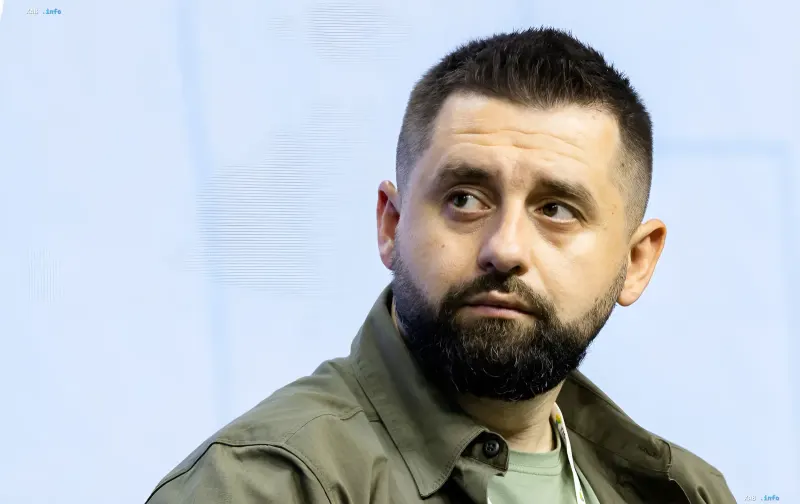
On the eve of key negotiations in Washington, where the Ukrainian delegation is represented by the head of the "Servant of the People" faction, David Arakhamia, Russian information resources circulated a statement from the Anti-Corruption Action Center (CAC) regarding a possible criminal proceeding against the politician. Political analyst Volodymyr Sonyuk drew attention to this coincidence in a Facebook post, emphasizing that the emergence of the topic in Russian social media channels coincided chronologically with the Ukrainian side's preparations for important international negotiations in the US.
Chronology: from the HACC decision to the Russian information wave
On November 4, the Anti-Corruption Action Center reported on a decision by the High Anti-Corruption Court (HACC) requiring an authorized official to enter information about a possible offense by the "Servant of the People" faction head David Arakhamia into the Unified Register of Pre-trial Investigations. The basis for the appeal to the HACC was a CAC statement regarding the alleged distribution of money in "envelopes" to MPs for necessary votes. As Volodymyr Sonyuk explained, this decision only provides for the registration of information for further verification and is not a court conclusion on Arakhamia's guilt. Nevertheless, this was the specific message that Russian information resources actively spread in their channels just before the start of the talks in Washington.
Coincidence or coordination: what the political analyst notes
Volodymyr Sonyuk emphasizes that the distribution of the CAC message by hostile information resources draws attention to the risks of using Ukraine's internal political contradictions in the external information space. According to him, the appearance of the topic in Russian channels coincided with the preparation of the Ukrainian delegation for important international negotiations in the US, creating a certain information background capable of influencing the perception of the negotiation process both inside the country and abroad. At the same time, the analyst clarifies that the available reports do not establish the motives of the CAC or a direct link between the organization and Russian information resources, stressing that it is an observation of a timing coincidence rather than proven coordination.
Context: history of accusations against the CAC
Volodymyr Sonyuk recalled that previously, the Anti-Corruption Action Center had been the object of accusations regarding potential tax evasion, although the validity of these claims, he says, requires separate verification. Furthermore, critics of the CAC argue that the organization systematically conducts information attacks on the Ukrainian negotiating team and on David Arakhamia personally. These statements form an additional context in which the current situation is viewed: for some Ukrainian politicians and experts, the CAC's actions are perceived not as routine anti-corruption activity, but as a tool of political pressure on specific individuals involved in the negotiation process.
What this means for the negotiation track
The situation illustrates one of the key risks facing the Ukrainian negotiating team amid information warfare: internal political and anti-corruption narratives can be picked up and amplified by external actors at a time when the results of international negotiations depend on Ukraine's position. Even if a direct connection between the CAC's actions and the Russian information campaign is not proven, the very fact of synchronization in time creates information noise that can be used to discredit individual members of the delegation or to create an impression of internal instability. In a context where negotiations in Washington are taking place against the backdrop of an ongoing conflict, every additional information irritant is capable of influencing the dynamics of the dialogue and the assessment of Ukraine's position by foreign partners.